
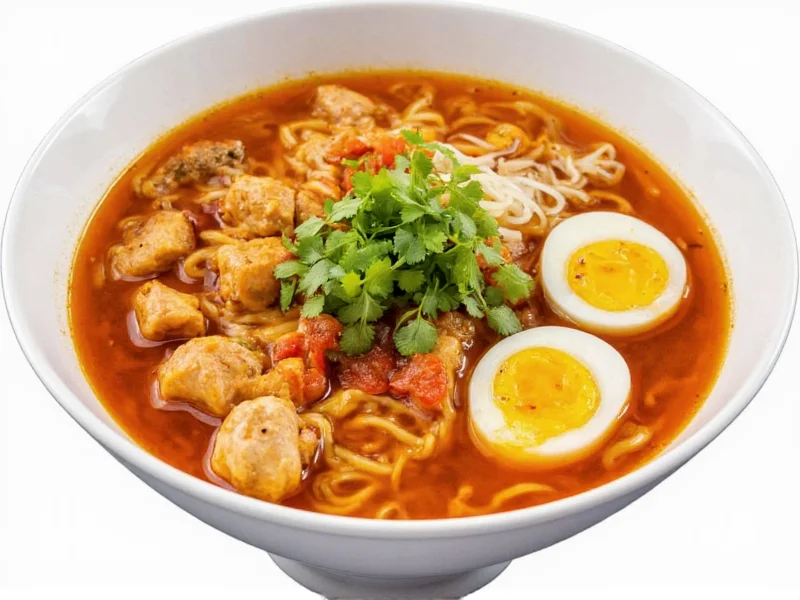
For decades, Top Ramen Chicken Flavor has satisfied cravings with its simple yet satisfying profile. The product's enduring popularity stems from its perfect balance of saltiness and savory notes that mimic traditional chicken broth without actual chicken meat. Understanding what makes this humble packet of noodles so compelling requires examining its ingredients, preparation methods, and cultural significance.
History and Development of Top Ramen Chicken Flavor
Nissin Foods revolutionized quick meals when founder Momofuku Ando invented instant ramen in 1958. The chicken flavor variant emerged later as one of the original Top Ramen offerings when Nissin expanded to the American market in the 1970s. Unlike Japanese ramen varieties with complex broths, Top Ramen Chicken simplified the experience into an accessible 3-minute meal that captured the essence of chicken soup.
The product's formulation has remained remarkably consistent over the years, with minor adjustments to ingredients based on regional preferences and regulatory requirements. While some critics note its high sodium content, the chicken flavor's nostalgic appeal and versatility have cemented its place in culinary culture.
Product Evolution Timeline
Key milestones reflect regulatory and consumer-driven adaptations:
- 1958: Momofuku Ando invents the world's first instant ramen in Japan using flash-frying technology. (Source: Nissin Group History)
- 1970: Nissin Foods USA establishes operations, introducing Top Ramen Chicken Flavor as a core product in American grocery aisles. (Source: Nissin Foods USA History)
- 2005: Global sodium reduction initiative launched after health advisories, targeting 10% sodium decrease across product lines. (Source: The Japan Times)
Ingredients and Nutritional Profile
Top Ramen Chicken Flavor contains wheat flour, palm oil, salt, and various flavor enhancers that create its signature taste. The seasoning packet typically includes monosodium glutamate (MSG), dehydrated vegetables, and chicken powder. A single serving (about 2.25 oz) provides approximately 190 calories, 7 grams of fat, 27 grams of carbohydrates, and 8 grams of protein.
| Nutrient | Amount Per Serving | % Daily Value |
|---|---|---|
| Calories | 190 | 9% |
| Total Fat | 7g | 9% |
| Sodium | 860mg | 38% |
| Total Carbohydrate | 27g | 10% |
| Protein | 8g | 16% |
While convenient, regular consumption should be balanced with additional vegetables and protein sources to create a more nutritionally complete meal. The high sodium content makes it less suitable for those on restricted diets without modifications.
Global Sodium Variations Across Markets
Regulatory differences drive formulation changes, creating significant nutritional disparities:
| Country | Sodium per Serving (mg) | % Daily Value |
|---|---|---|
| United States | 860 | 38% |
| Canada | 900 | 39% |
| Australia | 1,000 | 43% |
| United Kingdom | 800 | 35% |
Source: Global sodium assessment in instant noodles (Feng et al., 2019, Nutrients Journal). Values represent verified retail product measurements.
This variation demonstrates how regional health policies directly impact product composition, with stricter sodium regulations (like the UK's) yielding lower levels.
Contextual Suitability and Limitations
Strategic usage requires understanding specific scenarios where this product excels or falls short:
- Optimal applications: Emergency meal provisioning (e.g., natural disasters), budget-constrained environments (e.g., college dorms with limited cooking facilities), and as a customizable base for culinary experimentation when supplemented with fresh ingredients.
- Critical limitations: Unsuitable as a standalone meal for hypertension management without modification (exceeds American Heart Association's 480mg/serving high-sodium threshold). Lacks sufficient fiber and micronutrients for nutritional adequacy without vegetable/protein additions. Not recommended for daily consumption due to processed ingredients and sodium density.
The American Heart Association explicitly classifies foods exceeding 480mg sodium per serving as "high sodium," advising limited intake for cardiovascular health. Top Ramen's 860mg serving necessitates strategic dietary integration (Source: American Heart Association).
Enhancing Your Top Ramen Chicken Flavor Experience
Many home cooks transform basic Top Ramen Chicken into restaurant-quality meals with simple additions. The best ways to enhance top ramen chicken flavor include incorporating fresh ingredients that complement its savory profile:
- Add soft-boiled eggs for richness and protein
- Stir in leafy greens like spinach or bok choy for nutrients
- Include sliced green onions for freshness
- Boost umami with a dash of soy sauce or sesame oil
- Add cooked chicken breast for authentic meat flavor
Chefs often recommend undercooking the noodles slightly in less water than instructed, creating a more concentrated broth. This technique works particularly well when preparing top ramen chicken noodle soup as a base for more elaborate dishes.
Comparing Top Ramen Chicken to Other Instant Noodle Brands
When evaluating top ramen chicken vs other instant noodle brands, several factors distinguish it:
- Price point: Top Ramen remains one of the most affordable options
- Flavor authenticity: While not replicating gourmet ramen, it delivers consistent chicken broth notes
- Texture: The wheat noodles maintain firmness better than some competitors
- Availability: Found in virtually every grocery store worldwide
Compared to premium instant ramen brands, Top Ramen Chicken offers simplicity over complexity. It serves as an excellent base for customization rather than a finished gourmet product. Budget-conscious consumers appreciate its reliability and shelf stability.
Cultural Impact and Consumer Reception
Top Ramen Chicken Flavor has transcended its status as mere convenience food to become a cultural phenomenon. College students, busy professionals, and budget-conscious households rely on this product for quick, satisfying meals. Market research shows it consistently ranks among the top-selling instant noodle varieties in North America.
Food historians note how Top Ramen Chicken bridged cultural gaps by introducing Western consumers to Asian-inspired flavors in an accessible format. Its enduring popularity demonstrates how a simple product can become deeply embedded in daily life through consistent quality and versatility.
Where to Find Top Ramen Chicken Flavor
This product is widely available in most grocery stores, convenience stores, and online retailers. A standard three-pack typically costs between $1.50-$2.50, making it one of the most economical meal options. International food aisles often carry both the classic version and regional variations with slightly different seasoning profiles.
Final Thoughts on This Pantry Essential
Top Ramen Chicken Flavor Ramen Noodle Soup remains popular because it delivers exactly what it promises: a quick, warm, satisfying meal with minimal effort. While not a gourmet experience on its own, its true value lies in its adaptability. Understanding the nutritional facts of top ramen chicken noodle soup helps consumers make informed choices, while creative preparation methods transform this humble product into something special. Whether as a late-night snack or a base for more elaborate dishes, this classic product continues to earn its place in kitchens worldwide.




 浙公网安备
33010002000092号
浙公网安备
33010002000092号 浙B2-20120091-4