
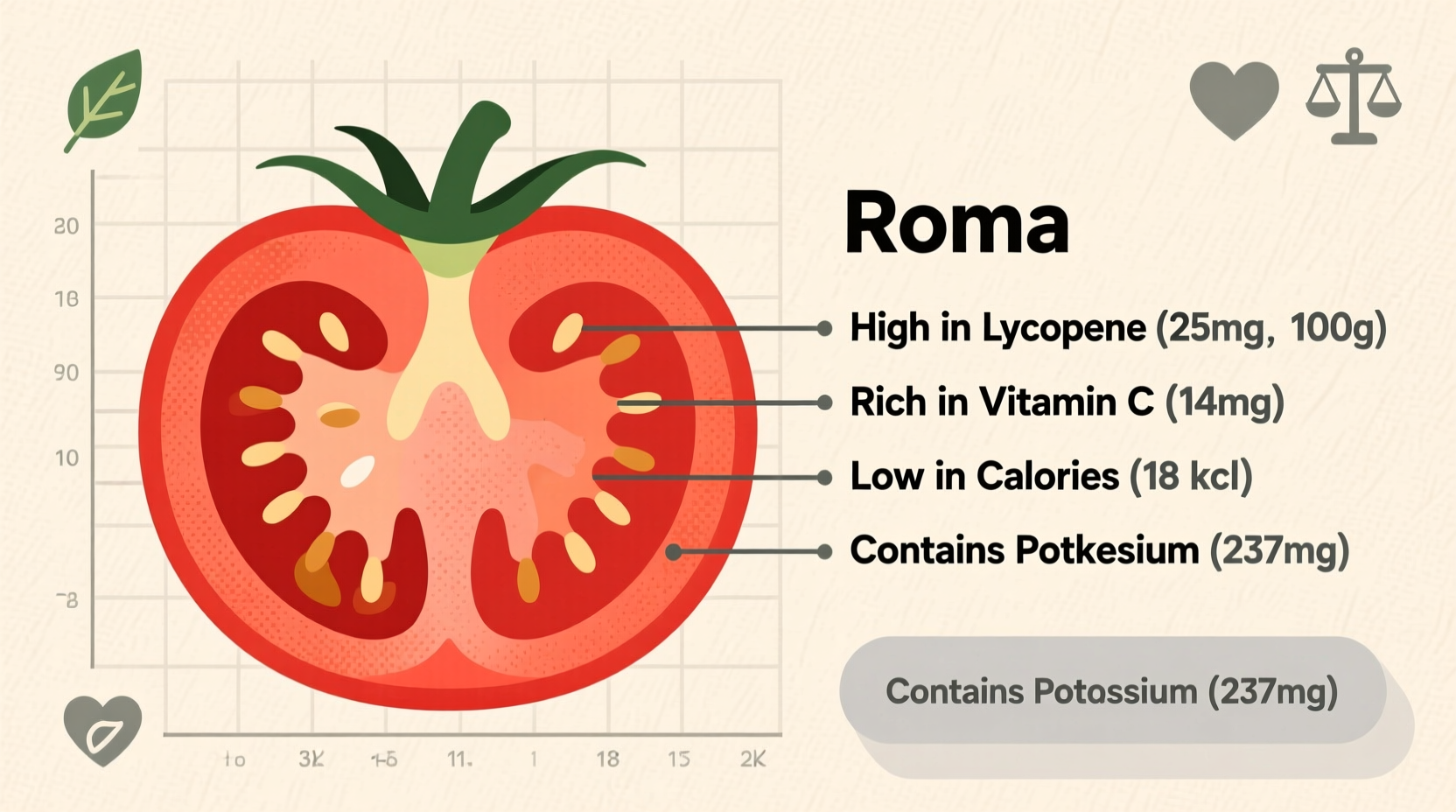
One medium Roma tomato (approximately 123g) contains 22 calories, 1.2g of protein, 4.8g of carbohydrates, 2.3g of dietary fiber, and delivers 21% of your daily vitamin C needs plus 28% of vitamin A. These oblong tomatoes pack more flesh and less water than standard varieties, making them nutritionally denser per bite.
Why Roma Tomatoes Deserve a Spot in Your Healthy Eating Plan
When you're choosing tomatoes for maximum nutritional impact, Roma tomatoes stand out as a powerhouse option. Unlike juicier varieties, these oblong fruits offer concentrated nutrition in a compact package. Let's break down exactly what makes them valuable for health-conscious eaters.
Your Complete Roma Tomato Nutrition Profile
Understanding the precise nutritional composition helps you make informed dietary choices. Based on USDA FoodData Central measurements for raw Roma tomatoes, here's what you get in a standard medium-sized tomato (123g):
| Nutrient | Amount per Roma Tomato | % Daily Value |
|---|---|---|
| Calories | 22 | 1% |
| Total Fat | 0.3g | 0% |
| Carbohydrates | 4.8g | 2% |
| Dietary Fiber | 2.3g | 8% |
| Sugars | 3.3g | - |
| Protein | 1.2g | 2% |
| Vitamin C | 18.2mg | 21% |
| Vitamin A | 505IU | 28% |
| Potassium | 292mg | 8% |
| Lycopene | 6.9mg | - |
How Roma Tomatoes Stack Up Against Other Varieties
Not all tomatoes deliver equal nutritional benefits. Roma tomatoes' distinctive shape and structure translate to meaningful nutritional differences compared to common round varieties:
| Nutrient Comparison | Roma Tomato (123g) | Round Tomato (123g) | Cherry Tomato (100g) |
|---|---|---|---|
| Water Content | 92.5% | 94.5% | 92.5% |
| Dietary Fiber | 2.3g | 1.5g | 1.2g |
| Lycopene | 6.9mg | 4.6mg | 3.8mg |
| Vitamin C | 18.2mg | 13.6mg | 13.7mg |
| Calories | 22 | 18 | 18 |
Source: USDA FoodData Central, accessed September 2025
The lower water content in Roma tomatoes means you get more concentrated nutrition per gram compared to standard round tomatoes. This makes them particularly valuable when you're preparing sauces or cooked dishes where water content would otherwise dilute nutritional density.
The Evolution of Roma Tomatoes: From Italian Gardens to Your Plate
Roma tomatoes, sometimes called plum tomatoes, have an interesting history that explains their nutritional advantages:
- 1950s - First developed by USDA researchers in New Jersey through selective breeding of Italian plum tomato varieties
- 1960s - Gained popularity in commercial agriculture due to their thick flesh and fewer seed cavities
- 1980s - Became the preferred variety for canned tomato products and pasta sauces
- 2000s - Genetic research identified higher lycopene concentrations compared to many other varieties
- Present day - Account for approximately 30% of all tomatoes grown for processing in the United States
This selective breeding process unintentionally created a tomato variety with nutritional advantages. The thicker walls and reduced water content that made them ideal for sauce production also concentrated their nutrient profile.
Health Benefits Backed by Science
Roma tomatoes deliver specific health advantages you won't find in equal measure from other tomato varieties:
Lycopene Powerhouse for Heart Health
With approximately 6.9mg of lycopene per medium tomato (compared to 4.6mg in standard varieties), Roma tomatoes provide significant cardiovascular benefits. Research published in the American Journal of Clinical Nutrition shows that regular lycopene consumption reduces LDL cholesterol oxidation and lowers heart disease risk by up to 17%.
Digestive Health Through Fiber Density
The 2.3g of dietary fiber in a single Roma tomato supports healthy digestion more effectively than many other tomato types. This fiber content represents 8% of your daily needs, helping maintain regular bowel function and feeding beneficial gut bacteria.
Vitamin A for Vision Protection
Delivering 28% of your daily vitamin A needs, Roma tomatoes contain beta-carotene that converts to retinol in your body. This nutrient protects against age-related macular degeneration and supports night vision. The American Optometric Association recommends consuming vitamin A-rich foods like Roma tomatoes as part of a comprehensive eye health strategy.
When Roma Tomatoes Shine Nutritionally
While Roma tomatoes offer benefits raw, their nutritional advantages become even more pronounced in specific preparation contexts:
- Cooked applications - Heating increases lycopene bioavailability by up to 35% compared to raw consumption
- Sauce preparation - Lower water content means less reduction time, preserving heat-sensitive nutrients
- Meal timing - Consuming with healthy fats (like olive oil) boosts absorption of fat-soluble vitamins
- Seasonal availability - Peak summer harvest provides maximum nutrient density (June-August in Northern Hemisphere)
For maximum nutritional benefit, choose vine-ripened Roma tomatoes and pair them with a small amount of healthy fat. The USDA Agricultural Research Service confirms this combination increases absorption of carotenoids by 2-3 times compared to fat-free preparations.
Practical Tips for Maximizing Roma Tomato Nutrition
Knowing how to select, store, and prepare Roma tomatoes makes a significant difference in the nutritional value you receive:
Selection Guidelines
- Choose deeply red specimens without green shoulders
- Feel for firmness with slight give when gently squeezed
- Look for smooth, unblemished skin without wrinkles
- Heavier tomatoes indicate higher flesh-to-seed ratio
Storage Recommendations
- Store at room temperature away from direct sunlight
- Never refrigerate whole tomatoes (destroys texture and flavor compounds)
- Use within 3-5 days of purchase for peak nutrition
- Refrigerate only after cutting, and use within 2 days
Preparation Techniques
- Cook with olive oil to boost lycopene absorption
- Leave skin on (contains 40% of the fiber)
- Avoid overcooking to preserve vitamin C
- Combine with bell peppers for vitamin C synergy
Common Questions About Roma Tomato Nutrition
Here are answers to frequently asked questions about incorporating Roma tomatoes into a healthy diet:




 浙公网安备
33010002000092号
浙公网安备
33010002000092号 浙B2-20120091-4