
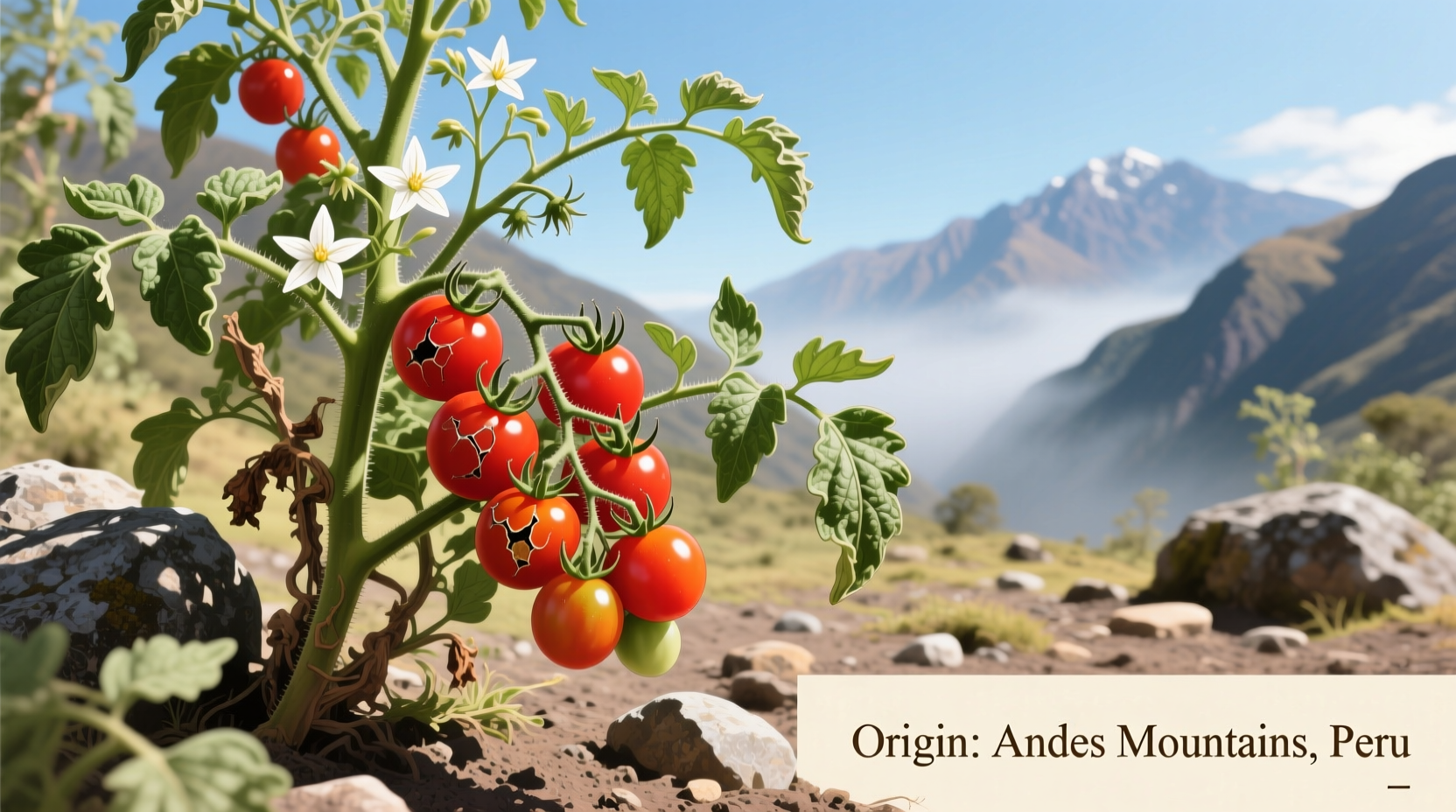
Ever wondered why your garden tomatoes thrive in certain conditions or carry specific flavor profiles? The answer lies in their ancient origins. Understanding where tomatoes truly began helps gardeners cultivate better crops and food enthusiasts appreciate this culinary staple's remarkable journey from obscure wild plant to global kitchen essential.
The Botanical Roots: Solanum lycopersicum Unveiled
Scientifically classified as Solanum lycopersicum, tomatoes belong to the nightshade family (Solanaceae) alongside potatoes and eggplants. Their wild ancestors still grow naturally along the Pacific coast of South America, particularly in the arid coastal regions of Peru and Ecuador. These original species featured small, berry-sized fruits quite different from today's cultivated varieties.
Genetic studies published in Nature Genetics confirm that modern tomatoes descended from Solanum pimpinellifolium, a wild species native to western South America. This genetic evidence aligns perfectly with archaeological findings from ancient settlements in the region.
Historical Journey: From Andes to Global Staple
Tomatoes followed a fascinating path from their native habitat to worldwide popularity:
| Time Period | Key Development | Geographical Spread |
|---|---|---|
| 700 BCE - 500 BCE | Initial domestication by indigenous peoples | Mesoamerica (Mexico region) |
| 1521 | Spanish conquistadors encounter tomatoes | Aztec Empire (Mexico) |
| 1540s | First European cultivation records | Spain and Italy |
| 1700s | Widespread acceptance as food crop | Across Europe and North America |
Contrary to popular belief, tomatoes didn't originate in Italy or the Mediterranean. Spanish explorers first encountered them in the Aztec Empire (present-day Mexico) during the early 16th century, where they had already been cultivated for centuries after migrating north from their South American birthplace.
Archaeological and Genetic Evidence
Researchers at the USDA Agricultural Research Service have documented wild tomato species growing in Peru's coastal valleys, matching genetic profiles of early cultivated varieties. Carbonized tomato remains discovered at archaeological sites in Mexico dating to 500 BCE provide physical evidence of early cultivation.
A common misconception persists that tomatoes are native to Europe. This confusion stems from their rapid adoption in Mediterranean cuisine after European contact. However, historical records from Spanish missionaries clearly document tomatoes as New World plants previously unknown in Europe.
Practical Implications for Modern Gardeners
Understanding tomato origins directly impacts successful cultivation today:
- Temperature preferences: Tomatoes thrive in warm conditions because their ancestors evolved in tropical and subtropical climates
- Watering needs: Their native arid habitat explains why tomatoes prefer consistent but not excessive moisture
- Soil requirements: Well-draining soil mimics their natural coastal environments in South America
- Disease resistance: Modern varieties often lack resistance to pathogens found in their native habitat
Gardeners in cooler climates can improve yields by replicating conditions similar to western South America—providing warmth, good drainage, and avoiding overwatering. This evolutionary perspective explains why tomatoes struggle in consistently wet or cold environments.
Dispelling Common Myths About Tomato Origins
Several persistent myths cloud tomato history. Many believe tomatoes originated in Italy due to their central role in Italian cuisine, but historical evidence confirms they arrived in Europe after Columbus's voyages. Another misconception suggests tomatoes were immediately embraced in Europe, when in reality, many Europeans initially considered them poisonous for nearly 200 years after their introduction.
The name "tomato" itself reveals its journey—derived from the Nahuatl (Aztec language) word "tomatl," which Spanish explorers adapted as "tomate." This linguistic evidence further confirms their Mesoamerican presence before European contact.
Frequently Asked Questions
Understanding tomato origins answers many practical gardening and historical questions:




 浙公网安备
33010002000092号
浙公网安备
33010002000092号 浙B2-20120091-4