
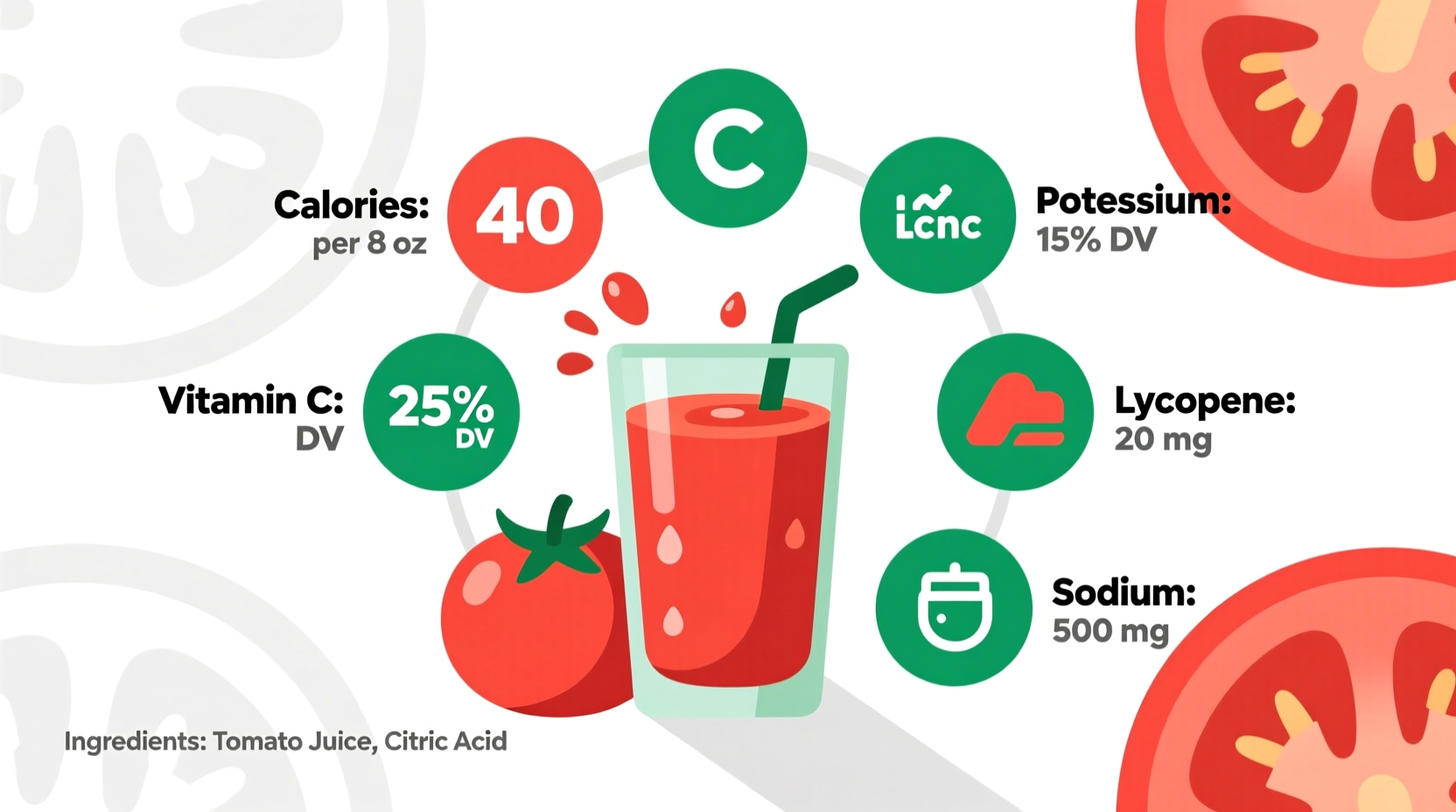
One 8-ounce (240ml) serving of unsweetened tomato juice contains approximately 41 calories, 8.9 grams of carbohydrates, 1.3 grams of protein, and is an excellent source of vitamin C (43% of Daily Value), vitamin A (22% DV), potassium (11% DV), and lycopene - a powerful antioxidant linked to heart health and cancer prevention.
Tomato juice isn't just a refreshing beverage; it's a nutritional powerhouse packed with essential vitamins, minerals, and unique plant compounds. Whether you're monitoring your dietary intake, managing health conditions, or simply curious about what's in your glass, understanding the complete nutritional profile helps you make informed choices about incorporating this vibrant drink into your daily routine.
Complete Tomato Juice Nutrition Profile (Per 8 fl oz/240ml Serving)
| Nutrient | Amount | % Daily Value* | Key Health Benefits |
|---|---|---|---|
| Calories | 41 kcal | 2% | Low-calorie hydration option |
| Total Fat | 0.2g | 0% | Negligible fat content |
| Sodium | 659mg | 29% | Check labels for low-sodium options if concerned |
| Total Carbohydrates | 8.9g | 3% | Natural sugars with fiber |
| Dietary Fiber | 1.1g | 4% | Supports digestive health |
| Sugars | 5.7g | n/a | Naturally occurring (no added sugar) |
| Protein | 1.3g | 3% | Contributes to daily protein needs |
| Vitamin C | 39mg | 43% | Immune support, antioxidant protection |
| Vitamin A | 198mcg RAE | 22% | Eye health, immune function |
| Potassium | 430mg | 11% | Blood pressure regulation, muscle function |
| Lycopene | 22,600mcg | n/a | Powerful antioxidant, heart health benefits |
*Percent Daily Values based on a 2,000 calorie diet. Values may vary by brand and preparation method. Source: USDA FoodData Central
Why Tomato Juice Stands Out Among Beverages
Unlike many fruit juices that are primarily sugar and water, tomato juice offers a unique nutritional advantage through its rich lycopene content. This red pigment, a carotenoid antioxidant, becomes more bioavailable when tomatoes are cooked or processed into juice. Research from the National Institutes of Health shows that lycopene absorption increases by 2.5 times when consumed in processed tomato products compared to raw tomatoes.
Tomato juice also provides a significant potassium boost while remaining relatively low in calories. This makes it a potentially valuable addition to diets focused on blood pressure management, as potassium helps counterbalance sodium's effects on blood vessels.
Tomato Juice vs. Other Common Beverages: Nutritional Comparison
When evaluating tomato juice nutrition facts, context matters. How does it stack up against other popular beverages? This comparison helps clarify where tomato juice fits in a balanced diet:
| Beverage (8 fl oz) | Calories | Sugar (g) | Key Nutrients | Best For |
|---|---|---|---|---|
| Tomato Juice | 41 | 5.7 | Vitamins A, C, potassium, lycopene | Antioxidant support, low-sugar option |
| Orange Juice | 110 | 21 | Vitamin C, folate, potassium | Vitamin C boost, quick energy |
| Apple Juice | 114 | 28 | Vitamin C (added) | Sweet taste preference |
| V8 Vegetable Juice | 50 | 5 | Vitamins A, C, potassium, multiple vegetables | Broad vegetable intake |
| Soda (regular) | 100 | 27 | None (empty calories) | Occasional treat only |
This nutritional comparison reveals tomato juice's advantage as a lower-sugar option with significant micronutrient content compared to many fruit juices. While orange juice provides more vitamin C, tomato juice delivers unique lycopene benefits not found in citrus beverages.
Health Benefits Backed by Research
The specific combination of nutrients in tomato juice contributes to several evidence-based health benefits:
Cardiovascular Support
A 2022 review published in the Journal of the American Heart Association found that regular tomato product consumption was associated with reduced risk of cardiovascular disease. The potassium content helps regulate blood pressure, while lycopene reduces oxidative stress and inflammation in blood vessels.
Antioxidant Protection
Lycopene, the predominant carotenoid in tomato juice, demonstrates significantly higher antioxidant activity than other carotenoids like beta-carotene. According to research from the NIH Office of Dietary Supplements, lycopene helps protect cells from damage caused by free radicals, potentially reducing risk of certain cancers and age-related conditions.
Digestive Health
While not as high in fiber as whole tomatoes, tomato juice still provides some dietary fiber that supports healthy digestion. The liquid form makes these nutrients more readily absorbable for people with certain digestive sensitivities.
Practical Considerations for Daily Consumption
Understanding tomato juice nutrition facts helps you incorporate it wisely into your diet. Consider these practical applications:
Sodium Content Awareness
Many commercial tomato juices contain added sodium as a preservative and flavor enhancer. A standard 8-ounce serving often contains 600-800mg of sodium (25-35% of daily recommended limit). If you're monitoring sodium intake:
- Look for "low sodium" or "no salt added" varieties
- Check labels carefully as sodium content varies significantly between brands
- Consider making homemade tomato juice to control sodium levels
Maximizing Nutrient Absorption
To get the most nutritional value from tomato juice:
- Choose products containing a small amount of healthy fat (like olive oil) which enhances lycopene absorption
- Consume with a source of healthy fat (a handful of nuts or avocado) for better carotenoid uptake
- Store in opaque containers as light exposure can degrade nutrients over time
When Tomato Juice Might Not Be Ideal
Despite its benefits, tomato juice isn't appropriate for everyone in all situations:
- Individuals with gastroesophageal reflux disease (GERD) may experience symptom exacerbation due to acidity
- Those managing kidney stones should monitor oxalate content (tomatoes contain moderate levels)
- People on certain blood thinners should maintain consistent vitamin K intake (tomato juice contains minimal amounts)
Making Informed Choices at the Grocery Store
Not all tomato juices deliver the same nutritional benefits. When selecting a product, pay attention to these factors:
- Ingredient list: Opt for products with just tomatoes (and possibly salt) rather than added sugars, preservatives, or artificial flavors
- Nutrition label: Compare sodium content between brands if you're watching your salt intake
- Processing method: Flash-pasteurized juices typically retain more nutrients than those processed at higher temperatures
- Organic vs. conventional: While both provide similar nutrition, organic options reduce pesticide exposure
For the most nutrient-dense option, consider making fresh tomato juice at home using ripe, in-season tomatoes. This approach eliminates added sodium and preservatives while maximizing freshness and flavor.
Tomato Juice in Specialized Diets
Tomato juice can fit into various dietary patterns with some considerations:
For Weight Management
With only 41 calories per serving, tomato juice serves as a satisfying, low-calorie beverage option. Its combination of water, fiber, and nutrients creates a feeling of fullness that may help reduce overall calorie intake when consumed before meals.
For Heart-Healthy Eating
The American Heart Association recommends diets rich in fruits and vegetables for cardiovascular health. Tomato juice's potassium content and lycopene make it a valuable component of heart-healthy eating patterns like the DASH diet.
For Athletes and Active Individuals
Tomato juice's electrolyte profile, particularly its potassium content, makes it a potentially useful post-exercise beverage for rehydration. Some athletes use tomato juice as part of their recovery routine due to its nutrient density and anti-inflammatory properties.
Putting Tomato Juice Nutrition Facts Into Perspective
While tomato juice offers impressive nutritional benefits, it shouldn't replace whole fruits and vegetables in your diet. The juicing process removes some fiber and may concentrate certain compounds. For optimal health, consider tomato juice as a complement to, rather than replacement for, whole food sources.
Registered dietitians generally recommend consuming tomato juice as part of a varied diet that includes multiple vegetable sources. The Dietary Guidelines for Americans suggest filling half your plate with fruits and vegetables at each meal - tomato juice can contribute to that goal while providing specific nutrients not as abundant in other produce.




 浙公网安备
33010002000092号
浙公网安备
33010002000092号 浙B2-20120091-4