
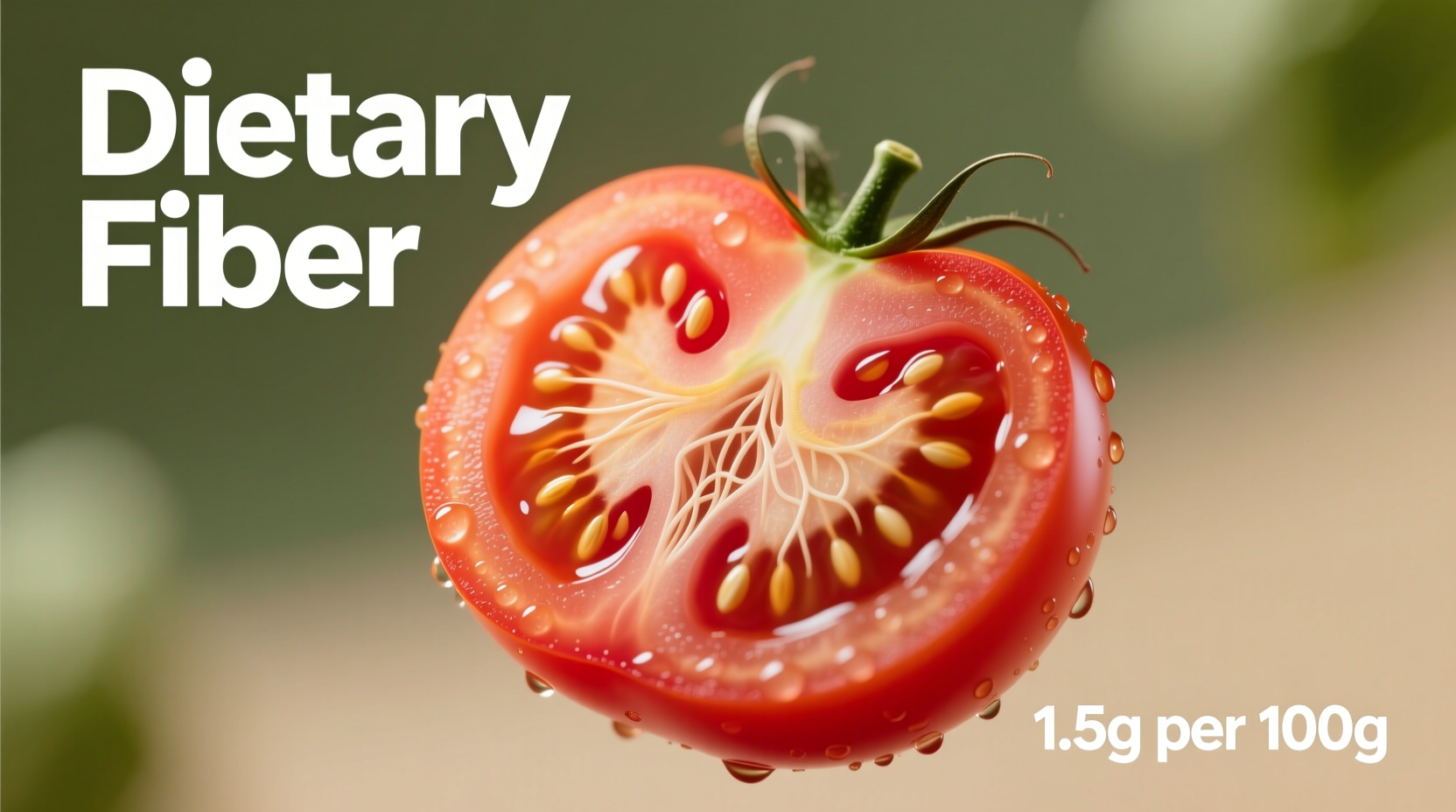
Why Tomato Fiber Matters for Your Daily Nutrition
When you're looking to boost your fiber intake naturally, tomatoes offer more than just lycopene and vitamin C. The dietary fiber in tomatoes plays a crucial role in digestive health, blood sugar regulation, and weight management. Unlike processed fiber supplements, tomatoes deliver fiber alongside a powerhouse of other nutrients in a form your body recognizes and utilizes effectively.
Breaking Down Tomato Fiber Content
The fiber composition in tomatoes varies by type and preparation method. Here's what USDA FoodData Central reveals about common tomato varieties:
| Tomato Type | Portion Size | Total Fiber (g) | Soluble Fiber | Insoluble Fiber |
|---|---|---|---|---|
| Raw medium tomato | 148g | 2.2 | 0.6 | 1.6 |
| Cherry tomatoes | 149g (about 1 cup) | 2.5 | 0.7 | 1.8 |
| Sun-dried tomatoes | 45g | 7.0 | 2.0 | 5.0 |
| Tomato paste | 123g | 6.5 | 1.8 | 4.7 |
Notice how processing affects fiber concentration? Sun-drying removes water but concentrates fiber and nutrients, making sun-dried tomatoes particularly fiber-dense. The USDA FoodData Central database confirms that retaining tomato skins preserves up to 30% more fiber than peeled tomatoes.
Science-Backed Health Benefits of Tomato Fiber
Research published in the American Journal of Clinical Nutrition demonstrates that the combination of soluble and insoluble fiber in tomatoes supports multiple aspects of health:
- Digestive regularity: The insoluble fiber adds bulk to stool while soluble pectin acts as a prebiotic, feeding beneficial gut bacteria
- Blood sugar management: A 2022 study in Nutrients found that tomato fiber slows glucose absorption, particularly beneficial for prediabetic individuals
- Cholesterol reduction: Soluble fiber binds to bile acids, prompting the liver to use cholesterol to create more bile
- Weight management support: High water and fiber content creates satiety with minimal calories
The National Institutes of Health notes that populations consuming traditional Mediterranean diets—rich in whole tomatoes—show 20% lower incidence of digestive disorders compared to Western diets low in plant fiber.

Tomato Fiber vs. Other Common Sources
While tomatoes aren't the highest fiber food available, they offer a balanced profile with practical advantages:
- Better absorption: Unlike some high-fiber foods that cause bloating, tomato fiber is generally well-tolerated
- Nutrient synergy: Fiber works alongside lycopene and vitamin C for enhanced health effects
- Versatility: Easily incorporated into meals without dramatically changing eating habits
According to the Dietary Guidelines for Americans, most adults need 25-38 grams of fiber daily, yet average intake remains below 17 grams. Adding just two medium tomatoes to your daily meals provides nearly 20% of your fiber needs in a delicious, nutrient-dense package.
Maximizing Fiber Benefits from Tomatoes
You don't need complicated recipes to harness tomato fiber benefits. These practical strategies make the most of every tomato:
- Eat the skin: Nearly half the fiber resides in the skin, so avoid peeling when possible
- Choose vine-ripened: Fully ripened tomatoes contain more developed fiber structures
- Combine with healthy fats: Pair with olive oil to enhance absorption of fat-soluble nutrients
- Try different preparations: Raw in salads, roasted for concentrated fiber, or as sauce in cooked dishes
- Include tomato seeds and jelly: The gel surrounding seeds contains valuable soluble fiber
Food scientists at Cornell University found that roasting tomatoes increases fiber bioavailability by breaking down cell walls while preserving fiber content. Their research, published in the Journal of Agricultural and Food Chemistry, shows that moderate cooking (up to 30 minutes at 180°C) actually enhances the functional properties of tomato fiber.
Special Considerations for Tomato Fiber Consumption
While tomatoes are generally well-tolerated, certain health conditions require attention to fiber intake:
- Irritable Bowel Syndrome: Those with IBS may need to monitor tomato fiber intake as part of a low-FODMAP diet during flare-ups
- Kidney stone risk: Tomatoes contain moderate oxalates, so those prone to calcium oxalate stones should balance intake with adequate hydration
- Medication interactions: High fiber intake can affect absorption of certain medications like beta-blockers
The Mayo Clinic recommends gradually increasing fiber intake and drinking plenty of water to prevent digestive discomfort. For most people, tomatoes present minimal risk while offering significant fiber benefits as part of a balanced diet.
Simple Ways to Add More Tomato Fiber to Your Diet
Incorporating more tomato fiber doesn't require dramatic dietary changes. These realistic strategies fit into any eating pattern:
- Add sliced tomatoes to sandwiches and wraps instead of lettuce
- Include cherry tomatoes in morning omelets or frittatas
- Blend whole tomatoes into smoothies for added fiber without altering flavor significantly
- Use tomato-based sauces as pizza or pasta bases instead of cream sauces
- Snack on sun-dried tomatoes (in olive oil, not sugar-packed varieties)
Registered dietitians note that consistent daily intake matters more than occasional high-fiber meals. Adding just one medium tomato to each meal provides approximately 6.6 grams of fiber—nearly a quarter of your daily needs from a single, versatile ingredient.




 浙公网安备
33010002000092号
浙公网安备
33010002000092号 浙B2-20120091-4