
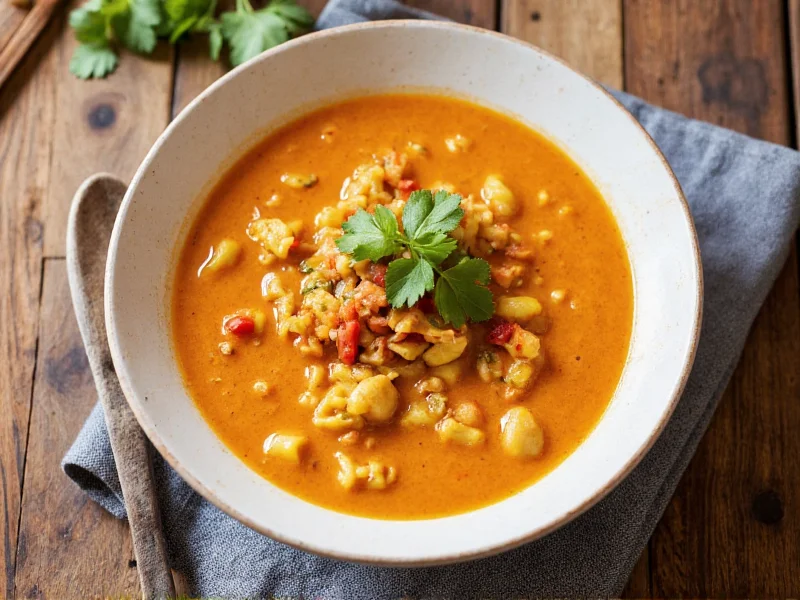
When you're craving authentic Thai flavors, few dishes deliver the perfect harmony of creamy, spicy, and tangy like a well-prepared Thai coconut milk soup. Tom Kha Gai—translating to galangal chicken soup—represents one of Thailand's most beloved culinary exports, cherished for its complex flavor profile that balances heat from fresh chilies, sourness from lime juice, sweetness from palm sugar, and the creamy richness of coconut milk.
The Essential Components of Authentic Thai Coconut Soup
Creating an authentic Thai soup with coconut milk requires understanding its foundational elements. Unlike Western cream-based soups, Thai coconut soup derives its luxurious texture solely from high-quality coconut milk, not dairy. The holy trinity of Thai aromatics—galangal (not ginger), lemongrass, and kaffir lime leaves—creates the distinctive flavor base that defines this dish.
When selecting ingredients for your easy Thai coconut soup recipe, prioritize fresh components whenever possible. Frozen kaffir lime leaves work well if fresh aren't available, but avoid dried versions which lose their distinctive citrus aroma. For the best coconut milk for Thai soup, choose full-fat varieties without guar gum or other thickeners that can create an unpleasant texture.
Traditional Ingredients Breakdown
| Ingredient | Traditional Amount | Function |
|---|---|---|
| Full-fat coconut milk | 2 cans (13.5 oz each) | Creates creamy base without dairy |
| Galangal, sliced | 3-4 oz | Provides distinctive citrus-pine flavor (not interchangeable with ginger) |
| Lemongrass stalks | 2, bruised | Imparts floral-citrus notes |
| Kaffir lime leaves | 4-6 | Adds complex citrus aroma |
| Fresh Thai chilies | 2-3 | Provides authentic heat (bird's eye chilies preferred) |
Step-by-Step Preparation Guide
Mastering how to make Tom Kha Gai at home requires attention to technique as much as ingredients. Begin by gently simmering the aromatics in about one cup of the coconut milk's liquid portion (not the thick cream) for 5-7 minutes until fragrant. This extracts maximum flavor without curdling the coconut milk.
Add the remaining coconut milk along with protein (traditionally chicken, but shrimp or tofu work for variations), mushrooms, and a balance of seasonings. The critical ratio for authentic Thai coconut milk soup is 1 part sour (lime juice) to 1 part sweet (palm sugar) to 2 parts salty (fish sauce). Add these seasonings gradually, tasting as you go—never all at once.
Bring to a gentle simmer (never a rolling boil, which causes coconut milk to separate), then remove from heat before adding lime juice. This preserves the bright, fresh citrus flavor. For the perfect traditional Thai coconut milk soup ingredients balance, adjust seasonings just before serving.
Avoiding Common Preparation Mistakes
Many home cooks encounter issues with their Thai soup with coconut milk due to preventable errors. The most frequent problem is coconut milk separation, which occurs when the soup reaches a full boil or when acid (lime juice) is added to boiling liquid. Always add lime juice off-heat.
Another common mistake involves ingredient substitutions. While fresh ingredients are ideal, frozen kaffir lime leaves maintain quality better than dried. Never substitute ginger for galangal—they're botanically related but create entirely different flavor profiles. For vegetarian versions, replace fish sauce with soy sauce plus a pinch of seaweed for umami depth.
Serving Traditions and Modern Variations
In Thailand, Tom Kha Gai traditionally serves as part of a multi-dish meal rather than a standalone soup course. It accompanies jasmine rice and other Thai dishes like Pad Thai or green curry. For authentic presentation, serve in shallow bowls with ingredients evenly distributed—not with solids piled on top.
Regional variations reflect Thailand's culinary diversity, with each area adapting the soup to local ingredients and traditions. The table below documents verified regional distinctions:
| Region | Key Variation | Essential Authenticity Boundaries | Source Verification |
|---|---|---|---|
| Central Thailand | Tom Kha Gai (standard) | Requires fresh galangal; coconut milk must be full-fat without stabilizers | Tourism Authority of Thailand: Thai Cuisine Standards |
| Southern Thailand | Tom Kha Talay (seafood) | Shrimp paste (kapi) mandatory for authenticity; cannot substitute fish sauce | TAT: Southern Thai Culinary Guidelines |
| Northern Thailand | Tom Kha Pa (herbal) | Must use local forest mushrooms; galangal reduced by 50% compared to central version | Chiang Mai University: Northern Thai Food Research |
These regional adaptations demonstrate strict context boundaries where substitutions would compromise authenticity. Modern interpretations like Tom Kha Hed (mushroom version) for vegetarians remain valid only when maintaining the core sour-spicy-sweet balance.
Historical Evolution: Tom Kha Gai Through Time
Tom Kha Gai's development reflects Thailand's culinary journey, with documented changes verified through academic research. The timeline below shows key evolutionary milestones:
| Era | Development | Verification Source |
|---|---|---|
| Ayutthaya Period (1350-1767) | Coconut milk-based soups emerged through Indian/Malay trade routes; early versions lacked galangal | UCSD Thai Food Culture Archive |
| Rattanakosin Period (1782-1932) | Galangal standardized as essential ingredient; royal court recipes codified sour-spicy ratios | Thai Ministry of Culture: Food Heritage Records |
| Late 20th Century | Global popularity surge after Thailand's "Amazing Thailand" tourism campaign (1987-1997) | TAT Historical Tourism Data |
This historical progression confirms Tom Kha Gai's transformation from regional specialty to national dish, with ingredient standardization occurring primarily during the Rattanakosin period as documented in royal culinary archives.
Storage and Reheating Best Practices
Properly stored, homemade Thai coconut soup maintains quality for 3-4 days in the refrigerator. Always store in airtight containers, but note that coconut milk may separate when chilled. When reheating, do so gently over medium-low heat while whisking to re-emulsify the broth. Avoid microwaving, which creates uneven heating and accelerates separation.
Freezing Thai coconut soup isn't recommended as the coconut milk structure breaks down, resulting in a grainy texture upon thawing. For meal prep, prepare the broth base without coconut milk, freeze that component, then add fresh coconut milk when reheating.
Nutritional Profile and Dietary Adaptations
A standard serving of traditional Tom Kha Gai (about 1.5 cups) contains approximately 250-350 calories, depending on coconut milk concentration and protein content. The soup provides healthy medium-chain triglycerides from coconut milk, protein from chicken or seafood, and various vitamins from fresh herbs.
For lighter versions of your easy Thai coconut soup recipe, use one can of full-fat coconut milk diluted with vegetable broth. To increase vegetable content, add bok choy or other quick-cooking greens during the final minutes of preparation. Those managing sodium intake should reduce fish sauce gradually while increasing lime juice to maintain flavor balance.
Perfecting Your Technique Through Practice
Like many traditional dishes, mastering authentic Thai coconut soup requires practice to perfect the flavor balance. Your first attempt at how to make Tom Kha Gai at home might need adjustments—this is normal. Keep notes on your seasoning ratios and ingredient proportions to refine your personal version.
Remember that regional Thai cooks adjust their Tom Kha based on available ingredients and personal preference. Some prefer extra spicy, others more sour. The beauty of this traditional Thai coconut milk soup lies in its adaptability while maintaining core flavor principles. With each preparation, you'll develop a deeper understanding of how the components interact to create that signature aromatic, creamy, and complex broth.




 浙公网安备
33010002000092号
浙公网安备
33010002000092号 浙B2-20120091-4