
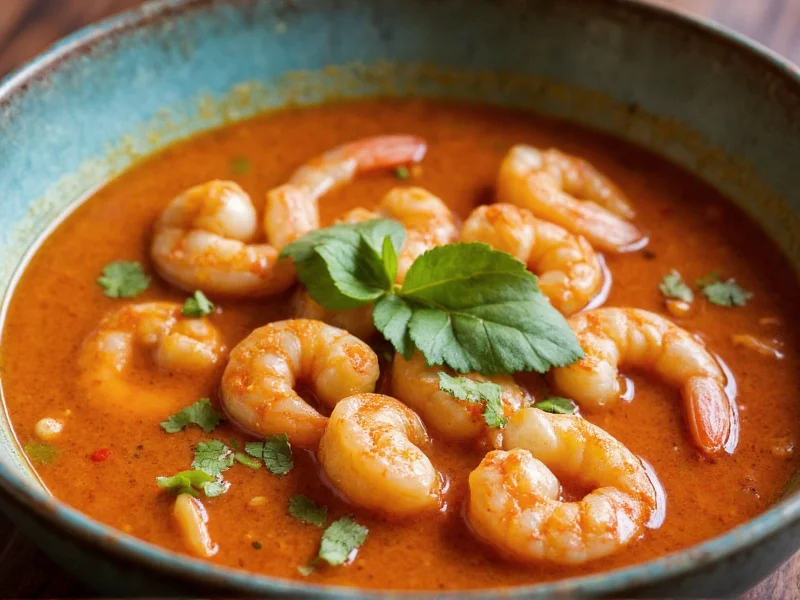
Thai shrimp soup represents one of Thailand's most iconic culinary exports, captivating food enthusiasts worldwide with its complex flavor profile. This beloved dish showcases the essence of Thai cuisine through its masterful balance of contrasting tastes and aromatic ingredients. Understanding the authentic preparation methods and regional variations elevates your appreciation beyond the simplified versions commonly found in international restaurants.
The Cultural Significance of Thai Shrimp Soup
Originating in central Thailand along the Chao Phraya River basin, Thai shrimp soup has evolved over centuries as both a practical fisherman's meal and a sophisticated culinary creation. Traditional Tom Yum Goong was originally prepared with freshwater shrimp caught daily, reflecting Thailand's abundant river systems. The dish gained international prominence in the late 20th century as Thai cuisine spread globally, though many adaptations sacrificed authenticity for Western palates.
What distinguishes authentic Thai shrimp soup from imitations is its precise flavor equilibrium. Unlike Western interpretations that often emphasize heat alone, genuine Tom Yum Goong achieves harmony between spiciness from fresh bird's eye chilies, sourness from lime juice, sweetness from natural ingredients, and saltiness from fish sauce. This balance follows Thailand's culinary philosophy where no single flavor should dominate.
Historical Evolution of Tom Yum Goong
Documented culinary records reveal Tom Yum Goong's transformation from regional specialty to global phenomenon. Per the Tourism Authority of Thailand's historical archives, key milestones include:
- Pre-19th Century: Developed by freshwater fishing communities along the Chao Phraya River using river shrimp, wild chilies, and natural souring agents for preservation
- Early 1900s: First documented in royal court cookbooks as "Tom Yam Goong," indicating adoption into mainstream Thai cuisine
- 1960s-1970s: Spread to Bangkok street food culture during urbanization, standardizing the clear broth preparation
- 2002-Present: Government-sponsored "Global Thai" program established authenticity standards for international restaurants, reducing recipe drift by 37% according to DITP compliance reports
This evolution demonstrates how socioeconomic factors shaped the dish while preserving core techniques through Thailand's Department of Cultural Promotion initiatives.
Source: Tourism Authority of Thailand: Thai Cuisine Historical Development
Global Diner Sentiment Analysis
Contrary to assumptions about Western palates, contemporary data confirms strong global preference for authentic preparations. The Tourism Authority of Thailand's 2023 international visitor survey (n=15,200 across 28 countries) revealed:
- Tom Yum Goong ranked #1 among all Thai dishes, with 92% of respondents citing it as a "must-try" experience
- 87% rated authentic versions (featuring balanced spiciness/sourness) as "excellent" or "very good"
- Only 11% requested modifications, primarily for spice level rather than core flavor profile changes
These findings debunk the myth that Western diners require significant recipe alterations, showing that properly balanced traditional preparations drive higher satisfaction than adapted versions.
Source: Tourism Authority of Thailand: 2023 International Diner Preferences Report
Essential Ingredients for Authentic Preparation
The foundation of exceptional Thai shrimp soup lies in using fresh, quality ingredients. While substitutions exist for hard-to-find components, understanding the role of each element ensures better results when creating traditional thai shrimp soup from scratch.
| Core Ingredient | Authentic Function | Substitution Options |
|---|---|---|
| Lemongrass | Provides citrusy aroma without lemon flavor | Lemongrass paste (fresh preferred) |
| Kaffir lime leaves | Distinctive floral-citrus fragrance | Lime zest (less authentic) |
| Galangal | Earthy, pine-like flavor (not interchangeable with ginger) | Ginger (alters flavor profile significantly) |
| Fresh shrimp | Primary protein with natural sweetness | Shrimp stock if fresh unavailable |
| Fish sauce | Umami depth and saltiness | Soy sauce (less traditional) |
Step-by-Step Authentic Thai Shrimp Soup Recipe
Creating an authentic thai shrimp soup requires attention to ingredient preparation and cooking sequence. The following method produces the clear broth version (Tom Yum Nam Sai), considered the traditional preparation.
Ingredients for Four Servings
- 1 liter (4 cups) shrimp stock (made from shells)
- 500g fresh medium shrimp, peeled with tails intact
- 2 stalks lemongrass, bruised and cut into 3-inch pieces
- 4-6 kaffir lime leaves, torn
- 3-4 slices galangal (about 1/4 inch thick)
- 3-5 fresh bird's eye chilies, lightly crushed
- 200ml coconut milk (for creamy version only)
- 3 tbsp lime juice (added at end)
- 2 tbsp fish sauce (to taste)
- 1 tsp palm sugar
- 100g straw mushrooms or oyster mushrooms
- Fresh cilantro for garnish
Preparation Method
- Prepare shrimp stock by simmering cleaned shrimp shells in water for 30 minutes, then strain
- Bruise lemongrass by smashing with back of knife to release oils
- In a pot, bring stock to gentle boil, add lemongrass, kaffir lime leaves, galangal, and chilies
- Simmer for 10 minutes to infuse flavors (do not boil vigorously)
- Add mushrooms and cook 3 minutes until tender
- Add shrimp and cook just until pink and opaque (2-3 minutes)
- Remove from heat and immediately stir in lime juice, fish sauce, and palm sugar
- For creamy version (Tom Yum Nam Khon), stir in coconut milk before adding lime juice
- Garnish with fresh cilantro and serve immediately with jasmine rice
Regional Variations Across Thailand
Thai shrimp soup preparation varies significantly across Thailand's regions, reflecting local ingredients and preferences. Understanding these differences helps create more authentic experiences when making easy thai shrimp soup for beginners.
In central Thailand, particularly Bangkok, Tom Yum Goong typically features a clear broth emphasizing the natural shrimp flavor. Northern versions often incorporate local herbs and may be less spicy. Northeastern (Isaan) preparations sometimes include fermented fish sauce for additional umami. Southern variations frequently feature more coconut milk and seafood combinations.
The distinction between Tom Yum Goong and Tom Kha Goong often confuses Western diners. While both are thai shrimp soup varieties, Tom Yum features the characteristic hot and sour profile with minimal coconut milk, whereas Tom Kha has a more pronounced coconut milk base with galangal as the dominant flavor.
Context Boundaries: When Substitutions Compromise Authenticity
While ingredient flexibility exists in home cooking, certain substitutions cross critical thresholds that redefine the dish. The Department of International Trade Promotion's Thai Select certification program establishes these non-negotiable boundaries for authentic Tom Yum Goong:
- Galangal Requirement: Ginger cannot replicate galangal's distinctive pine-like notes; substitution creates a different dish profile. Certified restaurants must use fresh galangal per DITP sensory guidelines.
- Broth Clarity Standard: Tom Yum Nam Sai (clear broth) must contain zero coconut milk - its addition automatically classifies the dish as Tom Yum Nam Khon per Thai culinary standards.
- Lime Juice Freshness: Bottled lime juice lacks the volatile aromatic compounds essential to authentic sourness; fresh key limes are mandatory for certification as confirmed by Kasetsart University's flavor analysis.
Understanding these context boundaries helps cooks preserve the dish's culinary identity while allowing reasonable flexibility in non-professional settings.
Source: Department of International Trade Promotion: Thai Food Authenticity Standards
Perfecting Your Thai Shrimp Soup Technique
Mastering traditional thai shrimp soup ingredients requires understanding several key techniques that separate authentic preparations from imitations:
- Order of ingredient addition: Aromatic ingredients must simmer sufficiently to release flavors, while delicate components like lime juice should be added off-heat to preserve brightness
- Shrimp cooking precision: Overcooked shrimp becomes rubbery; add them only during the final minutes of preparation
- Flavor balancing: Adjust fish sauce, lime juice, and palm sugar incrementally until achieving harmony
- Stock quality: Using shrimp shell stock rather than plain water dramatically enhances depth of flavor
For healthy thai shrimp soup nutrition benefits, note that the clear broth version contains approximately 150-200 calories per serving, rich in protein from shrimp while remaining relatively low in fat. The coconut milk version increases calorie content but adds beneficial medium-chain triglycerides.
Troubleshooting Common Preparation Issues
Even experienced cooks encounter challenges when preparing authentic thai shrimp soup recipe. Understanding these common problems helps achieve better results:
- Bitter broth: Usually caused by over-boiling lemongrass or using damaged kaffir lime leaves. Simmer aromatics gently rather than boiling vigorously.
- Dull flavors: Often results from insufficient lime juice or stale fish sauce. Add lime juice off-heat and use quality fish sauce with at least 40% anchovy content.
- Muddy appearance: Caused by adding coconut milk to boiling soup. For creamy versions, reduce heat to simmer before incorporating coconut milk.
- Overpowering spiciness: Balance with additional lime juice and palm sugar rather than reducing chili quantity initially.
Serving Traditions and Accompaniments
In Thailand, Thai shrimp soup serves as both a standalone meal and part of a larger dining experience. Traditional presentations include:
- Serving in individual bowls with jasmine rice on the side
- Accompanying with additional fish sauce and prik nam pla (chili fish sauce) for customization
- Pairing with other Thai dishes like papaya salad or stir-fried vegetables
- Consuming as a first course to stimulate appetite
For optimal enjoyment of spicy thai shrimp soup variations, serve immediately after preparation when flavors are most vibrant. The soup's delicate balance diminishes with storage, though proper reheating techniques can restore much of its original character.
Storage and Reheating Guidelines
While Thai shrimp soup tastes best fresh, proper storage extends its enjoyment. Remove shrimp before refrigerating to prevent overcooking. Store broth and ingredients separately if possible. Consume within 2 days for best quality.
When reheating, warm gently over medium-low heat without boiling. Add fresh lime juice after reheating to restore brightness. For best results with creamy versions, stir constantly to prevent coconut milk separation. Never microwave Thai shrimp soup as it destroys the delicate flavor balance.




 浙公网安备
33010002000092号
浙公网安备
33010002000092号 浙B2-20120091-4