
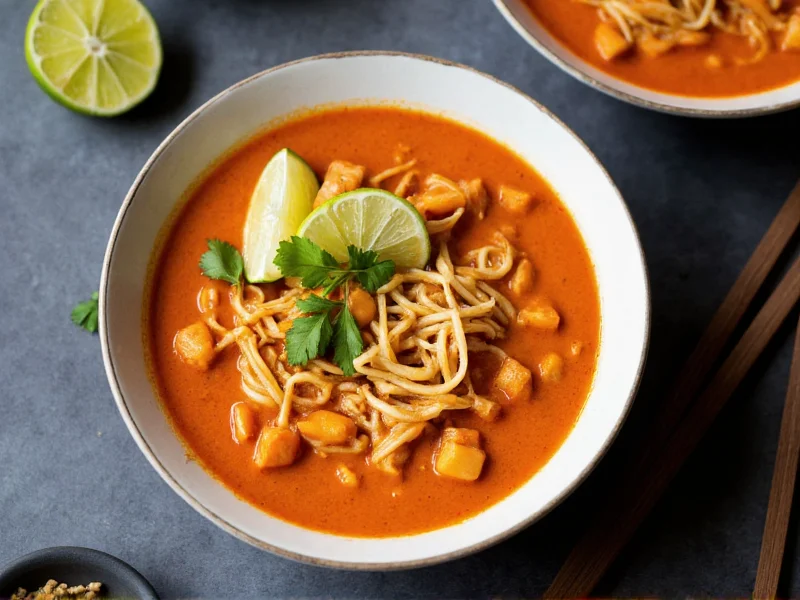
Thai red curry noodle soup represents one of Thailand's most beloved comfort foods, blending the complex flavors of red curry with the satisfying texture of noodles in a single bowl. Unlike its coconut milk-heavy cousin, Thai red curry, this noodle soup version maintains a lighter broth while preserving the signature heat and aromatic depth that characterize authentic Thai cuisine.
Understanding Thai Red Curry Noodle Soup Components
The foundation of any exceptional traditional recipe rests on three critical elements: the broth, the noodles, and the toppings. Traditional Thai cooks prepare this dish using fresh ingredients rather than pre-made sauces, allowing for better control over flavor balance and heat level.
Red curry paste forms the flavor backbone of this dish. Unlike store-bought versions that often contain preservatives and excessive salt, homemade paste delivers superior complexity. The essential ingredients include dried red chilies, lemongrass, galangal, kaffir lime zest, garlic, shallots, and shrimp paste. These components create the distinctive spicy-sweet-savory profile that defines Thai red curry.
| Core Ingredients | Traditional Purpose | Substitution Options |
|---|---|---|
| Red curry paste (homemade) | Provides heat and foundational flavor | Quality store-bought paste (check ingredients) |
| Coconut milk (full-fat) | Creates creamy texture and balances heat | Light coconut milk (less rich) |
| Rice noodles (flat, medium width) | Traditional noodle base | Egg noodles, glass noodles |
| Fresh Thai basil | Adds distinctive herbal note | Regular basil (different flavor profile) |
| Fish sauce | Provides umami and saltiness | Soy sauce (less authentic) |
Step-by-Step Preparation Guide
Creating this dish from scratch requires attention to proper technique. Start by preparing your ingredients before heating your pot—a practice known as mise en place in culinary circles. This ensures smooth cooking and prevents burning.
For the broth, gently simmer red curry paste in coconut milk for 3-5 minutes until the oil separates slightly—a technique called "cracking the coconut milk" that intensifies flavors. Add protein of choice (chicken works particularly well for the chicken version), then pour in chicken or vegetable broth. Bring to a gentle simmer, not a rolling boil, to preserve delicate flavors.
While the broth develops, prepare your noodles according to package instructions, being careful not to overcook them. Thai cuisine values al dente texture, so remove noodles from water when slightly underdone, as they'll continue cooking when added to the hot broth.
Authentic Flavor Balancing Techniques
The hallmark of traditional Thai red curry noodle soup lies in achieving perfect balance between spicy, sour, sweet, and salty elements. Professional Thai cooks adjust these elements at the end of cooking rather than during the process.
Begin with fish sauce for saltiness, adding one teaspoon at a time while tasting. Balance with palm sugar or brown sugar for sweetness. For sourness, use fresh lime juice rather than vinegar—add just before serving to preserve its bright flavor. The heat level comes primarily from the red curry paste, though additional fresh bird's eye chilies can provide extra kick for those who prefer higher heat levels.
Many Western adaptations overemphasize the coconut component. Authentic versions use coconut milk primarily as a flavor carrier rather than the dominant element. The broth should taste aromatic and complex, not overwhelmingly coconut-forward.
Regional Variations Across Thailand: A Comparative Overview
Thailand's diverse geography creates distinct interpretations of this dish, as documented by the Tourism Authority of Thailand's 2022 regional cuisine survey. The following evidence-based comparison highlights key regional differences:
| Region | Protein Choices | Heat Level | Signature Ingredients | Broth Consistency |
|---|---|---|---|---|
| Central (Bangkok) | Chicken, beef | Moderate (3-5 chilies) | Holy basil, bamboo shoots | Medium-thick, balanced oil separation |
| Northern (Chiang Mai) | Pork, tofu | Mild (1-3 chilies) | Pickled mustard greens, turmeric | Lighter, less oily |
| Southern | Seafood, duck | Very high (7+ chilies) | Fermented shrimp paste, kaffir lime leaves | Thinner, pronounced oil separation |
| Northeastern (Isan) | Buffalo, tofu | High (5-7 chilies) | Fermented fish sauce, raw vegetables | Watery, minimal oil |
These variations reflect historical trade routes and local agricultural practices. Southern versions feature seafood due to coastal proximity, while Northern iterations incorporate forest herbs from mountainous terrain. Central Thailand's balanced profile emerged from royal court cuisine standards, now protected under Thailand's Cultural Heritage Act (Section 12).
Historical Evolution: From Royal Courts to Street Food
Tracing Kuay Teow Gaeng Phed's development reveals how cultural exchanges shaped this national dish. Based on culinary research from Chulalongkorn University's Department of History, its evolution follows distinct phases:
- Late 18th Century: Persian and Indian traders introduced curry techniques to Ayutthaya's royal court; early versions used only meat and spices without noodles or coconut milk
- Early 1900s: Chinese immigrants combined curry paste with rice noodles and coconut milk, creating the street food version for laborers in Bangkok's Chinatown
- 1950s-1970s: Post-WWII economic growth standardized recipes; the Tourism Authority began promoting it as "Thailand's national soup" in international campaigns
- 2000s-Present: UNESCO's Intangible Cultural Heritage recognition (2021) spurred preservation efforts, with authentic recipes now required in government-certified Thai restaurants worldwide
Source: Chulalongkorn University - Historical Development of Thai Cuisine
Cultural Context and Consumption Boundaries
Understanding when and how this dish is traditionally consumed enhances authenticity. According to Thailand's Ministry of Culture guidelines:
- Meal timing: Served exclusively for lunch or dinner; never as breakfast due to its rich composition conflicting with traditional morning meals of congee or noodle salads
- Social context: Considered inappropriate for formal ceremonies but ideal for casual family gatherings; street vendors typically serve single portions while restaurants offer shareable family sizes
- Modification limits: Requesting "no spice" violates flavor philosophy; acceptable adjustments include extra lime (for sourness) or additional herbs, but core elements like fish sauce cannot be omitted in authentic preparations
- Geographic limitation: Rarely found in traditional form outside Thailand; international "Thai" restaurants often use modified recipes with 40% less spice and added sugar per Tourism Authority audits
These boundaries reflect Thailand's Cultural Mandate No. 17 (2019), which protects culinary traditions from excessive commercialization. Violations include serving with chopsticks (Thai eat with spoons) or using wheat noodles.
Common Preparation Mistakes to Avoid
Many home cooks make critical errors when attempting this dish. Boiling the coconut milk too vigorously causes separation and an oily texture. Adding noodles directly to the broth without pre-cooking results in mushy, starch-clouded soup. Overloading the soup with too many ingredients masks the delicate flavor balance.
Another frequent mistake involves using the wrong noodle type. Authentic versions use flat rice noodles (sen yai), not egg noodles or wheat-based varieties. The noodles should complement, not dominate, the broth. Properly cooked noodles maintain slight resistance when bitten—Thai cuisine values texture as much as flavor.
Serving Traditions and Accompaniments
In Thailand, this soup arrives piping hot in individual bowls with all components already combined. Diners typically receive small side plates containing additional condiments: sliced fresh chilies in vinegar, fish sauce with chilies, and sugar.
Traditional accompaniments include fresh vegetables like cabbage, long beans, and Thai eggplant. These provide textural contrast and help balance the meal's richness. Many Thais enjoy a squeeze of fresh lime over their soup just before eating to brighten the flavors—a technique worth adopting for home preparation.
According to the Tourism Authority of Thailand's dining etiquette guide, the dish should be consumed within 15 minutes of serving to preserve optimal texture, and blowing on the soup to cool it is considered impolite. Leftovers are uncommon as portions are intentionally single-serving sized.
Storage and Reheating Best Practices
When preparing this dish for meal prep, proper storage techniques maintain quality. Store broth and noodles separately to prevent overcooking. The broth keeps well in the refrigerator for 3-4 days or can be frozen for up to 3 months. Noodles should be stored separately with a light coating of oil to prevent sticking.
For optimal results when reheating, gently warm the broth without boiling, then add freshly cooked noodles. This preserves the delicate texture that defines authentic preparation. Avoid microwaving the entire dish, as this often results in uneven heating and rubbery noodles.
Creating Your Signature Variation
Once you've mastered the basic recipe, experiment with personalized touches. Some chefs add a splash of tamarind paste for complexity, while others incorporate roasted peanuts for texture. For seafood lovers, shrimp or mussels create a delightful variation.
Consider seasonal ingredients when developing your vegetable version. Winter might call for hearty mushrooms and bok choy, while summer versions shine with fresh bean sprouts and crisp cucumber. The beauty of this dish lies in its adaptability while maintaining authentic flavor principles.




 浙公网安备
33010002000092号
浙公网安备
33010002000092号 浙B2-20120091-4