
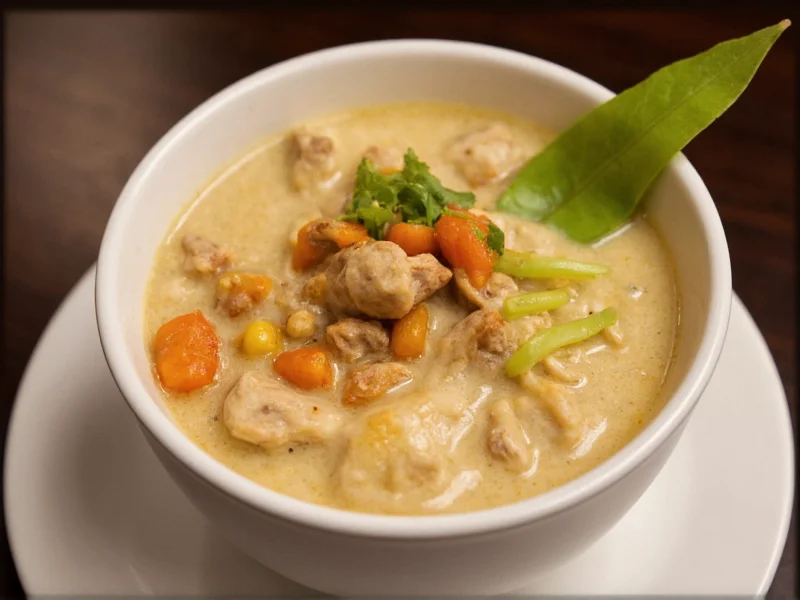
Tom Kha Gai represents one of Thailand's most beloved culinary treasures, originating from central Thai cuisine where coconut milk-based soups have been perfected over generations. Unlike the more famous Tom Yum, which features a clear broth, Tom Kha Gai's creamy texture comes from generous amounts of coconut milk that mellow the dish's signature heat while enhancing its aromatic profile.
The Cultural Significance of Tom Kha Gai
In Thai culinary tradition, soups serve as essential components of balanced meals rather than mere starters. Tom Kha Gai typically appears as part of a multi-dish spread, complementing rice and other curries. The name itself reveals its composition: "Tom" means boiled, "Kha" refers to galangal (not ginger), and "Gai" indicates chicken. This precise naming convention reflects Thai cuisine's emphasis on ingredient authenticity.
The dish's evolution reflects Thailand's culinary history. While coconut-based soups have ancient roots in Thai cuisine, the addition of chili peppers—a New World ingredient introduced by Portuguese traders in the 16th century—transformed Tom Kha into the spicy-sour profile we recognize today [1]. This historical adaptation exemplifies Thai cuisine's ability to integrate foreign elements while maintaining distinctive flavor balance.
Essential Ingredients and Their Roles
Creating authentic Thai chicken and coconut soup requires specific ingredients that work in harmony. Substitutions often compromise the dish's integrity, though minor adjustments can accommodate dietary needs without sacrificing core flavors.
| Ingredient | Traditional Role | Substitution Notes |
|---|---|---|
| Galangal | Provides distinctive citrusy, pine-like flavor | Ginger creates different flavor profile; not recommended |
| Kaffir lime leaves | Contributes floral, citrus aroma | Lime zest works in pinch but lacks complexity |
| Lemongrass | Adds bright, lemony notes | Lemon zest with lemon extract as last resort |
| Fish sauce | Provides umami and saltiness | Soy sauce for vegetarian version (reduces authenticity) |
| Coconut milk | Creates creamy texture and balances heat | Full-fat version essential for proper mouthfeel |
Step-by-Step Preparation Guide
Mastering traditional Thai soup with coconut milk requires attention to technique as much as ingredients. Follow these steps for restaurant-quality results:
- Prepare the aromatics: Bruise 2 stalks of lemongrass (white part only) with the back of your knife and cut into 2-inch pieces. Slice 3-4 kaffir lime leaves into thin strips. Cut 3-4 slices of galangal (about 1/8 inch thick).
- Create the broth base: In a medium pot, combine 4 cups of chicken broth with lemongrass, galangal, and kaffir lime leaves. Bring to a gentle simmer for 10 minutes to infuse flavors.
- Add coconut milk: Stir in 1 can (13.5 oz) of full-fat coconut milk. Do not boil vigorously as this may cause separation.
- Incorporate protein: Add 1 lb of boneless chicken thighs (cut into bite-sized pieces) and simmer until cooked through (about 8-10 minutes).
- Season to perfection: Add 2-3 tablespoons of fish sauce, 1-2 Thai bird chilies (sliced), and the juice of 1 lime. Taste and adjust seasoning—remember Thai flavors should balance sweet, sour, salty, and spicy elements.
- Final touches: Remove aromatics if desired (optional), stir in 4 oz of straw mushrooms, and garnish with fresh cilantro before serving.
Avoiding Common Preparation Mistakes
Many home cooks encounter challenges when attempting this authentic Thai chicken coconut soup recipe. Understanding these pitfalls ensures better results:
- Boiling coconut milk too vigorously: High heat causes coconut milk to separate. Maintain a gentle simmer after adding coconut milk.
- Using ginger instead of galangal: While related, these rhizomes have distinct flavor profiles. Ginger creates a completely different dish.
- Overcooking aromatics: Infusing the broth for 10-15 minutes is sufficient. Longer cooking makes flavors bitter.
- Adding lime juice too early: Acidic ingredients lose brightness when cooked too long. Add lime juice at the very end.
- Using light coconut milk: Full-fat coconut milk provides the necessary richness and mouthfeel that defines this soup.
Variations and Dietary Adaptations
While traditional preparation remains unmatched, thoughtful adaptations can accommodate various dietary needs without sacrificing essential character:
- Vegetarian/Vegan version: Substitute chicken broth with vegetable broth, use tofu instead of chicken, and replace fish sauce with soy sauce or vegan fish sauce alternative. Add extra mushrooms for umami depth.
- Seafood Tom Kha: Replace chicken with shrimp or a combination of shrimp and fish. Add seafood 3-4 minutes before serving to prevent overcooking.
- Milder version for sensitive palates: Reduce or omit bird chilies, and increase coconut milk proportion slightly to balance flavors.
- Gluten-free preparation: Ensure fish sauce is gluten-free (many traditional brands are), or use certified gluten-free alternatives.
Serving Traditions and Pairings
Understanding the contextual boundaries of Tom Kha Gai enhances its authentic enjoyment. As documented by Thailand's Tourism Authority, traditional Thai meals follow a specific structural principle where soups function as integral components of the main course rather than standalone starters [2]. This dish excels in cooler seasons due to its warming properties, but its rich coconut base becomes contextually inappropriate in extreme heat without fat reduction. Crucially, authenticity is bounded by ingredient availability—substituting galangal with ginger fundamentally transforms the dish into a different culinary entity. Tom Kha Gai serves as part of a balanced meal rather than a standalone dish. Understanding proper serving enhances the authentic experience:
- Traditionally served in small bowls alongside steamed jasmine rice
- Often accompanied by other dishes like stir-fries or curries
- Best enjoyed immediately while hot—the flavors diminish upon cooling
- Never served as a first course in authentic Thai dining
- Complements dishes with contrasting textures, like crispy spring rolls
Storage and Reheating Guidelines
While Tom Kha Gai tastes best fresh, proper storage maintains quality for later enjoyment:
- Cool completely before transferring to airtight containers
- Refrigerate for up to 3 days (flavors often improve overnight)
- Freeze for up to 2 months in portion-sized containers
- Reheat gently over medium-low heat, stirring frequently
- Never boil when reheating—this causes coconut milk separation
- Add fresh lime juice after reheating to restore brightness
Why Authentic Ingredients Matter
Creating genuine Thai chicken and coconut soup requires understanding why certain ingredients are non-negotiable. Galangal, for instance, contains unique compounds that give Tom Kha its distinctive flavor profile—different from ginger's sharper heat. Kaffir lime leaves contribute complex citrus notes impossible to replicate with regular limes. These elements combine to create the layered complexity that defines authentic Thai cuisine.
When shopping for ingredients, seek Asian grocery stores for the freshest options. Frozen galangal and kaffir lime leaves often maintain better quality than dried versions found in standard supermarkets. Freshness directly impacts the final dish's aromatic quality and overall balance.
Perfecting Your Technique
Mastering easy Thai coconut soup preparation involves more than following steps—it requires understanding the cooking process. The order of operations matters significantly: infusing the broth with aromatics first creates a flavor foundation, while adding acidic elements last preserves their brightness. Tasting throughout the process allows for precise adjustments that transform good soup into exceptional soup.
Professional chefs emphasize the importance of balancing the four fundamental Thai flavors. When seasoning your Tom Kha Gai, consider adding small increments of fish sauce (saltiness), palm sugar (sweetness), lime juice (sourness), and chilies (spiciness) while tasting after each addition. This incremental approach prevents over-seasoning and achieves the harmonious balance Thai cuisine celebrates.




 浙公网安备
33010002000092号
浙公网安备
33010002000092号 浙B2-20120091-4