
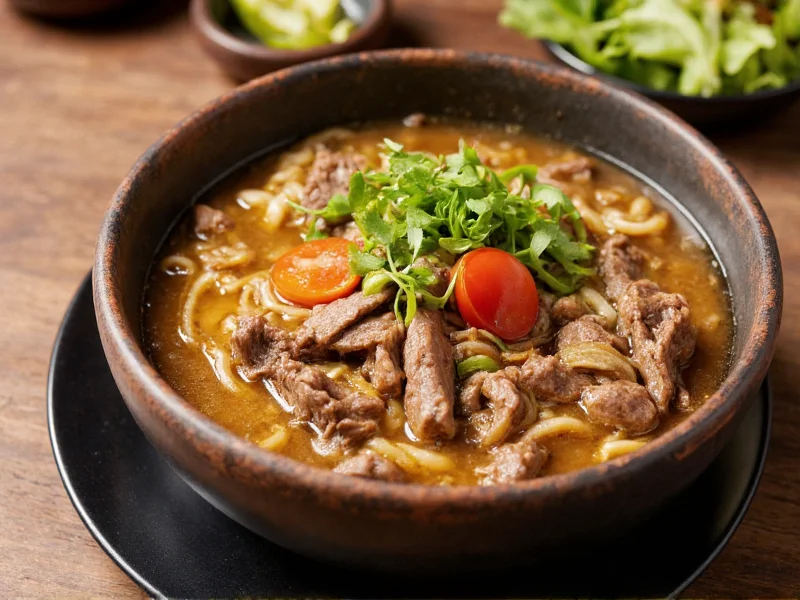
Why Your Homemade Thai Beef Noodle Soup Falls Short
Most home attempts yield muddy-tasting broth or chewy beef because they skip Thailand’s foundational techniques. Western adaptations often overload soy sauce or pre-cook beef, destroying the delicate balance that defines authentic gwaytio nuea nam. The real magic happens in the broth’s clarity and the beef’s silkiness—achieved only through precise temperature control and ingredient sequencing.
Decoding Authenticity: The Holy Trinity of Flavor
Thai culinary tradition centers on the saam klerr (“three aromatics”): coriander root, black peppercorns, and garlic. Unlike Chinese or Vietnamese broths, Thai versions exclude star anise and cinnamon, relying solely on these three elements for depth. As Cook with Ipoh Bunny confirms, “This trio creates the distinctive floral-peppery base no store-bought stock replicates.”
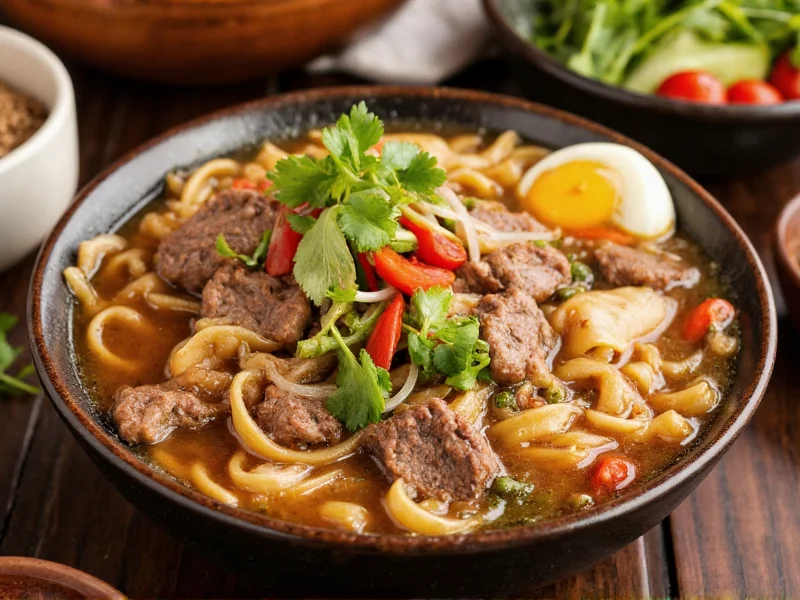
| Element | Authentic Approach | Common Mistake |
|---|---|---|
| Broth Base | Beef bones simmered 4-6 hours (never boiled) | Store-bought broth or rapid boiling |
| Beef Preparation | Raw slices added to hot broth (Hot Thai Kitchen technique) | Pre-cooked or seared beef |
| Noodle Type | Wet rice sheets (refrigerated section) | Dried noodles without soaking |
| Salt Component | Fish sauce (Tiparos brand) | Soy sauce dominance |
Building Your Broth: Step-by-Step Precision
Follow this verified sequence from Hot Thai Kitchen:
- Parboil bones: Simmer 2 lb beef/veal bones in 3L water for 10 minutes. Discard water to remove impurities.
- Build base: Add fresh water, 1 halved onion, 6 garlic cloves, ½ tsp cracked black peppercorns, and 3 cilantro roots. Simmer gently (180°F/82°C) for 4-6 hours.
- Finish seasoning: Stir in 2-3 tbsp fish sauce, 1-2 tsp sugar, and optional galangal slices 10 minutes before serving.
When to Use (and Avoid) Shortcuts
Acceptable when: Using bovril (beef paste) + 1 tbsp fish sauce + 1 tsp sugar replicates depth when bones are unavailable (Cook with Ipoh Bunny). Ideal for weeknight meals.
Never compromise:
- Boiling broth: Temperatures above 200°F toughen beef and create cloudy broth
- Dried noodles: Must soak 30 minutes in cold water—never use unsoaked
- Fish sauce substitution: Soy sauce alters the fundamental flavor profile
Quality Checks: Spotting Authenticity
True Thai beef noodle soup meets these criteria:
- Broth clarity: Translucent with visible herb fragments (cloudiness = boiling error)
- Beef texture: Silky and slightly pink in center (overcooked = gray and rubbery)
- Sodium balance: 800-1,000mg sodium per serving (Eat This Much data)—exceeding 1,200mg suggests soy sauce overuse
Avoid restaurants advertising “spicy” versions—authentic Thai beef noodle soup is never chili-forward; heat comes solely from black pepper.
Everything You Need to Know
Yes, but they require 30 minutes soaking in cold water before cooking. Thai Food.com specifies that skipping this step yields brittle noodles that break in broth. Wet sheets (refrigerated section) are preferred for authentic texture.
Cloudiness occurs when broth boils vigorously. Authentic preparation requires simmering below 200°F (93°C) as confirmed by Cook with Ipoh Bunny. Boiling emulsifies fat into the liquid. Strain through cheesecloth if cloudiness happens, but prevention is key.
Separate broth and solids immediately. Broth keeps 3 days refrigerated or 2 months frozen. Noodles and beef should be consumed within 24 hours as Eat This Much notes the high protein content risks spoilage. Never store assembled bowls.
Per Eat This Much nutritional analysis, a standard serving provides 523 kcal with 31g protein, 57g carbs, and 7g fiber. Sodium ranges 800-1,000mg—within healthy limits if using fish sauce instead of soy. Avoid adding extra salt.
Adding chili or five-spice powder. Authentic Thai beef noodle soup (gwaytio nuea nam) relies solely on black pepper for heat. As Cook with Ipoh Bunny emphasizes, “The holy trinity is coriander root, garlic, and black pepper—no extras.” Spices like star anise belong in Vietnamese pho.




 浙公网安备
33010002000092号
 浙B2-20120091-4