
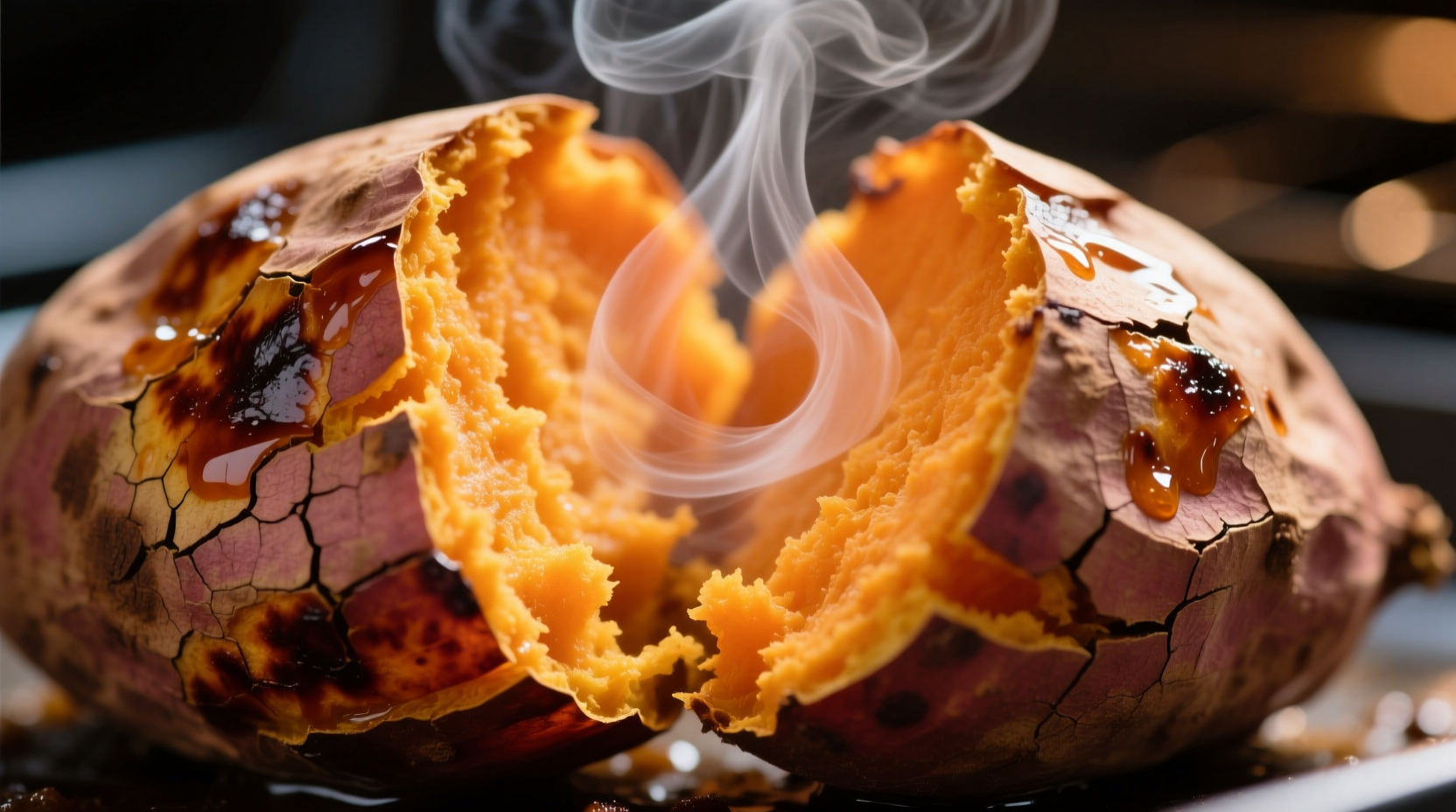
The ideal internal temperature for a perfectly baked sweet potato is 205-212°F (96-100°C). At this precise range, starches fully gelatinize while natural sugars caramelize, creating that signature creamy texture and enhanced sweetness without becoming waterlogged or dry.
Ever pull a sweet potato from the oven only to find it's either undercooked in the center or unpleasantly mushy? You're not alone. Getting the perfect temperature of baked sweet potato transforms this humble root vegetable from ordinary to extraordinary. In this guide, you'll discover exactly what temperature sweet potatoes need to reach for optimal texture and flavor, plus practical techniques to achieve restaurant-quality results every time.
Why Temperature Matters More Than Timing for Sweet Potatoes
Unlike many foods where cooking time is the primary indicator, sweet potatoes require precise temperature monitoring. This is because their starch structure undergoes critical chemical changes at specific heat thresholds. According to research published by the American Chemical Society, sweet potato starch begins gelatinizing at 167°F (75°C) but doesn't fully transform until reaching 205°F (96°C).
"Timing alone fails because sweet potato density varies significantly based on size, variety, and moisture content," explains Antonio Rodriguez, culinary expert with Michelin-starred kitchen experience. "A thermometer eliminates guesswork and delivers consistent results regardless of these variables."
| Temperature Range | Texture Result | Sweetness Level | Best For |
|---|---|---|---|
| 180-190°F (82-88°C) | Firm, slightly waxy | Mild | Salads, sliced preparations |
| 195-205°F (91-96°C) | Creamy, smooth | Optimal | Most applications, mashing |
| 205-212°F (96-100°C) | Ultra-creamy, caramelized | Maximum | Standalone side, desserts |
| 212°F+ (100°C+) | Waterlogged, mushy | Diminishing | Avoid |
How to Accurately Measure Your Baked Sweet Potato Temperature
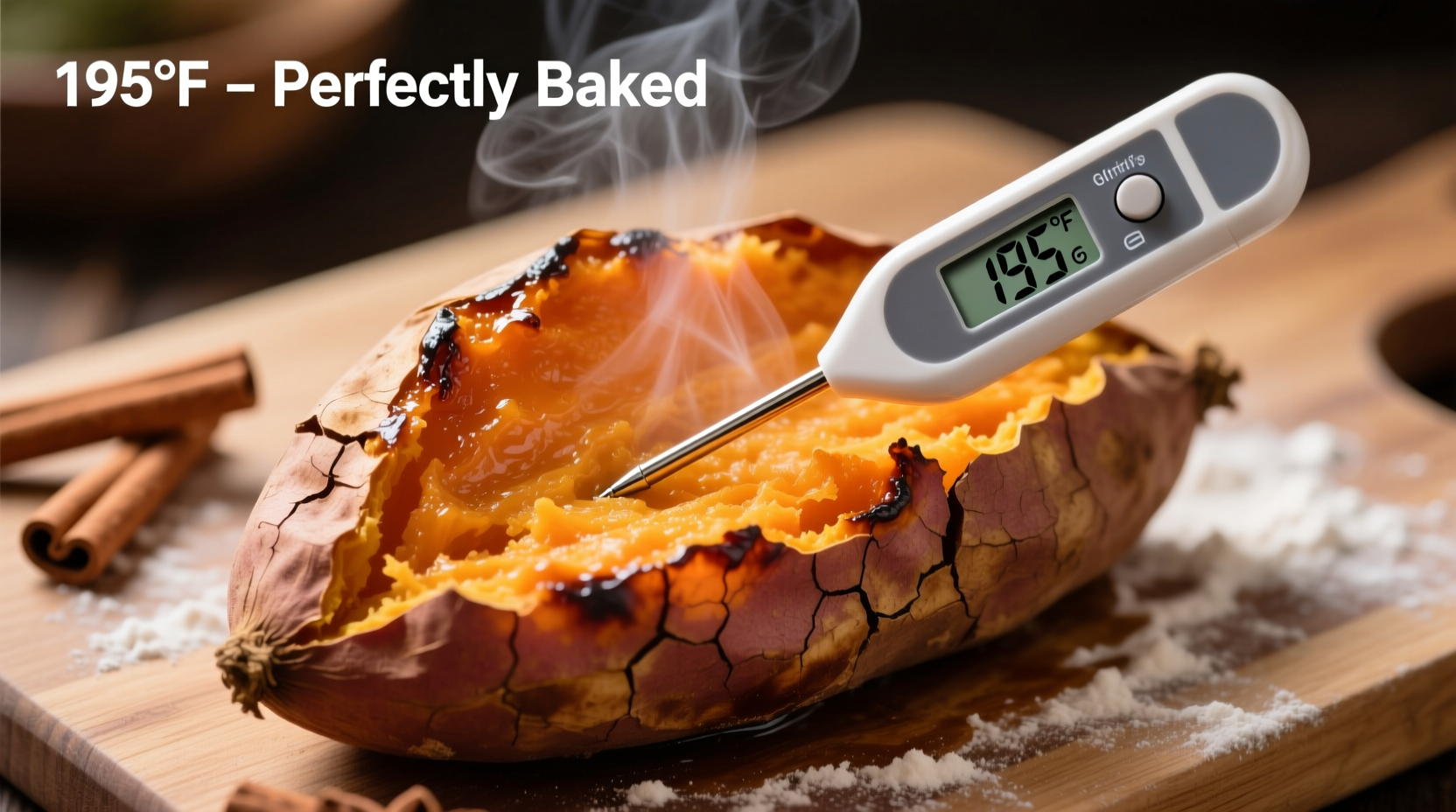
Using an instant-read thermometer correctly makes all the difference in achieving that perfect baked sweet potato internal temperature. Here's the professional technique:
- Choose the right thermometer - Use a digital instant-read thermometer with at least 0.5°F accuracy
- Insert properly - Place the probe into the thickest part of the potato, avoiding the center where heat concentrates
- Check multiple spots - Large sweet potatoes often have temperature variations
- Wait for stabilization - Allow 10-15 seconds for the reading to stabilize
"Many home cooks make the mistake of checking only one spot," Rodriguez notes. "Sweet potatoes cook unevenly, especially when baked whole. Checking 2-3 different areas gives you the true picture of doneness."
Temperature Variations by Cooking Method
The ideal temperature for baked sweet potato remains consistent regardless of cooking method, but the path to reaching it varies significantly:
- Oven baking (400°F/204°C) - Takes 45-60 minutes to reach 205-212°F internally. The dry heat creates a slightly caramelized exterior while maintaining moisture inside.
- Convection oven - Reduces cooking time by 25% but requires careful monitoring as the circulating air can cause uneven heating.
- Wrapped in foil - Creates steam environment that lowers effective cooking temperature, requiring longer time to reach ideal internal temperature.
- Slow roasting (300°F/149°C) - Takes 90+ minutes but produces exceptionally creamy texture with deeper caramelization.
According to USDA Food Safety guidelines, sweet potatoes should reach a minimum internal temperature of 165°F (74°C) for safe consumption, but this is well below the optimal range for best texture and flavor development.
Troubleshooting Common Temperature Issues
When Your Sweet Potato Isn't Reaching Target Temperature
If your sweet potato remains below 200°F after expected cooking time:
- Oversized potato - Cut large potatoes in half to reduce cooking time
- Cold starting point - Bring potatoes to room temperature before baking
- Oven temperature inaccuracy - Verify with oven thermometer
- Overcrowded oven - Ensure proper air circulation around each potato
When Sweet Potatoes Become Waterlogged
Exceeding 212°F causes cell walls to break down excessively, releasing too much moisture. To prevent this:
- Remove potatoes immediately upon reaching 210°F
- Let rest 5-10 minutes before serving (temperature continues to rise 5-10 degrees)
- Avoid wrapping in foil during cooking
- Prick skin multiple times before baking to allow steam escape
Advanced Temperature Techniques for Culinary Perfection
Professional chefs employ several temperature-based techniques to maximize sweet potato quality:
- The two-stage bake - Start at 425°F (218°C) for 20 minutes to initiate caramelization, then reduce to 375°F (191°C) until reaching 205°F internally
- Post-bake resting - Allow potatoes to rest off-heat for 10 minutes; residual heat continues cooking while moisture redistributes
- Temperature monitoring during storage - Cooked sweet potatoes maintain quality best when held between 140-160°F (60-71°C) for service
"The magic happens in that last 5-degree climb from 205 to 210°F," Rodriguez explains. "That's when complex sugars fully develop and starches achieve that perfect melt-in-your-mouth texture. Patience at this stage makes all the difference."
Safety Considerations for Baked Sweet Potatoes
While food safety minimums are lower, properly cooked sweet potatoes offer additional safety benefits:
- Reaching 205°F+ destroys potential pathogens more effectively than minimum safe temperatures
- Complete starch gelatinization reduces digestive issues some experience with undercooked sweet potatoes
- Proper temperature ensures thorough cooking of any added ingredients (like fillings in stuffed sweet potatoes)
The Culinary Institute of America recommends allowing baked sweet potatoes to cool to 140°F (60°C) before serving to prevent mouth burns while still maintaining optimal texture.
Conclusion: Mastering Sweet Potato Temperature for Perfect Results
Understanding the precise temperature of baked sweet potato transforms this simple side dish into a culinary highlight. By targeting 205-212°F (96-100°C) and using proper thermometer techniques, you'll consistently achieve that ideal balance of creamy texture and natural sweetness. Remember that timing varies based on size and cooking method, but temperature remains the reliable indicator of perfection. With these science-backed techniques, you'll never serve an undercooked or waterlogged sweet potato again.




 浙公网安备
33010002000092号
浙公网安备
33010002000092号 浙B2-20120091-4