
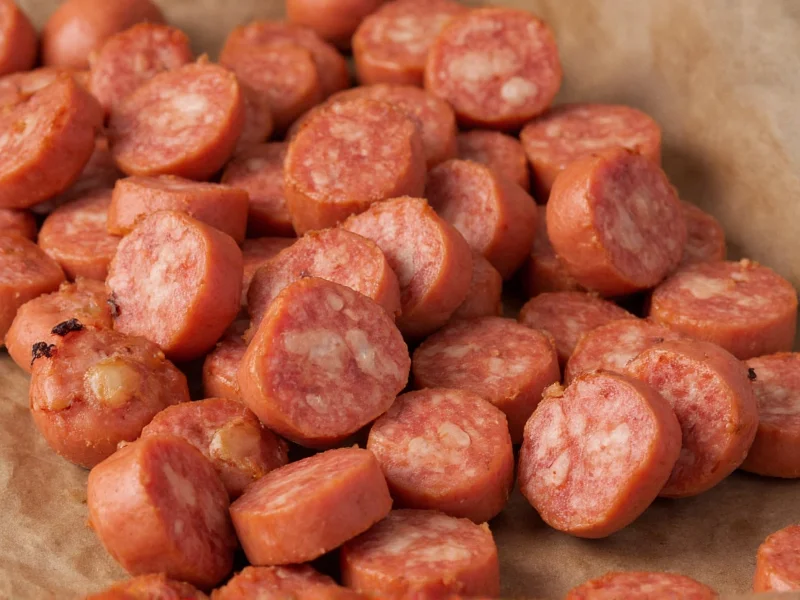
The safe internal temperature for cooked pork sausage is 160°F (71°C). This temperature destroys harmful bacteria like Salmonella and E. coli, ensuring your sausage is safe to eat while maintaining optimal texture and flavor.
When preparing pork sausage, achieving the correct internal temperature isn't just about taste—it's a critical food safety requirement. Many home cooks rely on visual cues like color change or firmness, but these methods can't reliably indicate whether potentially dangerous bacteria have been eliminated.
Why 160°F Is the Critical Temperature for Pork Sausage
Pork sausage contains ground meat, which increases surface area where bacteria can thrive. Unlike whole cuts of meat, ground pork requires higher temperatures to ensure pathogens are destroyed throughout the product. The USDA Food Safety and Inspection Service established 160°F as the minimum safe temperature because at this point, harmful bacteria including Salmonella, E. coli, and Trichinella are effectively eliminated.
Some modern pork production methods have reduced trichinosis risks, leading to recommendations of 145°F for whole pork cuts with a 3-minute rest time. However, this exception doesn't apply to ground pork products like sausage, which must still reach 160°F due to the increased contamination risk during the grinding process.
Historical Context: Evolution of Pork Cooking Standards
Understanding how pork safety guidelines evolved reveals why 160°F remains critical for sausages despite changes for other cuts:
- Pre-2011: All pork products required cooking to 160°F to eliminate trichinosis risks from traditional farming practices
- May 2011: USDA revised guidelines for whole cuts to 145°F (with 3-minute rest) after commercial pork production virtually eliminated trichinosis [USDA Press Release]
- Present: Ground pork maintains 160°F requirement due to irreversible bacterial exposure during grinding, while whole cuts benefit from updated science [USDA FSIS Documentation]
This timeline demonstrates how food safety standards adapt to agricultural advancements while maintaining strict protocols for higher-risk products like ground meats.
Proper Temperature Measurement Techniques
Accurate temperature measurement requires specific techniques:
- Use a digital instant-read thermometer for precise readings
- Insert the probe into the thickest part of the sausage, avoiding contact with the cooking surface
- Test multiple sausages in a batch, as temperatures can vary
- Sanitize your thermometer between measurements
- Allow 10-15 seconds for the reading to stabilize
| Meat Product | Safe Minimum Internal Temperature | Rest Time |
|---|---|---|
| Ground pork (including sausage) | 160°F (71°C) | No rest required |
| Whole pork cuts (chops, roasts) | 145°F (63°C) | 3 minutes |
| Poultry sausage | 165°F (74°C) | No rest required |
Source: USDA Food Safety and Inspection Service - Verified Cooking Temperatures
Context and Limitations: When the 160°F Rule Applies
While 160°F is universally required for fresh pork sausage, critical boundaries exist where exceptions apply:
Standard Application (160°F mandatory)
- Fresh pork sausage (uncooked links/patties)
- Homemade sausage from raw pork
- Products labeled "requires cooking"
Documented Exceptions
- Pre-cooked smoked sausages (kielbasa, andouille): Reheat to 140°F per USDA guidelines for ready-to-eat products
- Cured dry sausages (salami, pepperoni): Not intended for cooking; consume as-is per processing standards
- Composite meat sausages: Follow highest required temperature (e.g., 165°F for poultry-containing blends)
Technical Limitations
- Altitude impact: Increase target temperature by 1°F per 500 ft above sea level [USDA Altitude Guidelines]
- Thermometer variance: ±2°F margin of error requires verification with calibrated equipment
- Time-temperature interaction: 155°F requires 60+ seconds for equivalent safety to instantaneous 160°F kill rate
Common Temperature Measurement Mistakes
Many home cooks make critical errors when checking sausage temperature:
- Using visual cues only: Color change (from pink to brown) doesn't guarantee safety, as some sausages contain curing agents that maintain pink color even when fully cooked
- Testing only one piece: Temperature can vary significantly between sausages in the same batch
- Touch testing: Firmness indicates texture, not safety—undercooked sausage can feel firm while still harboring pathogens
- Using outdated guidelines: Some still follow older recommendations of 165°F for all meats, which can lead to overcooked sausage
- Not calibrating thermometers: Inaccurate thermometers can provide false readings, putting you at risk
What Happens Below 160°F?
When pork sausage doesn't reach the proper internal temperature, several risks emerge:
- Pathogen survival: Bacteria like Salmonella begin dying at 130°F but require higher temperatures for complete elimination
- Increased illness risk: Undercooked sausage can cause foodborne illnesses with symptoms including nausea, vomiting, diarrhea, and fever
- Vulnerable populations: Children, elderly individuals, pregnant women, and immunocompromised people face higher risks from undercooked meat
Food safety experts emphasize that the 5°F difference between 155°F and 160°F significantly impacts bacterial reduction rates. At 155°F, it takes nearly a minute to destroy pathogens, while at 160°F, the process occurs almost instantly.
Post-Cooking Temperature Management
Proper temperature management continues after cooking:
- Holding temperature: Keep cooked sausage at 140°F or higher if serving buffet-style
- Cooling: Refrigerate leftovers within 2 hours (1 hour if room temperature exceeds 90°F)
- Reheating: Return leftovers to 165°F before serving
- Storage: Consume refrigerated cooked sausage within 3-4 days
Food Safety Beyond Temperature
Temperature is just one component of sausage safety:
- Cross-contamination prevention: Use separate cutting boards and utensils for raw and cooked sausage
- Hand hygiene: Wash hands thoroughly after handling raw sausage
- Refrigeration: Store raw sausage below 40°F and use within 1-2 days of purchase
- Thawing practices: Thaw frozen sausage in the refrigerator, not at room temperature
Professional chefs and food safety experts agree that while properly cooked sausage should have a firm texture with clear juices, these visual indicators alone cannot guarantee safety. The only reliable method to confirm pork sausage is safe to eat remains an accurate internal temperature reading of 160°F.




 浙公网安备
33010002000092号
浙公网安备
33010002000092号 浙B2-20120091-4