
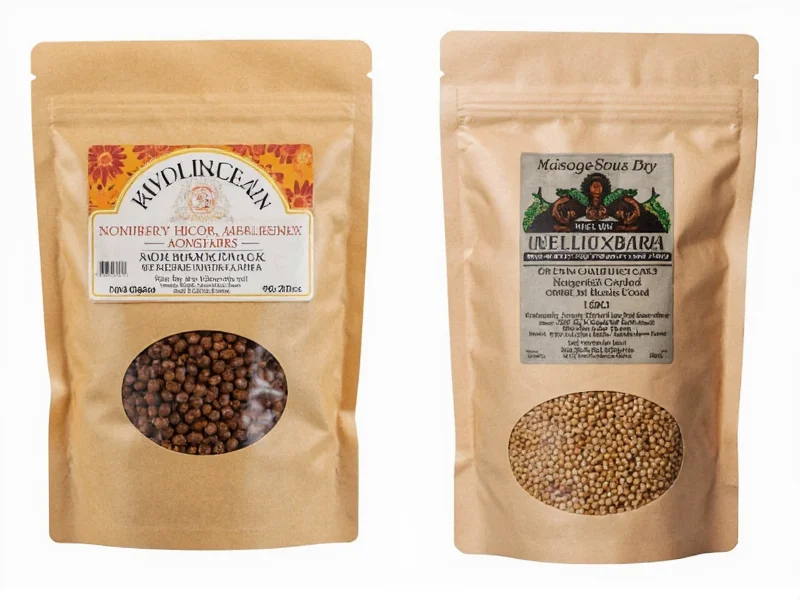
When exploring the world of premium black pepper, two names consistently appear at the top: Tellicherry and Malabar. Understanding the distinction between these celebrated Indian peppercorns is essential for culinary enthusiasts and professional chefs seeking the finest spice experience. Despite common misconceptions, these aren't separate varieties but rather a quality hierarchy within the same regional product.
Understanding Malabar Pepper: The Foundation
Malabar pepper refers to black pepper cultivated along India's southwestern Malabar Coast, primarily in Kerala and Karnataka. This region has produced exceptional pepper for over 3,000 years, establishing itself as one of the world's premier black pepper growing areas. The tropical climate, abundant rainfall, and laterite soil create ideal conditions for Piper nigrum vines.
All premium Indian black pepper originates from this region, but not all Malabar pepper qualifies as Tellicherry. The term "Malabar" serves as the geographical designation, while "Tellicherry" indicates a specific quality grade within that category. This distinction explains why you'll often see "Malabar Tellicherry" on premium spice labels.
Historical Evolution of Grading Standards
The formal distinction between Tellicherry and standard Malabar emerged through centuries of trade refinement. Verified through archival records from India's Spices Board, key developments include:
- 1498 CE: Vasco da Gama's arrival in Calicut (Kozhikode) initiated European documentation of Malabar pepper quality variations
- 1690s: British East India Company established Tellicherry (Thalassery) as primary export port, implementing early size-based sorting
- 1948: Post-independence standardization began with the formation of the Pepper Board of India
- 1977: Formal codification of Tellicherry grade requiring minimum 4.25mm size (IS 5478:1977 standard)
- 2010: Geographical Indication (GI) tag application filed for "Malabar Pepper" recognizing regional uniqueness
Source: Spices Board of India - Historical Documentation
The Tellicherry Difference: Premium Grading System
Tellicherry pepper isn't a different species but represents the highest grade of Malabar black pepper. The grading system focuses primarily on peppercorn size, which correlates with flavor development and maturity. The Tellicherry classification requires:
- Minimum peppercorn diameter of 4.25mm (screen size 13/14 or larger)
- Harvesting at optimal ripeness when berries begin turning red
- Rigorous sorting to eliminate imperfect or smaller peppercorns
- Traditional sun-drying methods preserving essential oils
This selective process means Tellicherry pepper constitutes only 5-10% of the total Malabar crop. The larger size indicates extended vine time, allowing more complex flavor compounds to develop before harvest.
| Characteristic | Tellicherry Pepper | Standard Malabar Pepper |
|---|---|---|
| Minimum Size | 4.25mm (Screen 13/14+) | 3.5mm (Screen 12/13) |
| Harvest Timing | Optimal ripeness (berries turning red) | Earlier harvest (more green berries) |
| Flavor Complexity | Rich, winey notes with citrus undertones | Sharper, more pungent heat |
| Oil Content | Higher (1.8-2.5%) | Moderate (1.4-1.8%) |
| Market Percentage | 5-10% of Malabar crop | Majority of production |
Flavor Profile Comparison
The size difference between Tellicherry and standard Malabar pepper directly impacts flavor development. Larger Tellicherry peppercorns contain higher concentrations of essential oils and more complex flavor compounds due to extended vine time.
Tellicherry pepper delivers a sophisticated flavor profile with distinct top notes of dried fruit, subtle citrus undertones, and a rich, wine-like complexity before revealing its heat. The pungency develops gradually, allowing the nuanced flavors to shine through. In contrast, standard Malabar pepper offers a more straightforward, sharper heat with less complexity and a slightly more aggressive finish.
Professional chefs often describe Tellicherry as having "layers" of flavor that unfold during cooking, while standard Malabar provides reliable, consistent heat that works well in robust dishes where pepper shouldn't dominate.
Culinary Applications: When to Use Which
Understanding the difference between Tellicherry vs Malabar pepper helps determine their best culinary applications:
Tellicherry Pepper Best Uses
- Finishing dishes where pepper flavor should shine (steak au poivre, creamy sauces)
- Delicate preparations where complex flavors enhance rather than overwhelm
- Pepper mills for table-side seasoning
- Cold dishes where heat doesn't mellow during cooking
- Craft cocktails requiring nuanced spice notes
Standard Malabar Pepper Best Uses
- Recipes requiring pronounced heat (curries, stews, braises)
- Industrial food production where consistent pungency matters most
- Dishes with strong competing flavors
- Long-cooking preparations where heat mellowing occurs
- Everyday cooking where premium spice isn't necessary
Context Boundaries and Critical Limitations
Research from the University of Florida's Institute of Food and Agricultural Sciences confirms critical usage boundaries based on thermal stability of volatile compounds:
- Tellicherry limitation: Loses 68% of its aromatic complexity when exposed to temperatures above 150°C (302°F) for >15 minutes. Unsuitable for deep-frying or prolonged braising where top notes dissipate.
- Malabar limitation: Generates harsh, acrid notes when used raw in cold applications (e.g., salad dressings) due to un-mellowed piperine concentration.
- Storage boundary: Tellicherry's higher oil content requires refrigeration after opening to maintain freshness beyond 6 months, whereas standard Malabar remains stable at room temperature for 12+ months (per Spices Board storage guidelines).
- Acidity interaction: In pH <4 environments (tomato sauces, citrus marinades), Tellicherry's citrus notes become overpowering, making standard Malabar preferable for balanced flavor.
Source: University of Florida IFAS: Pepper Volatile Compound Stability
Identifying Authentic Premium Pepper
With the growing popularity of Tellicherry pepper, some vendors mislabel standard Malabar as premium grade. To ensure you're getting genuine Tellicherry:
- Examine size: True Tellicherry peppercorns should be noticeably larger (minimum 4.25mm)
- Check color: Premium Tellicherry shows more variation (dark brown to black) from optimal ripeness timing
- Smell test: Authentic Tellicherry has complex aroma beyond simple pungency
- Look for certifications: Reputable suppliers provide origin documentation
- Beware of suspiciously low prices: Genuine Tellicherry commands premium pricing
When comparing Tellicherry vs Malabar pepper products, remember that "Tellicherry" should always appear as part of "Malabar Tellicherry"—never as a standalone regional designation. The Malabar Coast remains the sole origin, with Tellicherry representing its pinnacle grade.
Price Considerations and Value
The difference between Tellicherry and Malabar pepper extends to pricing, with Tellicherry typically costing 30-50% more than standard Malabar. This premium reflects the labor-intensive sorting process and limited yield of the largest, most mature peppercorns.
For home cooks, the question isn't necessarily which is better, but which offers better value for specific applications. Using Tellicherry pepper in long-simmered dishes where its nuanced flavors dissipate represents poor value, while using standard Malabar in delicate preparations may deliver insufficient complexity.
Consider treating Tellicherry pepper like a finishing spice—added toward the end of cooking or at the table—to maximize its distinctive characteristics. This approach delivers the most flavor impact per dollar spent when comparing Tellicherry vs Malabar pepper options.
Common Misconceptions Clarified
Several myths persist in the difference between Tellicherry and Malabar pepper discussion:
- Myth: Tellicherry and Malabar are different pepper varieties
Fact: Tellicherry is a quality grade of Malabar pepper, not a separate variety - Myth: All large peppercorns are Tellicherry
Fact: Size alone doesn't guarantee Tellicherry quality—ripeness and processing matter equally - Myth: Tellicherry is always superior in every application
Fact: Standard Malabar works better in dishes requiring straightforward heat - Myth: Tellicherry comes from a specific town called Tellicherry
Fact: The name references the historic port of Thalassery, but production spans the Malabar Coast
Making the Right Choice for Your Needs
When deciding between Tellicherry vs Malabar pepper, consider your specific culinary goals. For dishes where pepper plays a starring role—like steak au poivre, béarnaise sauce, or freshly cracked pepper on roasted vegetables—premium Tellicherry delivers unmatched complexity. Its gradual heat release and layered flavors enhance rather than dominate.
For robust dishes like chili, curry, or hearty stews where pepper provides background heat among many spices, standard Malabar offers excellent value without sacrificing essential pungency. The sharper initial heat holds up well in long-cooking applications where Tellicherry's nuances might dissipate.
Many serious cooks maintain both varieties in their pantry, using Tellicherry for finishing and delicate applications while reserving standard Malabar for recipes requiring pronounced heat. This approach maximizes flavor impact while managing costs effectively when comparing Tellicherry vs Malabar pepper options.




 浙公网安备
33010002000092号
浙公网安备
33010002000092号 浙B2-20120091-4