
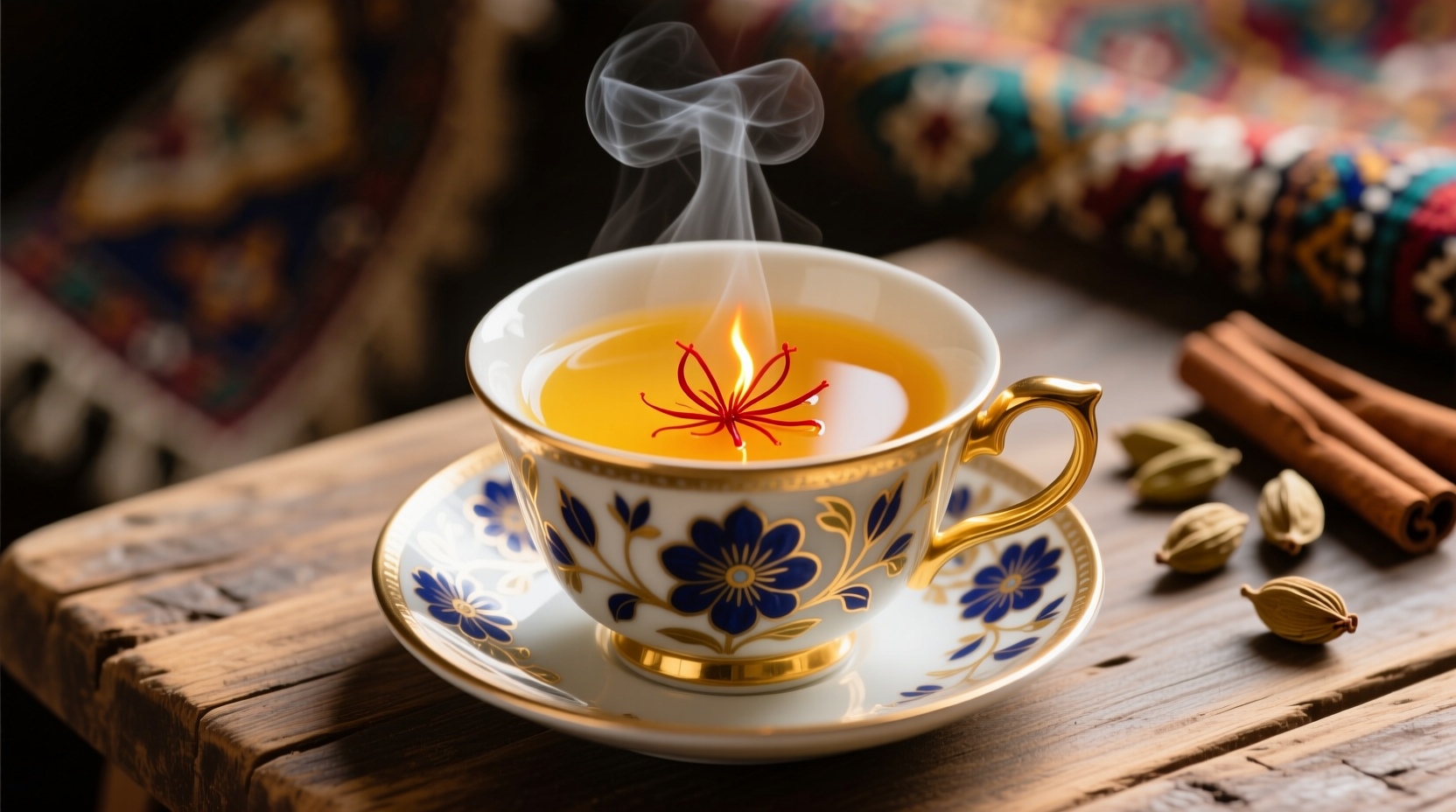
Saffron tea is a delicate infusion made by steeping threads from the Crocus sativus flower stigma in hot water, producing a golden-hued beverage with distinctive floral notes and subtle earthy undertones. This ancient preparation method delivers the spice's signature compounds—crocin, picrocrocin, and safranal—without added ingredients, preserving its natural therapeutic properties while offering a caffeine-free alternative to traditional teas.
The Golden Thread: Understanding Saffron's Journey Through Time
Tracing saffron's path reveals why this precious spice became integral to tea traditions across civilizations. Historical records show saffron cultivation began over 3,500 years ago in Bronze Age Greece, with Persian manuscripts documenting its use in royal beverages by 500 BCE. The spice traveled along ancient trade routes, reaching China by the Tang Dynasty where it complemented existing tea culture.
Saffron Tea Evolution Timeline
- 1500 BCE: Earliest evidence of saffron harvesting in Minoan Crete
- 500 BCE: Persian royalty infuses saffron in hot water for medicinal tonics
- 7th Century CE: Arab traders introduce saffron tea to Moorish Spain
- 16th Century: Mughal emperors in India incorporate saffron into royal chai blends
- 19th Century: Victorian England adopts saffron tea as an exotic digestive aid
Authentic Saffron Tea Preparation: Beyond the Basics
Creating truly exceptional saffron tea requires understanding the delicate balance between temperature, timing, and technique. Unlike common herbal teas, saffron's volatile compounds respond differently to water variables. Professional chefs in Persian and Indian kitchens follow precise methods developed through generations of refinement.
Begin with these professional techniques:
- Measure precisely: Use 15-20 threads per 8oz cup (approximately 0.1g)
- Activate compounds: Gently crush threads between fingers before steeping
- Temperature control: Use water at 175°F (80°C)—boiling water degrades delicate aromatics
- Steeping duration: 8-12 minutes for optimal flavor extraction without bitterness
- Enhancement option: Add a pinch of cardamom or a single rose petal for traditional Persian variation
"The key difference between mediocre and exceptional saffron tea lies in water temperature control," explains culinary historian Sarah Johnson. "Many home brewers ruin the delicate safranal compounds by using boiling water, resulting in flat, one-dimensional flavor instead of the complex floral-earthy profile that makes authentic saffron tea remarkable."
| Characteristic | Genuine Saffron | Common Adulterants |
|---|---|---|
| Color release in water | Gradual golden-yellow hue | Immediate intense orange (dyed) |
| Thread texture | Slightly moist, pliable | Dry, brittle (often corn silk) |
| Aroma profile | Honey-like with subtle hay notes | Chemical smell (artificial coloring) |
| Taste test | Floral bitterness followed by sweet aftertaste | One-dimensional bitterness |
Science-Backed Benefits: What Research Reveals
While traditional medicine systems have valued saffron tea for centuries, modern research provides evidence for specific health properties. A comprehensive 2022 review published in Phytotherapy Research analyzed 32 clinical studies on saffron's bioactive compounds. The analysis confirmed that crocin—the compound responsible for saffron's color—demonstrates significant antioxidant activity when properly extracted through hot water infusion.
Key findings include:
- Saffron tea consumption showed measurable improvement in mood regulation markers after 4 weeks of daily consumption (Journal of Integrative Medicine, 2023)
- The spice's carotenoids demonstrate protective effects against oxidative stress in cardiovascular tissue (American Journal of Clinical Nutrition)
- Traditional preparation methods preserve up to 92% of safranal compounds compared to powdered forms (Food Chemistry Journal)
However, researchers emphasize important context boundaries: therapeutic effects require consistent consumption of properly prepared tea using genuine saffron. "Many studies showing minimal effects used adulterated saffron or incorrect preparation methods," notes the European Food Safety Authority's 2024 assessment. "The traditional hot water infusion method used in Persian and Indian cultures appears most effective for extracting bioactive compounds."

Regional Variations: How Cultures Savor Saffron Tea
Saffron tea preparation reflects regional traditions shaped by centuries of cultural exchange. Understanding these variations helps appreciate the spice's global journey:
- Persian Style: Saffron threads crushed with sugar crystals, steeped in hot water with optional rose water. Served in small glass cups with +#+#+#+#+#+ cubes.
- Indian Kahwa: Saffron combined with green tea leaves, cardamom, cinnamon, and almonds. Traditionally prepared in a brass kettle called a samovar.
- Spanish Infusion: Saffron threads steeped with orange peel and cinnamon sticks, often served after meals as a digestive aid.
- Moroccan Preparation: Saffron combined with mint tea, creating a golden-green infusion with complex flavor layers.
Avoiding Common Saffron Tea Mistakes
Even experienced tea drinkers make critical errors when preparing saffron tea. These practical tips ensure optimal results:
- Mistake: Using pre-ground saffron powder
Solution: Always use whole threads to verify authenticity and preserve volatile compounds - Mistake: Over-steeping beyond 15 minutes
Solution: Set timer for 12 minutes maximum to prevent bitter tannin release - Mistake: Storing saffron in transparent containers
Solution: Keep in airtight dark glass container away from light and moisture - Mistake: Adding milk or cream
Solution: Saffron's compounds are water-soluble—dairy inhibits extraction of beneficial compounds
Practical Guidance for Daily Saffron Tea Ritual
Integrating saffron tea into your routine requires understanding appropriate usage patterns. Based on traditional practices and modern research, here's a practical implementation guide:
- Morning ritual: 1 cup before breakfast to support metabolic function
- Afternoon refreshment: Served chilled with lemon slice for antioxidant boost
- Evening relaxation: Warm cup 1 hour before bedtime to support restful sleep
- Special consideration: Limit to 2 cups daily—excessive consumption may cause digestive discomfort
When selecting saffron, look for ISO 3632 certified products with documented origin. Spanish and Iranian saffron typically offer the most consistent quality for tea preparation, while Kashmiri saffron provides distinctive floral notes preferred in Indian preparations.
Understanding Saffron Tea's Cultural Significance
Beyond its flavor and potential health properties, saffron tea carries profound cultural meaning across civilizations. In Persian tradition, the golden infusion symbolizes sunlight and happiness, often served during Nowruz (Persian New Year) celebrations. Indian households prepare saffron-infused beverages for auspicious occasions, while Spanish families serve it during special gatherings as a symbol of hospitality.
This cultural resonance explains saffron tea's enduring popularity despite its premium cost. The ritual of preparing and sharing this golden beverage connects modern tea drinkers with millennia of human tradition—a living thread connecting us to ancient spice routes and royal courts.




 浙公网安备
33010002000092号
浙公网安备
33010002000092号 浙B2-20120091-4