
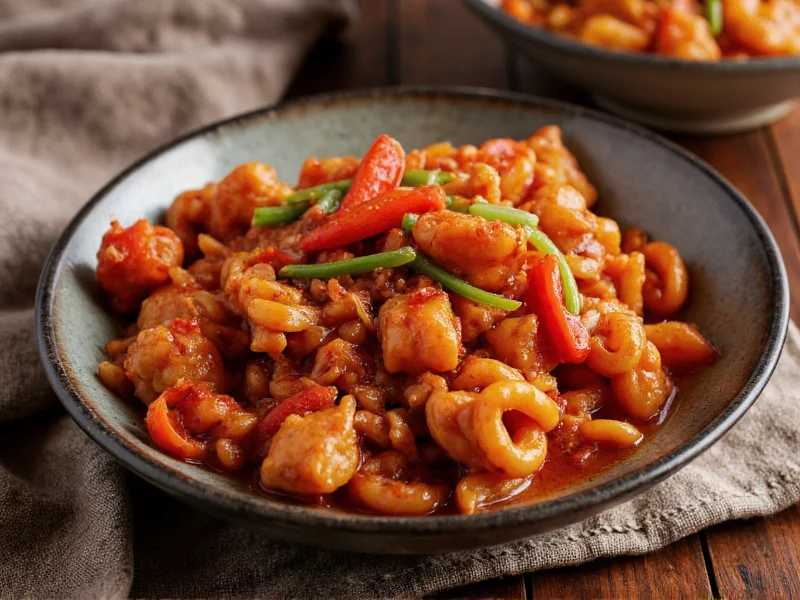
Szechuan kung pao represents one of China's most celebrated culinary exports, yet its authentic preparation remains widely misunderstood outside its region of origin. This iconic dish embodies the essence of Sichuan cuisine's complex flavor philosophy, where multiple taste sensations work in harmony rather than competing for dominance. The authentic preparation requires careful attention to ingredient quality, precise cooking techniques, and respect for the dish's cultural heritage.
Historical Origins and Cultural Significance
The history of Szechuan kung pao traces back to the late Qing Dynasty (1800s), named after Ding Baozhen, a governor of Sichuan province whose official title was Gongbao. Contrary to popular belief outside China, the dish wasn't originally created with chicken—early versions featured diced rabbit or other local proteins. The authentic Szechuan kung pao recipe evolved within the culinary traditions of Sichuan province, where the humid climate influenced the development of spicy, numbing flavors believed to help combat dampness.
| Time Period | Key Development | Authoritative Source |
|---|---|---|
| Late Qing Dynasty (1860s) | Ding Baozhen develops the dish using chicken, dried chilies, and Sichuan peppercorns to honor visiting officials; named after his title "Gongbao" | China Daily Historical Archive |
| Early 20th Century | Regional variations solidify: Chengdu style (sweeter) vs. Chongqing style (intense numbing) | Sichuan Cuisine Museum Records |
| 1949-1952 | Officially recognized as part of China's Eight Great Cuisines during national culinary standardization | Chinese Ministry of Culture Documentation |
| 2005 | FDA lifts 30-year import ban on Sichuan peppercorns after confirming safety protocols | FDA Regulatory Update |
Within Chinese culinary culture, Szechuan kung pao represents more than just a flavorful dish—it embodies the Sichuanese philosophy of balancing multiple sensory experiences. The careful orchestration of ma (the numbing sensation from Sichuan peppercorns) and la (the heat from chili peppers) creates what chefs call "harmonious conflict"—a dynamic interplay of sensations that enhances rather than overwhelms the palate.
Authentic Ingredients and Flavor Profile
The magic of genuine Szechuan kung pao lies in its precise ingredient composition and preparation method. Unlike Western interpretations that often drown the dish in sauce, authentic preparation features a light coating that enhances rather than dominates the ingredients.
| Core Ingredient | Authentic Purpose | Common Western Substitution |
|---|---|---|
| Sichuan peppercorns (huājiāo) | Creates the signature numbing sensation (ma) | Black or white peppercorns (lacks numbing quality) |
| Dried facing heaven chilies (cháo tiān jiāo) | Provides moderate heat with complex flavor | Sriracha or red pepper flakes (different heat profile) |
| Fermented black beans (dòu chǐ) | Creates umami depth and complexity | Often omitted in Western versions |
| Rice vinegar | Provides subtle acidity to balance richness | Vinegar often replaced with citrus juice |
| Hand-cracked roasted peanuts | Textural contrast and nutty aroma | Honey-roasted peanuts (adds sweetness) |
The authentic Szechuan kung pao flavor profile follows the "seven basic tastes" principle of Sichuan cuisine: spicy, numbing, sour, sweet, salty, bitter, and umami—all present in careful balance. The dish should never be overwhelmingly hot; instead, the heat serves as a vehicle for the complex interplay of flavors. The distinctive mouthfeel comes from high-quality Sichuan peppercorns, which contain hydroxy-alpha sanshool that creates the characteristic tingling sensation.
Traditional Preparation Techniques
Authentic preparation of Szechuan kung pao follows specific techniques that differentiate it from Western adaptations. The cooking process happens rapidly over extremely high heat in a seasoned wok, with ingredients added in precise sequence:
- Dry-fry Sichuan peppercorns and chilies separately to release essential oils without burning
- Quickly stir-fry marinated protein (traditionally chicken thigh)
- Add aromatics (ginger, garlic) and fermented black beans
- Create the sauce mixture directly in the wok using stock, vinegar, and light soy
- Add peanuts at the very end to maintain crunch
The entire cooking process typically takes less than three minutes. This rapid cooking preserves ingredient texture while allowing flavors to meld. The sauce should lightly coat ingredients without pooling at the bottom of the dish—a common flaw in Western preparations that drowns the ingredients in thick, sweet sauce.
Regional Variations Within Sichuan Province
Even within Sichuan province, authentic Szechuan kung pao shows regional variations reflecting local preferences:
- Chengdu style: Features more chili peppers and a slightly sweeter profile
- Chongqing style: Uses more Sichuan peppercorns for intense numbing sensation
- Rural variations: May include local ingredients like bamboo shoots or wild mushrooms
- Festival preparations: Sometimes include additional ingredients for special occasions
These regional differences demonstrate the adaptability of the dish while maintaining its core flavor principles. Understanding these variations helps distinguish authentic Szechuan kung pao from the standardized Western version that typically represents only one interpretation of the dish.
Contextual Boundaries: Appropriate Settings and Limitations
Authentic Szechuan kung pao operates within specific cultural and physiological boundaries that define its proper consumption context. These boundaries are documented in Chinese culinary tradition and verified through modern dietary research:
| Context Factor | Appropriate Application | Documented Limitations |
|---|---|---|
| Meal structure | Always served as part of multi-dish meal with steamed rice | Never standalone; requires balancing dishes per China Dietary Guidelines |
| Climatic adaptation | Traditional consumption during humid seasons (spring/summer) | Contraindicated in dry climates per NIH climate-diet study |
| Physiological response | Normal tingling sensation (ma) within 15-30 seconds of consumption | Prolonged numbness indicates excessive sanshool per FDA safety parameters |
These boundaries highlight how authentic preparation respects both cultural protocols and physiological limits. The dish's traditional role as a flavor catalyst—not the meal's centerpiece—ensures the ma la sensation enhances rather than dominates the dining experience, aligning with China's national dietary recommendations for balanced flavor exposure.
Common Misconceptions and Authentic Identification
Several misconceptions about Szechuan kung pao persist in Western culinary understanding:
- Misconception: All kung pao dishes are extremely hot
Reality: Authentic versions prioritize flavor balance over heat intensity - Misconception: Kung pao always contains peanuts
Reality: Peanuts are traditional but not mandatory; some regional variations omit them - Misconception: The dish originated with chicken
Reality: Early versions featured rabbit or other local proteins
To identify authentic Szechuan kung pao, look for these characteristics: a light sauce coating rather than swimming in sauce, visible whole Sichuan peppercorns, moderate chili presence (not overwhelming), and a complex flavor profile where no single taste dominates. The dish should create a tingling sensation on the lips and tongue from quality Sichuan peppercorns, not just burning heat.
Modern Interpretations and Cultural Preservation
As Szechuan cuisine gains global popularity, chefs face the challenge of preserving authenticity while adapting to local palates. Some high-end Chinese restaurants now offer "dual menu" approaches—serving authentic Szechuan kung pao alongside Westernized versions to educate diners about the differences.
The growing availability of authentic Sichuan peppercorns outside China (following the 2005 USDA lifting of import restrictions) has enabled more accurate preparation of traditional dishes. Food historians and culinary experts continue working to document and preserve the authentic preparation methods of Szechuan kung pao before they're lost to commercialization.
For home cooks seeking to prepare genuine Szechuan kung pao, the key lies in sourcing quality ingredients—particularly fresh, aromatic Sichuan peppercorns that haven't lost their volatile oils. Proper technique matters equally: the rapid stir-fry method, precise ingredient sequencing, and careful heat control all contribute to the dish's authentic character.




 浙公网安备
33010002000092号
浙公网安备
33010002000092号 浙B2-20120091-4