
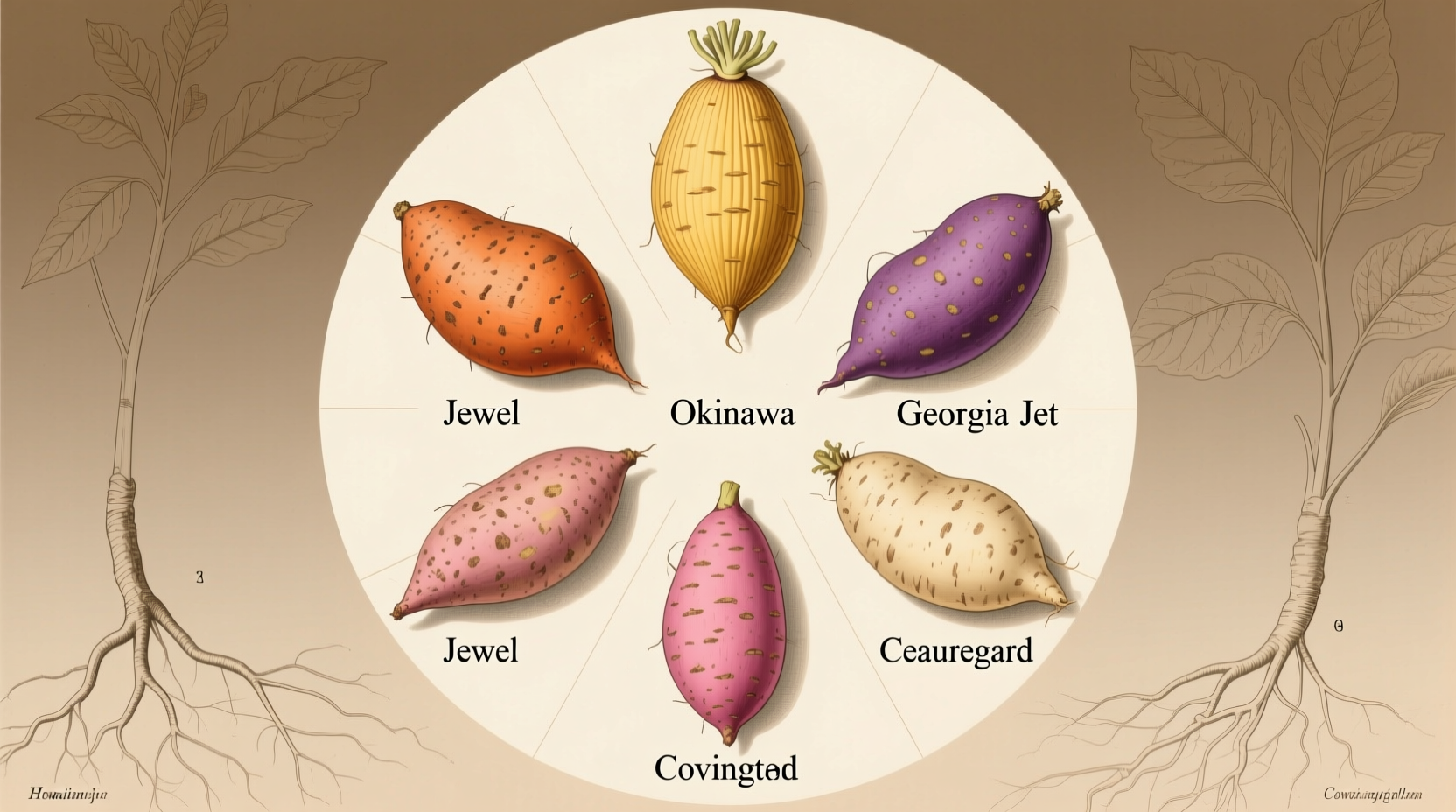
When selecting sweet potatoes, understanding the differences between varieties transforms your cooking and nutrition outcomes. Unlike regular potatoes, sweet potatoes (Ipomoea batatas) belong to the morning glory family and originated in Central and South America over 5,000 years ago. Modern varieties fall into three primary categories based on flesh color: orange, white/cream, and purple, each with unique culinary properties and nutritional benefits.
Why Sweet Potato Variety Selection Matters
Choosing the right sweet potato variety significantly impacts your dish's texture, sweetness, and nutritional value. Orange-fleshed types contain beta-carotene that converts to vitamin A, while purple varieties deliver anthocyanins with antioxidant properties. The starch content varies dramatically—Japanese sweet potatoes have drier, denser flesh perfect for roasting, while Jewel varieties maintain moisture ideal for pies. Home gardeners benefit from knowing disease-resistant cultivars like Covington that thrive in challenging conditions.
Sweet Potato Evolution Timeline
Sweet potatoes have journeyed across continents through human migration. Archaeological evidence shows cultivation began in Peru and Ecuador around 3,000 BCE. Spanish and Portuguese traders introduced them to Europe and Asia in the 15th century. By the 18th century, sweet potatoes became staple crops throughout the American South. The USDA's sweet potato breeding program, established in the 1930s, developed modern varieties like Beauregard with improved disease resistance and yield. Today's diverse varieties reflect centuries of selective breeding for flavor, color, and adaptability to different growing regions.
Orange-Fleshed Sweet Potato Varieties
Orange-fleshed sweet potatoes dominate 90% of U.S. production due to their high beta-carotene content. These varieties generally have moist textures and caramel-like sweetness when cooked.
Beauregard
The most widely grown commercial variety in the United States, Beauregard features copper skin and deep orange flesh. Developed at Louisiana State University, it matures in 90-100 days with high yields. Its moist texture makes it ideal for baking, mashing, and adding to soups. Beauregard contains 28,000 IU of vitamin A per 3.5-ounce serving—more than seven times the daily recommended value. This variety stores well for 4-6 months under proper conditions.
Garnet
Recognizable by its rose-colored skin, Garnet offers darker orange flesh with a richer, more pronounced sweetness than Beauregard. It matures slightly faster (90 days) and performs exceptionally well in southern climates. Garnet's higher sugar content caramelizes beautifully when roasted, making it a favorite for restaurant preparations. Nutritionally similar to Beauregard, it provides excellent moisture content for pies and casseroles but doesn't hold shape as well when boiled.
Jewel
With copper skin and bright orange flesh, Jewel sweet potatoes deliver consistent sweetness and moisture. Developed in the 1970s, they resist common diseases like fusarium wilt. Jewel maintains its shape better than other orange varieties when boiled, making it ideal for salads and soups. Its balanced sweetness works well in both savory and sweet applications. Jewel contains approximately 14,000 IU of vitamin A per serving and stores for 3-5 months.
| Variety | Days to Maturity | Best Cooking Methods | Vitamin A (IU/serving) | Storage Duration |
|---|---|---|---|---|
| Beauregard | 90-100 | Baking, mashing, soups | 28,000 | 4-6 months |
| Garnet | 90 | Roasting, pies, casseroles | 26,000 | 3-5 months |
| Jewel | 95-100 | Boiling, soups, pies | 14,000 | 3-5 months |
| Covington | 90-100 | Roasting, baking | 22,000 | 5-7 months |
Purple-Fleshed Sweet Potato Varieties
Purple sweet potatoes contain anthocyanins, the same antioxidants found in blueberries and red cabbage. These varieties typically have drier textures and earthier flavors compared to orange-fleshed types.
Stokes Purple
Developed in North Carolina, Stokes Purple features purple skin and deep violet flesh that retains its color when cooked. With nearly double the antioxidants of blueberries, it's prized for health benefits. The texture is denser and drier than orange varieties, making it excellent for roasting or frying into chips. Stokes Purple requires 110-120 days to mature and prefers warmer climates. It stores well for 5-6 months but develops a unique wine-like flavor after extended storage.
Okinawan
Originating in Japan's Okinawa region, this variety has beige skin and vibrant purple flesh. Okinawans contain significant amounts of anthocyanins and have a mildly sweet, nutty flavor with less moisture than orange varieties. They excel in steamed preparations and hold their shape well when cut into cubes. Nutritionally, they provide 100% of the daily vitamin A requirement plus additional antioxidants. Okinawans mature in 100-110 days and store for 4-5 months.
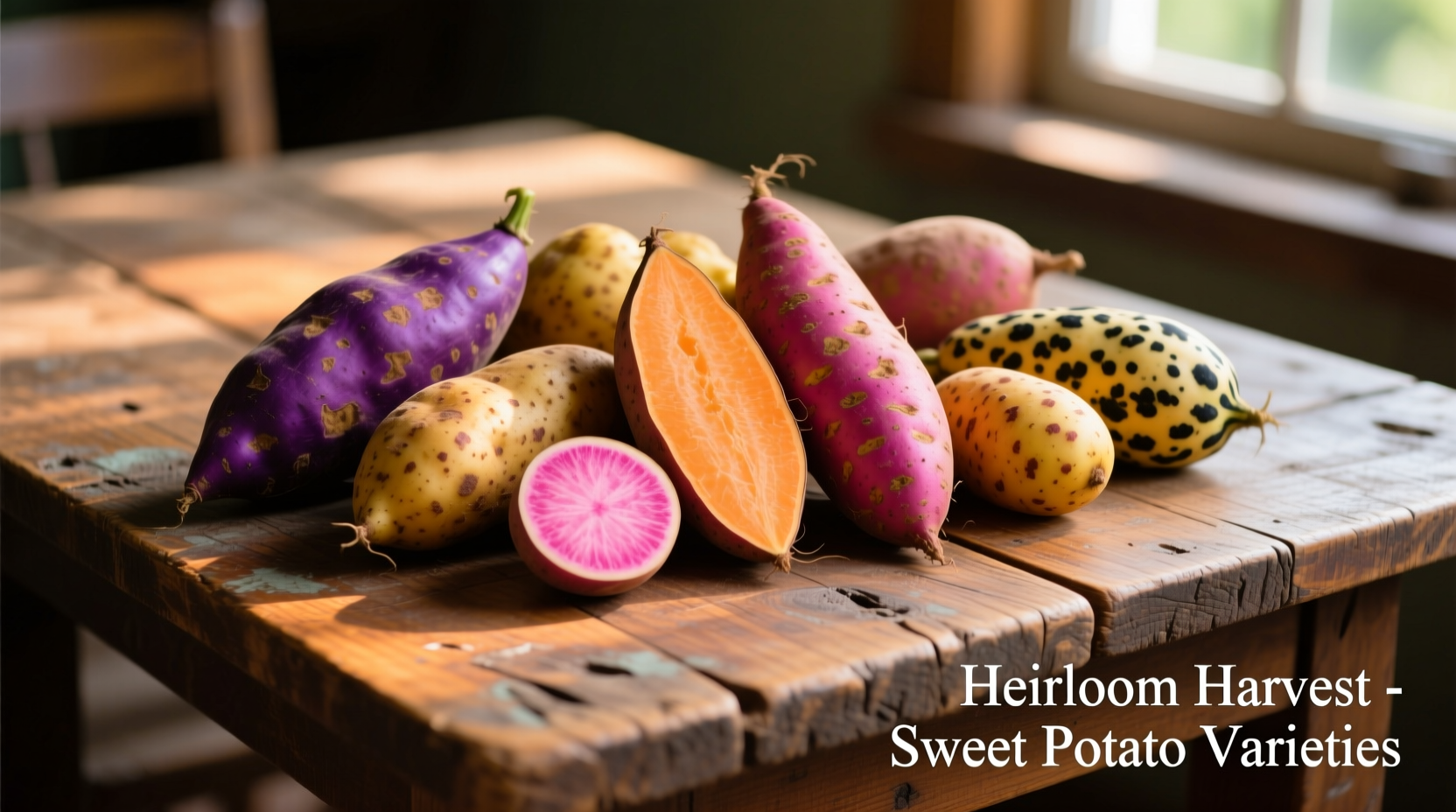
White and Yellow-Fleshed Varieties
White and yellow-fleshed sweet potatoes offer lower sugar content and drier textures, making them versatile for both sweet and savory applications.
Japanese Sweet Potato (Satsumaimo)
Recognizable by its purple-tinted skin and pale yellow flesh, Japanese sweet potatoes deliver a distinctive chestnut-like flavor. The texture is exceptionally dry and fluffy when baked, similar to a French fry. They contain less sugar than orange varieties, making them suitable for savory dishes without added sweetness. Japanese sweet potatoes mature in 100-120 days and store exceptionally well for 6-8 months. Nutritionally, they provide moderate vitamin A with higher fiber content.
Hannah
Hannah sweet potatoes feature tan skin and pale yellow flesh with a delicate sweetness. Their lower moisture content makes them ideal for frying or roasting without becoming mushy. Hannah contains about half the vitamin A of orange varieties but offers higher potassium levels. This heirloom variety matures in 95-105 days and stores for 4-6 months. Chefs appreciate Hannah for its ability to maintain structure in salads and grain bowls.
Variety Selection Guide by Cooking Method
Understanding context boundaries ensures optimal results with each sweet potato variety:
- Best for roasting: Japanese sweet potatoes and Garnet develop exceptional caramelization due to their sugar content
- Ideal for mashing: Beauregard and Jewel provide perfect moisture balance for creamy textures
- Top for boiling: Hannah and Jewel maintain shape better than moist varieties
- Preferred for pies: Garnet offers the richest flavor, while Jewel provides consistent texture
- Best for fries: Japanese and Hannah varieties yield crispier results due to lower moisture
When substituting varieties, consider moisture content. Drier varieties like Japanese sweet potatoes require additional liquid in baked goods, while moist varieties like Beauregard may need draining after boiling for salads.
Gardening Considerations for Home Growers
Sweet potatoes require a long, warm growing season (90-120 days). The USDA Agricultural Research Service recommends selecting varieties based on your climate zone. In cooler northern regions, choose faster-maturing varieties like Georgia Jet (90 days). Southern gardeners can grow longer-season varieties like Porto Rico. All sweet potatoes need well-drained, sandy soil with pH between 5.5-6.5. Plant slips (rooted cuttings) after soil temperatures reach 65°F. For optimal storage, cure harvested sweet potatoes at 85-95°F with 85-90% humidity for 5-10 days before moving to cooler, dry storage.
Nutritional Comparison Across Varieties
All sweet potatoes provide excellent vitamin A, fiber, and complex carbohydrates, but key differences exist:
- Orange varieties: Highest in beta-carotene (converts to vitamin A)
- Purple varieties: Rich in anthocyanins with antioxidant properties
- White/yellow varieties: Lower sugar content, higher potassium levels
A 3.5-ounce serving of orange sweet potatoes delivers 300-400% of daily vitamin A needs, while purple varieties provide comparable vitamin A plus additional antioxidants. White-fleshed types contain about 50% less sugar than orange varieties, making them preferable for certain dietary needs. All varieties contain approximately 90 calories per serving with 20g carbohydrates and 3g fiber.
Selecting and Storing Sweet Potatoes
Choose firm sweet potatoes without soft spots, bruises, or signs of sprouting. Avoid refrigeration, which causes hard centers and off-flavors. Store in a cool, dark, well-ventilated place at 55-60°F. Properly cured sweet potatoes can last 3-6 months depending on variety. Never wash sweet potatoes before storage—moisture accelerates spoilage. For extended storage, separate any sweet potatoes showing signs of decay to prevent spread.




 浙公网安备
33010002000092号
浙公网安备
33010002000092号 浙B2-20120091-4