
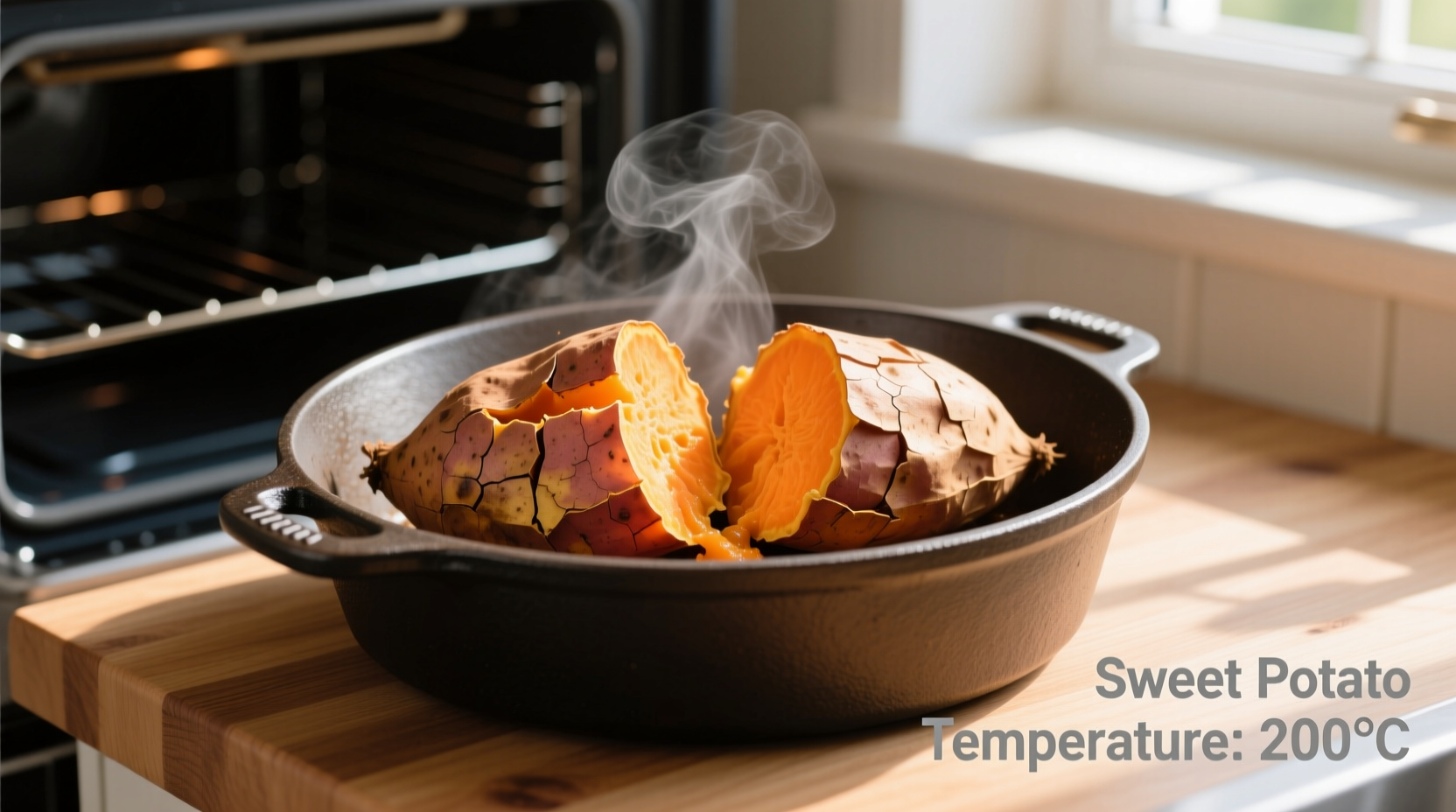
The ideal oven temperature for baking sweet potatoes is 400°F (204°C), which delivers perfectly caramelized exteriors and creamy, tender interiors in 45-60 minutes. This temperature optimizes starch gelatinization while developing rich, complex flavors through Maillard reactions and caramelization.
When you're craving that perfect sweet potato with crispy skin and melt-in-your-mouth flesh, getting the oven temperature right makes all the difference. Baking at 400°F (204°C) creates the ideal balance between thorough cooking and flavor development. This precise temperature range ensures your sweet potatoes cook evenly without drying out or becoming waterlogged—a common frustration many home cooks face.
Why 400°F Is the Sweet Spot for Sweet Potatoes
Sweet potatoes contain complex starches that need sufficient heat to fully gelatinize, transforming from hard and fibrous to creamy and tender. At temperatures below 375°F, the cooking process becomes inefficient, often resulting in undercooked centers or uneven texture. Conversely, temperatures above 425°F risk burning the natural sugars before the interior fully cooks.
According to research from the University of Minnesota Extension, sweet potatoes reach optimal texture when their internal temperature reaches 205-210°F (96-99°C). This critical temperature range ensures complete starch conversion while preserving moisture.
Temperature vs. Cooking Time: What You Need to Know
| Oven Temperature | Approximate Cooking Time | Result Characteristics |
|---|---|---|
| 350°F (177°C) | 65-80 minutes | Milder caramelization, softer skin, less concentrated flavor |
| 375°F (191°C) | 55-70 minutes | Moderate browning, balanced texture |
| 400°F (204°C) | 45-60 minutes | Optimal caramelization, creamy interior, slightly crispy skin |
| 425°F (218°C) | 35-50 minutes | Deep browning, potential for slightly drier texture |
Step-by-Step Guide to Perfect Oven-Baked Sweet Potatoes
Preparation Essentials
Before you even preheat your oven, proper preparation sets the stage for success:
- Wash thoroughly with a vegetable brush to remove dirt from the skin
- Pierce 4-5 times with a fork to allow steam to escape (prevents bursting)
- Dry completely with a clean towel—moisture creates steam that hinders caramelization
- Optional enhancement: Lightly coat with avocado oil and sprinkle with flaky sea salt for improved texture
The Baking Process
- Preheat your oven to 400°F (204°C) with rack positioned in the center
- Place sweet potatoes directly on the oven rack or on a parchment-lined baking sheet
- Set timer for 45 minutes for medium-sized potatoes (about 6-8 ounces)
- Check for doneness at 45 minutes by inserting a skewer—it should slide in with no resistance
- For extra caramelization, continue baking in 5-minute increments until desired texture is achieved
How to Determine Perfect Doneness
Don't rely solely on time—sweet potato size significantly impacts cooking duration. Use these reliable indicators:
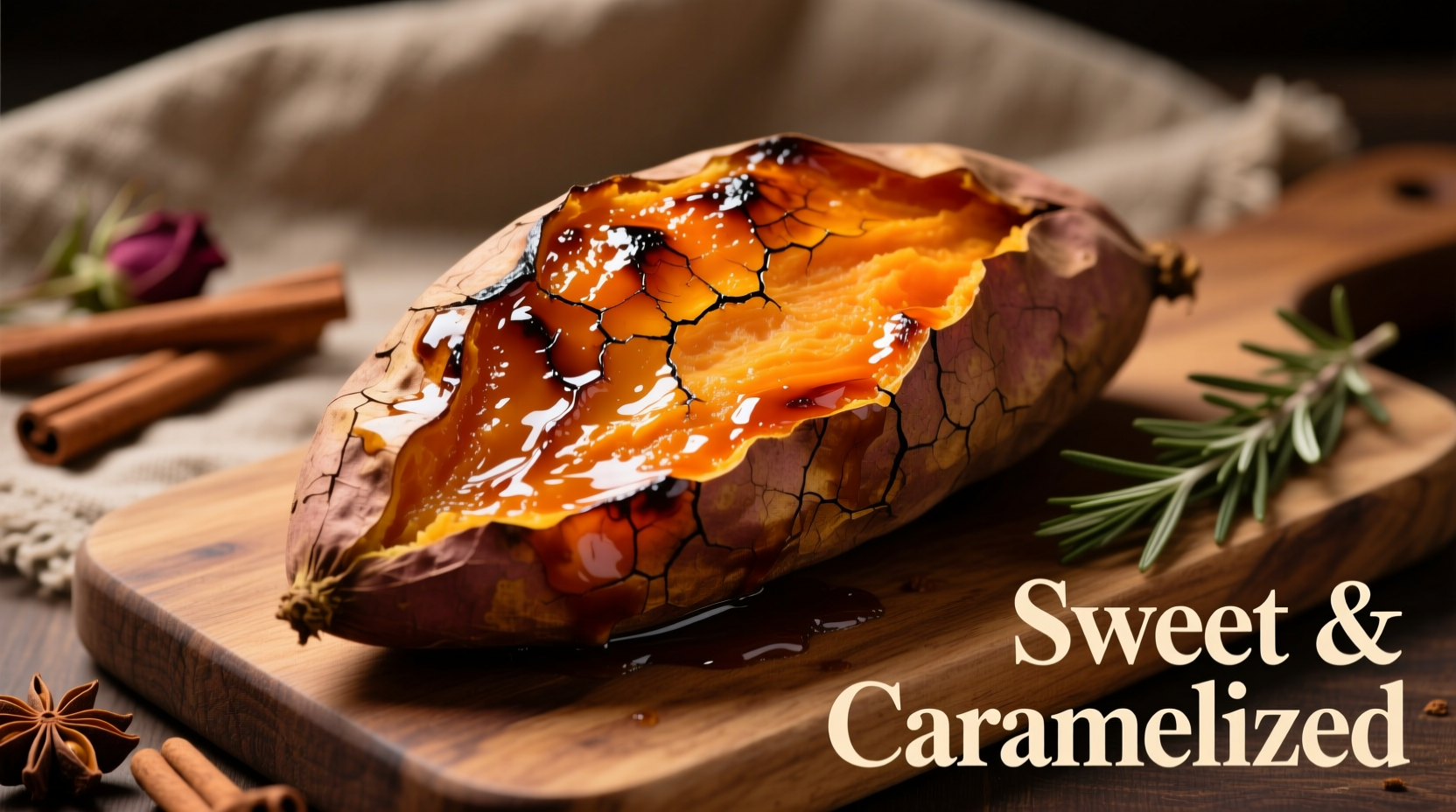
- Visual cue: Skin appears slightly shrunken with darkened, caramelized spots
- Texture test: Gently squeeze (using oven mitts)—should yield slightly but maintain shape
- Internal temperature: 205-210°F (96-99°C) measured with an instant-read thermometer
- Skewer test: Should slide through with absolutely no resistance
Undercooked sweet potatoes will feel firm when squeezed and offer resistance to a skewer. Overcooked potatoes may develop wrinkled skin and potentially leak sugary syrup.
Special Considerations for Different Sweet Potato Varieties
Not all sweet potatoes behave the same in the oven. Understanding variety differences prevents cooking mishaps:
- Beauregard/Standard orange-fleshed: Most common variety, performs best at 400°F with 45-60 minute cooking time
- Japanese (Murasaki): Thinner skin, slightly drier texture—reduce temperature to 375°F to prevent drying
- White-fleshed varieties: Higher moisture content—extend cooking time by 10-15 minutes at same temperature
- Garnet: Higher sugar content—watch carefully after 45 minutes to prevent burning
According to agricultural research from the Clemson University Cooperative Extension, sweet potato varieties with higher sugar content (like Garnet) undergo caramelization more rapidly, requiring closer monitoring during the final cooking stages.
Avoiding Common Sweet Potato Baking Mistakes
Even with the right temperature, these frequent errors can ruin your results:
- Skipping the preheat: Putting potatoes in a cold oven extends cooking time and creates uneven texture
- Overcrowding the pan: Prevents proper air circulation, steaming rather than roasting the potatoes
- Wrapping in foil: Creates steam that prevents caramelization and yields boiled-texture results
- Ignoring size differences: Large potatoes need significantly longer than small ones—cook similar sizes together
Storage and Reheating for Maximum Flavor Preservation
Proper storage maintains texture and flavor for future enjoyment:
- Cool completely at room temperature before storing (about 30 minutes)
- Refrigerate in airtight container for up to 5 days
- For best reheating results, use oven at 350°F until internal temperature reaches 165°F
- Microwave reheating often creates uneven texture—add a damp paper towel to preserve moisture
Food science research from the National Center for Home Food Preservation confirms that reheating sweet potatoes in dry heat (oven or toaster oven) better preserves texture than moist heat methods, which can make the exterior soggy.
Advanced Temperature Techniques for Culinary Professionals
For those seeking restaurant-quality results, consider these professional approaches:
- Two-stage cooking: Start at 425°F for 20 minutes to initiate caramelization, then reduce to 375°F to finish cooking without burning
- Convection advantage: Reduce standard temperature by 25°F when using convection setting for more even cooking
- Temperature mapping: Place multiple potatoes on different racks to determine your oven's hot spots
Professional chefs at America's Test Kitchen discovered that the two-stage method produces the most consistent results across various oven types, accommodating for common household oven inconsistencies.
Troubleshooting Your Sweet Potato Results
| Problem | Most Likely Cause | Solution |
|---|---|---|
| Soggy texture | Insufficient oven temperature or wrapped in foil | Cook uncovered at minimum 375°F; increase temperature by 25°F next time |
| Burnt exterior, raw interior | Oven temperature too high or potatoes too large | Reduce temperature to 375°F; cut large potatoes in half |
| Lack of caramelization | Temperature too low or insufficient cooking time | Increase temperature to 400°F; extend cooking by 10-15 minutes |
Conclusion: Mastering Sweet Potato Oven Temperatures
Understanding the science behind sweet potato cooking temperatures transforms this simple side dish into a culinary highlight. The 400°F standard provides the perfect balance of efficient cooking and flavor development for most home ovens and sweet potato varieties. By recognizing how size, variety, and oven characteristics affect results, you'll consistently achieve that ideal combination of creamy interior and caramelized exterior.
Remember that oven calibration varies—using an independent oven thermometer ensures accuracy. With these temperature guidelines and troubleshooting tips, you'll never serve undercooked or burnt sweet potatoes again. The perfect baked sweet potato is within your reach with just the right temperature control.
Frequently Asked Questions
What's the minimum temperature for properly cooking sweet potatoes?
The minimum effective temperature is 350°F (177°C), though this requires 65-80 minutes of cooking time and produces less caramelization. At temperatures below 350°F, sweet potatoes may remain undercooked in the center even after extended periods, as the internal temperature may not reach the critical 205°F needed for complete starch gelatinization.
Can I bake sweet potatoes at 325°F for longer cooking?
While technically possible, baking at 325°F is not recommended as it falls below the optimal range for starch conversion. This low temperature often results in waterlogged texture rather than the desired creamy consistency. The extended cooking time (90+ minutes) also increases the risk of bacterial growth during the slow temperature rise through the food safety danger zone (40-140°F).
How does oven type affect sweet potato cooking temperature?
Convection ovens circulate hot air, requiring a 25°F reduction from standard temperatures (so 375°F instead of 400°F). Gas ovens often have more moisture in the environment, potentially extending cooking time slightly. Toaster ovens typically require the same temperature but may need 5-10 minutes less cooking time due to closer proximity to heating elements.
Why do my sweet potatoes always burn on the outside before cooking through?
This typically indicates your oven runs hotter than displayed, or you're using an excessively high temperature for your potato size. Try reducing to 375°F and checking after 50 minutes. Large sweet potatoes (over 10 ounces) often require lower temperatures to cook through properly. An independent oven thermometer can verify your actual oven temperature.
Should I adjust temperature for stuffed sweet potatoes?
Yes, when stuffing sweet potatoes with fillings like marshmallows or cheese, reduce the temperature to 375°F after the initial 30 minutes of cooking at 400°F. This prevents the toppings from burning while ensuring the potato interior fully cooks. The lower temperature allows fillings to heat through without scorching.




 浙公网安备
33010002000092号
浙公网安备
33010002000092号 浙B2-20120091-4