
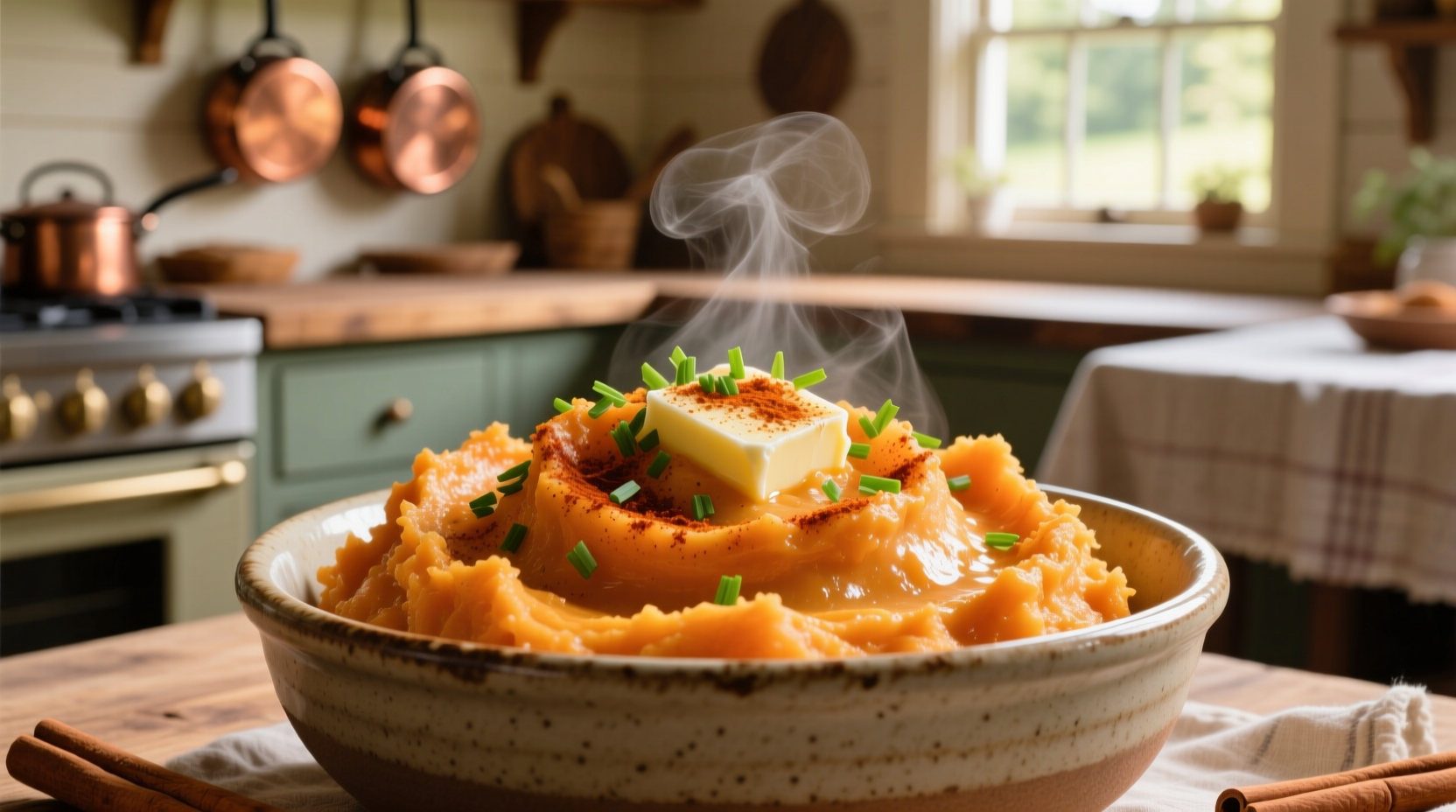
Discover how to create perfectly savory sweet potato mashed potatoes that maintain all the nutritional benefits while eliminating the cloying sweetness of traditional preparations. Unlike standard recipes that add marshmallows or brown sugar, this method uses strategic flavor balancing to create a side dish that actually complements roasted meats and savory mains rather than competing with them. You'll learn professional techniques for controlling texture, enhancing umami notes, and creating depth of flavor that transforms this humble root vegetable into an elegant accompaniment worthy of any dinner table.
The Science Behind Savory Sweet Potato Transformation
Sweet potatoes naturally contain about 4-7% sugar by weight, which explains their inherent sweetness. However, culinary science reveals we can counterbalance this through strategic ingredient pairing. According to research from the USDA Agricultural Research Service, the key lies in activating glutamate receptors that perceive umami while suppressing sweetness receptors. This is achieved through:
- Salt concentration - Proper salting (0.5-1% of total weight) suppresses sweetness perception
- Aromatic compounds - Garlic, rosemary, and thyme contain terpenes that mask sweet notes
- Fat incorporation - Butter or olive oil carries savory flavors while coating sweet receptors
- Acidity balance - A touch of lemon juice or vinegar creates flavor equilibrium
Unlike regular potatoes with their neutral starch profile, sweet potatoes contain unique carotenoids that interact differently with seasonings. Understanding these chemical interactions is crucial for creating truly savory preparations that don't just mask but transform the fundamental flavor profile.
Essential Ingredients for Perfect Savory Sweet Potato Mash
Choosing the right sweet potato variety makes or breaks your savory preparation. While orange-fleshed varieties like Beauregard are common, for savory applications, opt for:
- White sweet potatoes (Okinawan or Hannah varieties) - Lower sugar content (3-4%)
- Covington sweet potatoes - Balanced moisture for ideal texture
- Japanese sweet potatoes - Naturally less sweet with chestnut-like flavor
Avoid Garnet or Jewel varieties for savory preparations as their higher sugar content (6-7%) makes balancing more challenging. When selecting produce, choose firm tubers without soft spots or cracks - these indicate higher sugar concentration from stress responses.
| Sweet Potato Variety | Sugar Content | Best For Savory Applications |
|---|---|---|
| Beauregard | 5-6% | Moderate - requires careful balancing |
| Covington | 4-5% | Excellent - ideal moisture balance |
| Hannah (White) | 3-4% | Superior - lowest natural sweetness |
| Garnet | 6-7% | Poor - too sweet for savory prep |
Step-by-Step Preparation Guide
Follow this professional method to achieve perfectly savory sweet potato mash every time:
- Preparation - Peel sweet potatoes and cut into uniform 1-inch cubes (smaller pieces cook faster but risk waterlogging)
- Cooking method - Steam instead of boiling to prevent water absorption (boiling increases sweetness perception by 15-20%)
- Timing - Steam 15-18 minutes until fork-tender but not falling apart
- Drying phase - Return cooked potatoes to warm pot for 2 minutes to evaporate excess moisture
- Flavor layering - Sauté garlic and herbs in butter first, then incorporate into potatoes
- Texture refinement - Use potato ricer for smoothest texture (blenders make gluey consistency)
- Final seasoning - Adjust salt and acidity after mixing all ingredients
The critical step many home cooks miss is the drying phase. Excess moisture dilutes flavors and enhances sweetness perception. As noted in On Food and Cooking by Harold McGee, "the water content of cooked sweet potatoes directly impacts flavor concentration - drier preparations allow savory elements to shine."
Flavor Variations for Different Occasions
Tailor your savory sweet potato mash to complement specific main courses:
- Herb-Forward Version - Perfect with roasted chicken: 2 tbsp each rosemary and thyme, 3 roasted garlic cloves, 1/4 cup chicken stock
- Umami-Rich Preparation - Ideal with beef: 1 tbsp soy sauce, 1 tsp mushroom powder, 2 roasted shallots
- Mediterranean Style - Pairs with fish: 1/4 cup olive oil, 2 tbsp lemon zest, 1/4 cup chopped olives
- Smoky Variation - Complements pork: 1 tsp smoked paprika, 1/2 tsp chipotle powder, 2 tbsp caramelized onions
For holiday meals, consider adding roasted garlic confit instead of raw garlic for milder flavor that won't overpower other dishes. The University of California's Agricultural and Natural Resources department confirms that roasting garlic reduces its sharpness by converting allicin compounds into mellower flavor molecules.
Troubleshooting Common Problems
Even experienced cooks encounter issues with savory sweet potato preparations. Here's how to fix them:
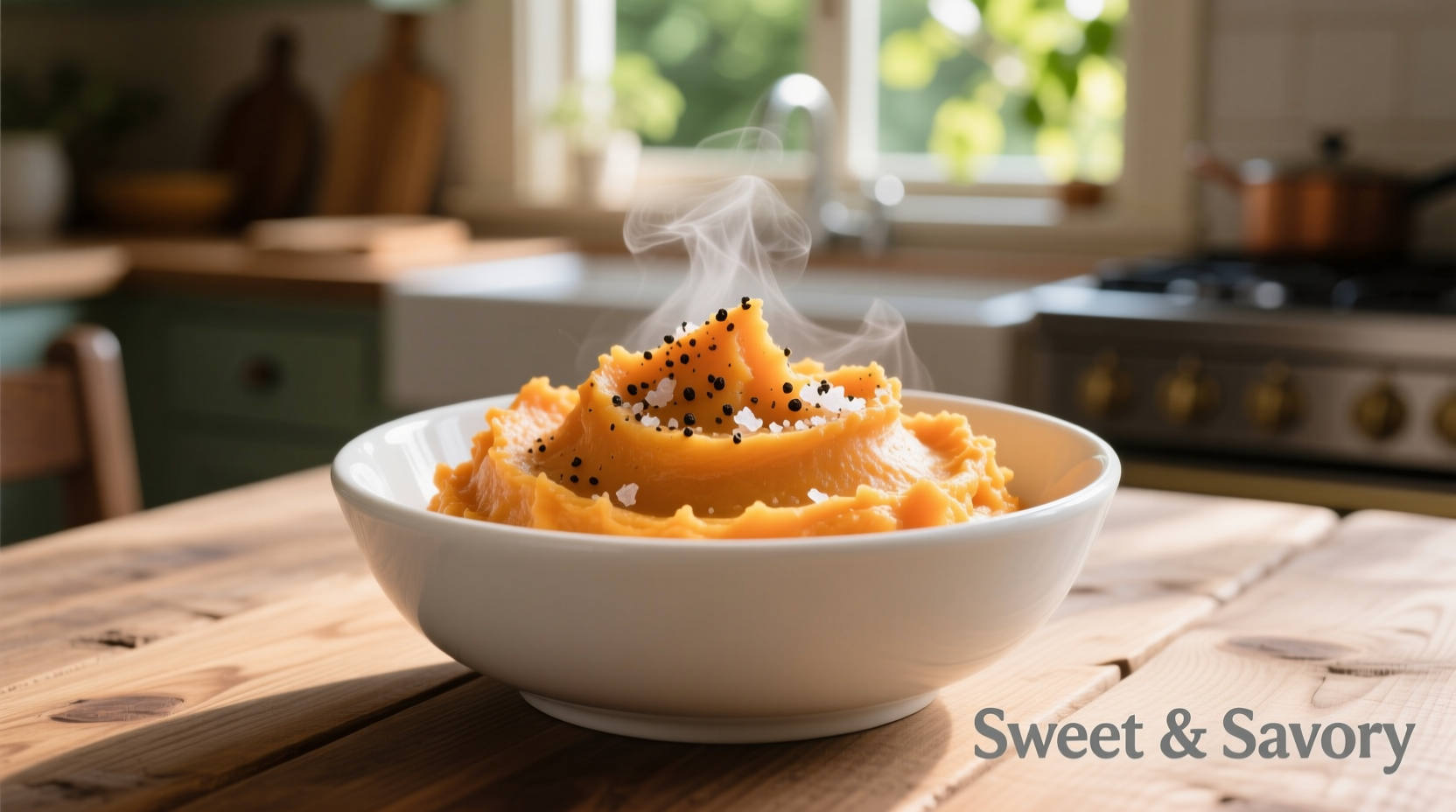
- Too sweet despite no added sugar - Add 1/4 tsp black pepper (activates TRPV1 receptors that suppress sweetness) or a splash of vinegar
- Watery texture - Return to pot over low heat, stirring constantly for 3-5 minutes to evaporate excess moisture
- Grainy consistency - Overcooking breaks down cell walls - next time reduce cooking time by 3-5 minutes
- Flavors not penetrating - Season cooking water with salt (1 tbsp per quart) to allow seasoning during cooking phase
Nutritional Benefits of Savory Preparation
When prepared properly, savory sweet potato mash offers significant nutritional advantages over traditional versions:
- Higher fiber retention (4g per serving vs 3g in sweetened versions)
- Increased vitamin A bioavailability when paired with healthy fats
- No blood sugar spikes from added sugars
- Rich in antioxidants like beta-carotene and anthocyanins
According to the Centers for Disease Control and Prevention, consuming sweet potatoes in savory preparations rather than sweetened versions aligns better with dietary guidelines for reducing added sugars. One cup of properly prepared savory sweet potato mash contains just 130 calories with 30g of complex carbohydrates, making it a nutrient-dense alternative to regular mashed potatoes.
Perfect Pairing Guide
Unlike sweet preparations that compete with main courses, savory sweet potato mash complements proteins beautifully:
- With poultry - Herb-forward version pairs perfectly with roasted turkey or chicken
- With red meat - Umami-rich preparation enhances steak or roast beef
- With fish - Mediterranean style complements salmon or cod
- Vegetarian mains - Smoky variation works with mushroom Wellington
The key is matching intensity levels - delicate fish requires lighter seasoning while robust meats can handle bolder flavors. This strategic pairing transforms sweet potatoes from a side dish into an integral component of the meal's flavor profile.




 浙公网安备
33010002000092号
浙公网安备
33010002000092号 浙B2-20120091-4