
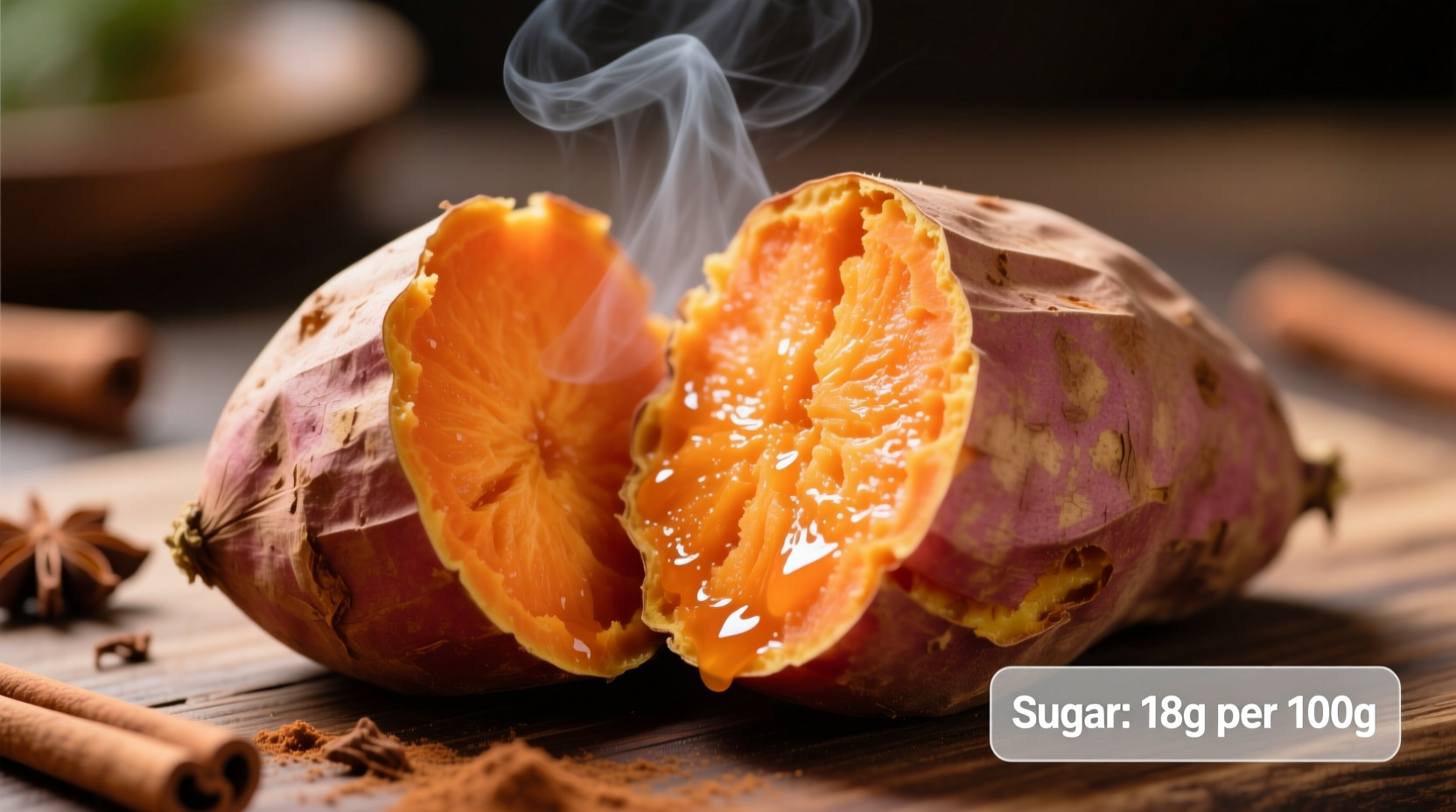
A medium sweet potato (about 130g) contains approximately 5-7 grams of natural sugar. This natural sugar comes packaged with fiber, vitamins, and minerals that affect how your body processes it, making sweet potatoes a nutritious choice even for those monitoring sugar intake.
When you're watching your sugar consumption, understanding exactly how much sugar is in a sweet potato becomes crucial information. Unlike processed foods with added sugars, sweet potatoes contain naturally occurring sugars that come with valuable nutrients. Let's break down the exact sugar content and what it means for your diet.
Sweet Potato Sugar Content: The Facts
According to the USDA FoodData Central database, a medium-sized sweet potato (approximately 130 grams) contains about 5-7 grams of natural sugar. This amount can vary slightly depending on the variety and cooking method, but it remains significantly lower than many people assume.
| Serving Size | Total Sugar (grams) | Natural Sugars Only | Added Sugar |
|---|---|---|---|
| 100g raw sweet potato | 4.2g | Yes | None |
| Medium sweet potato (130g) | 5.5g | Yes | None |
| 1 cup mashed (200g) | 8.4g | Yes | None |
| 1 small sweet potato fries (85g) | 3.6g | Yes | Potentially added |
This comparison chart shows sweet potatoes contain only natural sugars with zero added sugar in their whole, unprocessed form. The sugar content becomes a concern only when sweet potatoes are prepared with added sugars, like in candied recipes or sweet potato pie.
Sweet Potato Sugar vs. Other Common Foods
Understanding sweet potato sugar content requires context. How does it compare to other foods you might eat regularly?
| Food Item | Serving Size | Total Sugar (grams) | Glycemic Index |
|---|---|---|---|
| Sweet potato | 130g | 5.5g | 44-61 |
| White potato | 150g | 0.8g | 70-85 |
| Apple | 1 medium | 19g | 36 |
| Orange juice | 8oz | 21g | 50 |
| Whole wheat bread | 1 slice | 2g | 69 |
As you can see from this sweet potato sugar comparison, while sweet potatoes contain more sugar than white potatoes, they have a lower glycemic index, meaning they cause a slower, more gradual rise in blood sugar. This makes them a better option for blood sugar management despite the higher natural sugar content.
Understanding Natural Sugar in Sweet Potatoes
The sugar in sweet potatoes isn't the same as the added sugar in processed foods. Sweet potatoes contain naturally occurring sugars along with fiber, vitamins A and C, potassium, and other nutrients. This combination affects how your body processes the sugar.
When you eat a whole sweet potato, the fiber content (about 3.6 grams per medium potato) slows down the digestion and absorption of sugars. This prevents the rapid blood sugar spikes you might experience with foods containing refined sugars.
The American Diabetes Association recognizes sweet potatoes as a diabetes-friendly food when prepared properly. Their moderate glycemic index (44-61 depending on cooking method) makes them suitable for inclusion in balanced meal plans for people with diabetes.
Who Should Monitor Sweet Potato Sugar Intake
While sweet potatoes are nutritious, certain individuals may need to be mindful of portion sizes:
- People with diabetes: Sweet potatoes can be part of a diabetes meal plan, but portion control matters. A standard serving is 1/2 cup cooked, which contains about 15 grams of carbohydrates.
- Those following low-carb diets: If you're on a strict low-carb regimen, you may need to limit sweet potato portions or choose them less frequently.
- Individuals managing insulin resistance: The natural sugars still affect blood glucose, so monitoring your personal response is important.
Research from the Centers for Disease Control and Prevention shows that focusing on whole food sources of carbohydrates like sweet potatoes is more beneficial than avoiding them altogether. The key is understanding appropriate portions for your individual health needs.
Practical Tips for Enjoying Sweet Potatoes
Here's how to incorporate sweet potatoes into your diet while being mindful of sugar content:
- Choose appropriate portions: Stick to 1/2 to 1 cup of cooked sweet potato per serving.
- Avoid added sugars: Skip recipes that call for marshmallows, brown sugar, or syrup toppings.
- Pair with protein and healthy fats: Combine sweet potatoes with sources of protein and fat to further slow sugar absorption.
- Try different cooking methods: Boiling preserves more of the natural resistant starch than baking, potentially lowering the glycemic impact.
- Monitor your personal response: Use a glucose monitor if you have diabetes to see how sweet potatoes affect your individual blood sugar levels.
These practical strategies help you enjoy the nutritional benefits of sweet potatoes while managing sugar intake effectively. Remember that how much sugar is in a baked sweet potato differs slightly from boiled, with baking concentrating the natural sugars somewhat more.
Common Questions About Sweet Potato Sugar Content
Many people wonder about specific aspects of sweet potato sugar content. Let's address some frequent concerns:
When comparing sweet potato sugar content per 100g to regular potatoes, sweet potatoes do contain more natural sugar (4.2g vs 0.8g), but they also offer significantly more vitamins and fiber. The higher nutrient density makes sweet potatoes a more nutritionally valuable choice despite the slightly higher sugar content.
For those asking are sweet potatoes high in sugar for diabetics, the answer is nuanced. Sweet potatoes have a moderate glycemic index and can be included in diabetes meal plans with proper portion control. The American Diabetes Association recommends them as a better alternative to white potatoes for blood sugar management.
The question do sweet potatoes turn into sugar in your body reflects a common misunderstanding. All carbohydrates break down into glucose during digestion, but the fiber and nutrients in sweet potatoes slow this process significantly compared to refined carbohydrates.
How much sugar is in a medium sweet potato?
A medium sweet potato (about 130g) contains approximately 5-7 grams of natural sugar. This sugar comes with valuable fiber and nutrients that affect how your body processes it.
Are sweet potatoes high in sugar compared to other vegetables?
Sweet potatoes contain more natural sugar than many non-starchy vegetables like broccoli or spinach, but less than fruits. Compared to white potatoes, they have slightly more sugar but offer significantly more nutrients and fiber.
Can people with diabetes eat sweet potatoes?
Yes, people with diabetes can enjoy sweet potatoes as part of a balanced meal plan. The key is portion control (typically 1/2 cup cooked) and preparation method (avoiding added sugars). Their moderate glycemic index makes them a better option than white potatoes for blood sugar management.
Does cooking method affect sweet potato sugar content?
The actual sugar content doesn't change significantly with cooking, but the concentration does. Baking concentrates natural sugars more than boiling. However, boiling may preserve more of the resistant starch, which can have a lower glycemic impact.




 浙公网安备
33010002000092号
浙公网安备
33010002000092号 浙B2-20120091-4