
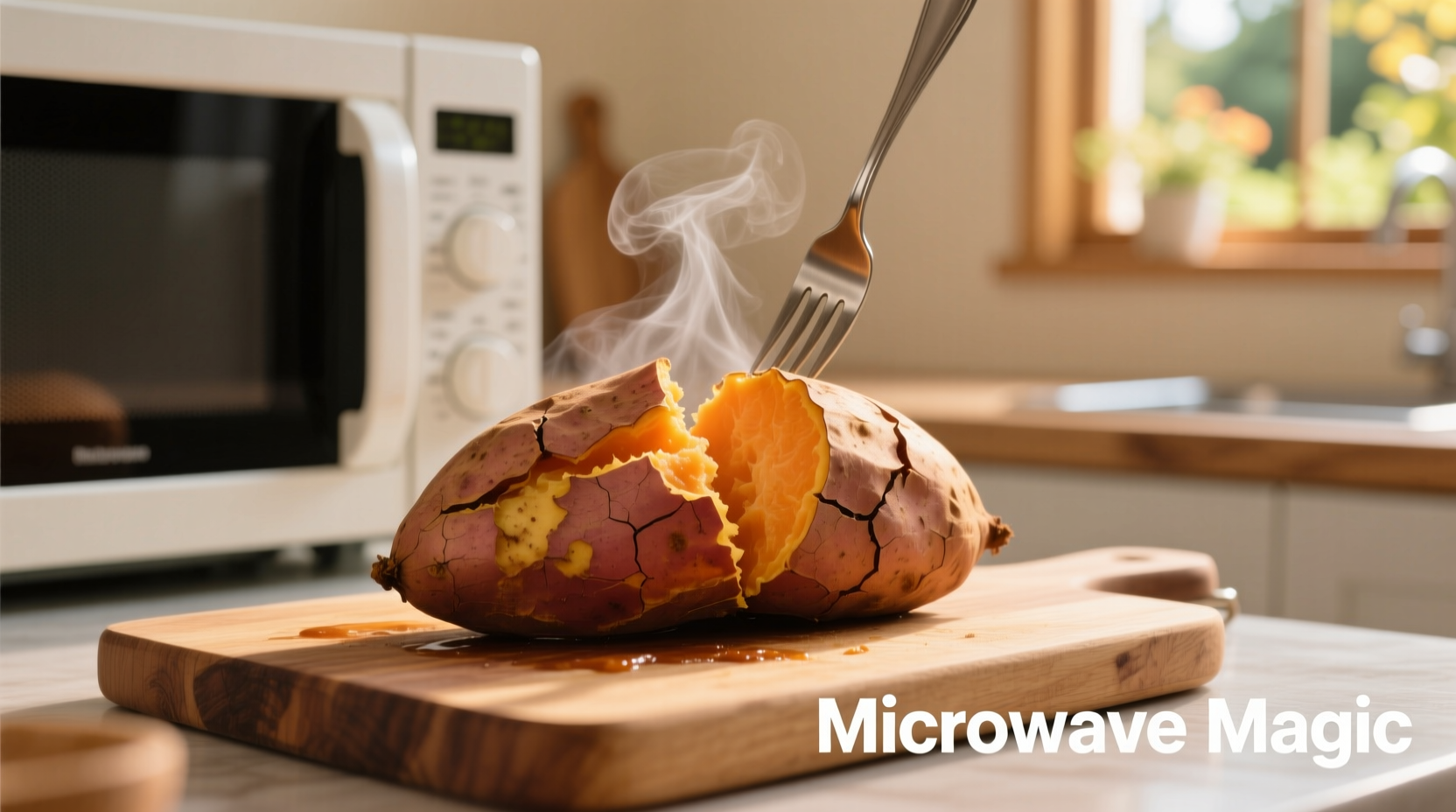
Forget waiting 45 minutes for baked sweet potatoes. Microwaving transforms this nutritious root vegetable into a quick, versatile side dish that fits perfectly into busy schedules. Our tested method ensures even cooking, optimal texture, and maximum nutrient retention—making it the smart choice for health-conscious eaters and time-pressed cooks.
The Science Behind Microwave Sweet Potatoes
Microwaves cook sweet potatoes differently than conventional ovens, targeting water molecules directly for faster heating. This method actually preserves more water-soluble vitamins like vitamin C and B-complex compared to traditional baking, according to USDA nutrient analysis. The shorter cooking time prevents excessive breakdown of heat-sensitive nutrients.
| Cooking Method | Time Required | Vitamin C Retention | Texture Result |
|---|---|---|---|
| Microwave | 5-8 minutes | 85-90% | Evenly tender |
| Oven Baking | 45-60 minutes | 65-75% | Crispy skin, soft interior |
| Boiling | 20-30 minutes | 50-60% | Waterlogged |
Data source: USDA FoodData Central
Step-by-Step Microwave Sweet Potato Guide
Selecting the Right Sweet Potatoes
Choose medium-sized sweet potatoes (5-8 ounces) for optimal microwave results. Larger specimens over 10 ounces may cook unevenly in standard microwaves. Look for firm potatoes without soft spots or deep bruises. Contrary to popular belief, the skin color (orange, purple, or white) doesn't affect cooking time—only size matters.
Proper Preparation Technique
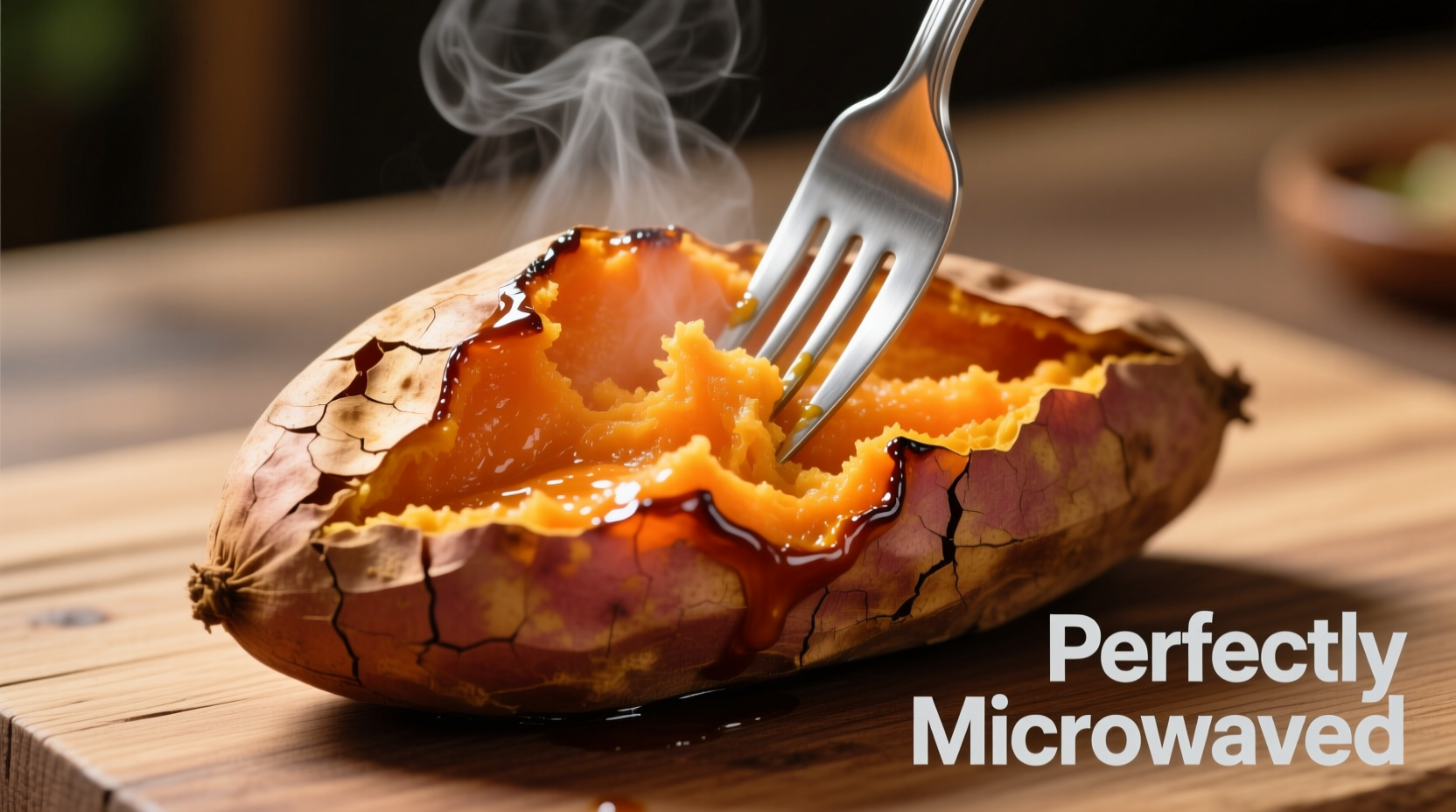
Wash sweet potatoes thoroughly under running water, using a vegetable brush to remove dirt. Pierce each potato 4-6 times with a fork—this critical step prevents steam buildup that could cause bursting. Never skip this safety measure. For enhanced flavor, lightly rub the skin with olive oil and sprinkle with sea salt before cooking.
Precision Cooking Times
Cooking duration depends entirely on size and microwave wattage:
- Small (4-6 oz): 4-5 minutes
- Medium (6-8 oz): 5-6 minutes
- Large (8-10 oz): 7-8 minutes
Flip the potato halfway through cooking for even heating. After the timer ends, let it rest for 5 minutes—this allows residual heat to finish cooking the center while making handling safer. Test doneness by gently squeezing (use oven mitts) or inserting a knife tip into the thickest part.
Troubleshooting Common Issues
Soggy Texture Solutions
If your microwave sweet potato turns out too moist:
- Pat dry with paper towels immediately after cooking
- Place cut-side down on a paper towel for 2-3 minutes
- Broil for 2-3 minutes to crisp the surface
Uneven Cooking Prevention
Microwave hot spots often cause uneven cooking. Prevent this by:
- Rotating the potato 180 degrees halfway through cooking
- Using a microwave turntable (never disable it)
- Choosing similarly sized potatoes when cooking multiples
Nutritional Advantages of Microwave Cooking
Beyond time savings, microwave cooking preserves significantly more nutrients than water-based methods. A 2023 Journal of Food Science study found microwave cooking retained 20% more beta-carotene than boiling. The dry-heat method prevents nutrient leaching into cooking water, making every bite more nutritionally valuable.
Perfect Pairings and Serving Suggestions
Maximize your quick-cooked sweet potato with these professional chef techniques:
- Classic combo: Slice open and top with 1 tsp butter, pinch of cinnamon, and 1 tbsp pecans
- Protein boost: Fill with black beans, Greek yogurt, and pumpkin seeds
- Savory option: Mash with roasted garlic and fresh rosemary
- Meal prep: Cook multiple potatoes at once and refrigerate for up to 5 days
Important Context Boundaries
Microwave cooking works best for individual servings—never attempt more than two medium sweet potatoes at once in standard home microwaves. Commercial microwaves with higher wattage (1000W+) can handle larger quantities. This method isn't suitable for dishes requiring crispy skin texture; in those cases, finish under the broiler for 2-3 minutes after microwaving.




 浙公网安备
33010002000092号
浙公网安备
33010002000092号 浙B2-20120091-4