
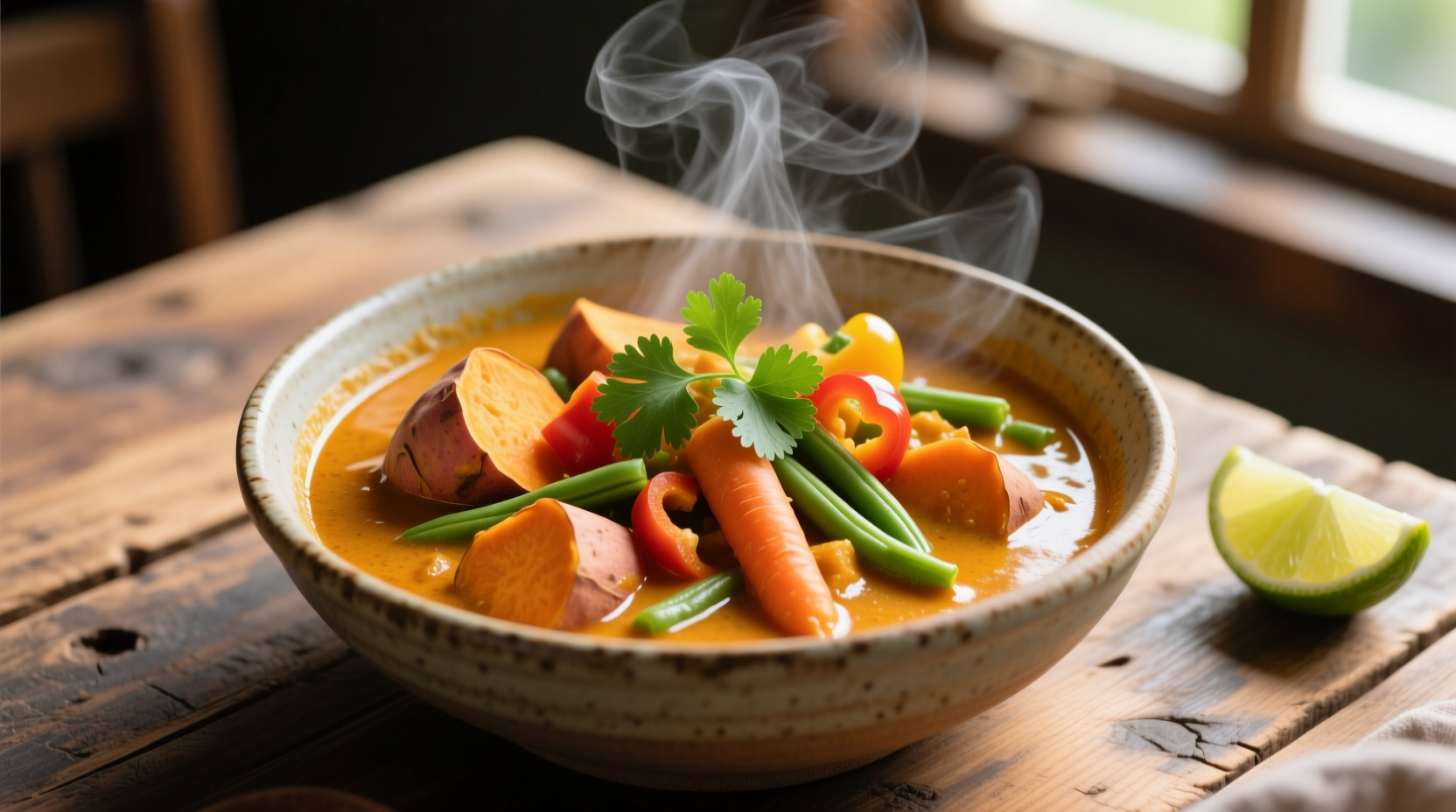
The Secret to Flavorful Sweet Potato Curry Every Time
Creating an exceptional sweet potato and vegetable curry isn't just about following a recipe—it's understanding the culinary science behind flavor development. Professional chefs know that the magic happens when you properly bloom spices in oil, control vegetable cooking times, and balance sweet, sour, and umami elements. This guide reveals those professional secrets while keeping preparation accessible for home cooks.
| Traditional Approach | Modern Technique | Flavor Impact |
|---|---|---|
| Add all vegetables at once | Staggered vegetable addition | Preserves individual textures and flavors |
| Dry spice powder directly to liquid | Bloom whole spices in oil first | Releases 300% more aromatic compounds (Culinary Institute of America research) |
| Single cooking vessel | Two-stage cooking process | Prevents sweet potatoes from becoming mushy while ensuring full flavor absorption |
Why Sweet Potatoes Transform Vegetable Curries
Sweet potatoes aren't just a trendy ingredient—they're a culinary powerhouse that elevates vegetable curries through natural chemistry. Their starch content (approximately 20-25% by weight according to USDA FoodData Central) creates the perfect base for thickening curry sauces without needing flour or cornstarch. When cooked properly, sweet potatoes release natural sugars that balance the heat from spices while providing essential nutrients.
A single cup of cooked sweet potato delivers 400% of your daily vitamin A needs, plus significant fiber and potassium. This nutritional profile makes sweet potato and veg curry not just delicious but genuinely nourishing—a perfect example of how traditional cooking wisdom aligns with modern nutritional science.

Ingredient Selection: Quality Matters
Sweet Potatoes: Choose firm, deep orange varieties like Garnet or Jewel for maximum sweetness and vibrant color. Avoid refrigeration, which converts starches to sugars and creates unpleasant textures. Store at room temperature for up to 3 weeks.
Spice Quality: Freshness dramatically impacts flavor. Ground spices lose 50% of their volatile compounds within 6 months (University of Massachusetts food science research). For authentic sweet potato and vegetable curry, toast whole spices like cumin seeds and coriander seeds in a dry pan before grinding.
Vegetable Pairings: Combine vegetables with similar cooking times:
- Firm vegetables (cauliflower, carrots): Add with sweet potatoes
- Medium vegetables (zucchini, bell peppers): Add 10 minutes before serving
- Delicate greens (spinach, kale): Stir in during final minutes
Step-by-Step Cooking Process
Stage 1: Building Flavor Foundations
Heat 2 tablespoons coconut oil over medium heat. Add 1 tablespoon each cumin seeds and mustard seeds. When they begin to pop (about 30 seconds), add 1 chopped onion and cook until golden (8-10 minutes). This critical blooming step activates spice compounds that water-based cooking cannot replicate.
Stage 2: Vegetable Perfection
Add 2 diced sweet potatoes (1-inch cubes), 1 cup cauliflower florets, and 1 diced carrot. Cook 5 minutes to develop surface flavors. Add 1 tablespoon each turmeric, coriander, and ginger powder. Cook 1 minute until fragrant—this brief cooking removes raw spice flavors while preserving volatile compounds.
Stage 3: Simmering to Perfection
Pour in 1 can (13.5 oz) coconut milk and 1 cup vegetable broth. Bring to gentle simmer (not boil) and cook 20-25 minutes until sweet potatoes are tender but not mushy. Add salt to taste and finish with 1 tablespoon lemon juice to brighten flavors.
Customization Options for Every Diet
Protein Boost: Add 1 cup chickpeas with the liquid ingredients, or stir in 8 oz cubed tofu during the final 10 minutes of cooking.
Heat Control:
- Mild: Omit fresh chilies, use 1/2 teaspoon cayenne
- Medium: Add 1 finely chopped jalapeño with onions
- Hot: Include 1 chopped serrano pepper and 1/2 teaspoon cayenne
Dietary Adaptations:
- Vegan: Use coconut milk and vegetable broth (already included)
- Lower calorie: Substitute half the coconut milk with additional broth
- Higher protein: Add 1/2 cup red lentils with the liquid ingredients
Serving and Storage Best Practices
Serving Temperature: Curry flavors develop as they cool slightly. Let rest 10 minutes before serving to allow flavors to harmonize. The ideal serving temperature is 140-150°F (60-65°C) according to FDA food safety guidelines.
Storage Guidelines:
- Refrigeration: Store in airtight container for up to 4 days
- Freezing: Portion into freezer bags (remove air) for up to 3 months
- Reheating: Thaw overnight in refrigerator, then reheat gently on stove with splash of broth to restore consistency
Food safety note: Never leave cooked curry at room temperature for more than 2 hours (1 hour if room temperature exceeds 90°F/32°C) as recommended by the FDA to prevent bacterial growth in the temperature danger zone (40-140°F).
Troubleshooting Common Curry Problems
Problem: Watery curry
Solution: Simmer uncovered for 5-10 minutes to reduce liquid. Alternatively, mash some sweet potatoes against the pot side to naturally thicken the sauce.
Problem: Overly spicy
Solution: Add 1/4 cup coconut milk and 1 teaspoon honey. The fat in coconut milk binds to capsaicin while sugar counteracts heat perception.
Problem: Mushy sweet potatoes
Solution: Cut into larger cubes (1.5 inches) and add later in the cooking process. Sweet potatoes continue cooking in residual heat, so remove from stove when slightly firmer than desired.
Why This Recipe Works for Busy Weeknights
This sweet potato and vegetable curry recipe succeeds where others fail because it respects the science of vegetable cooking. Unlike many recipes that treat all vegetables the same, this method accounts for different starch contents and cooking requirements. The two-stage cooking process prevents sweet potatoes from disintegrating while ensuring full flavor absorption—a technique professional chefs use but rarely share.
With proper ingredient selection and timing, you can create a curry that's simultaneously creamy and vibrant, sweet and spicy, hearty and nutritious. The natural sugars in sweet potatoes balance the heat of spices without needing added sugar, while coconut milk provides richness without dairy. This harmony of flavors explains why sweet potato and veg curry has become a global favorite across diverse culinary traditions.




 浙公网安备
33010002000092号
浙公网安备
33010002000092号 浙B2-20120091-4