
The History and Evolution of America's Favorite Holiday Side
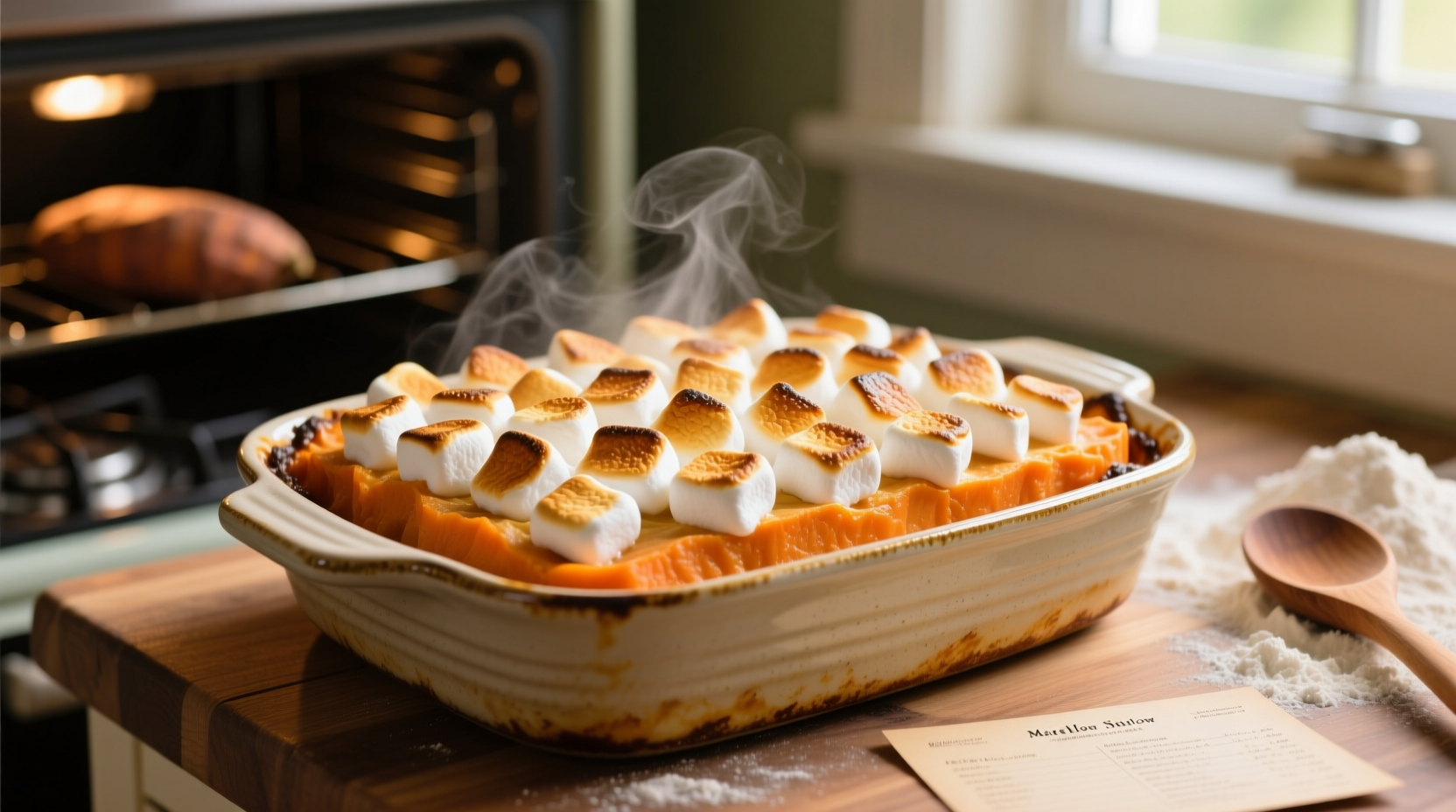
Sweet potato and marshmallow casserole has become a Thanksgiving staple across the United States, but its journey to the holiday table spans over a century. The dish emerged during the early 20th century when the Orange County Sweet Potato Council began promoting sweet potatoes as a versatile, nutritious crop. By the 1910s, cookbooks started featuring sweet potato recipes with marshmallows as a novel topping, capitalizing on the growing availability of mass-produced marshmallows.
Evolution of Sweet Potato Casserole: A Culinary Timeline
- 1870s: Sweet potatoes gain popularity after the Civil War as a reliable crop in Southern states
- 1917: The first known recipe combining sweet potatoes and marshmallows appears in a cookbook
- 1920s: Orange County Sweet Potato Council actively promotes the marshmallow topping technique
- 1950s: The dish becomes a Thanksgiving tradition as convenience foods gain popularity
- 2020s: Modern variations emerge with bourbon, pecans, and alternative sweeteners
Why This Recipe Works: The Science Behind Perfect Texture
Most home cooks struggle with two critical elements: achieving creamy sweet potatoes without wateriness and getting that perfect golden-brown marshmallow topping without burning. Our method addresses both through precise temperature control and ingredient ratios.
| Sweet Potato Variety | Moisture Content | Sweetness Level | Best For Casserole? |
|---|---|---|---|
| Garnet (red skin) | High | ★★★★☆ | Yes - creates creamy texture |
| Jewel (lighter skin) | Moderate | ★★★☆☆ | Yes - balanced flavor |
| Japanese (purple skin) | Low | ★★★☆☆ | Limited use - drier texture |
| White sweet potato | Low | ★★☆☆☆ | No - lacks necessary sweetness |
According to USDA agricultural research, Garnet and Jewel varieties contain the ideal balance of starch and sugar for casserole applications. Their higher moisture content (typically 75-80%) creates the creamy texture essential to the dish, while their natural sugars complement rather than compete with added sweeteners.
Step-by-Step Preparation: Avoiding Common Pitfalls
Many recipes fail because they don't account for the natural moisture in sweet potatoes. Our technique ensures perfect consistency every time:
Ingredient Selection and Preparation
- Sweet potatoes: Use 3 pounds of Garnet or Jewel varieties (about 4 medium potatoes)
- Marshmallows: Standard size works best - mini marshmallows melt too quickly while jumbo take too long
- Sweetener balance: 1/3 cup brown sugar provides depth without overwhelming the natural sweetness
- Binding agent: 2 eggs create structure without making the casserole dense
Cooking Process
- Boil sweet potatoes until fork-tender but not falling apart (18-22 minutes)
- Drain thoroughly and let sit for 5 minutes to evaporate excess moisture
- Mash with butter, brown sugar, cinnamon, and nutmeg until smooth
- Stir in beaten eggs and vanilla extract
- Pour into greased 9x13 baking dish and smooth top
- Arrange marshmallows in single layer with slight gaps between them
- Bake at 375°F for 25-30 minutes until marshmallows are golden brown
Troubleshooting Guide: Fixing Common Problems
Even experienced cooks encounter issues with this deceptively simple dish. Here's how to address them:
Wateriness Issues
If your casserole turns out too watery, it's likely due to excess moisture in the sweet potatoes. Always drain thoroughly after boiling and let them sit for 5 minutes before mashing. For immediate correction, mix 1 tablespoon cornstarch with 2 tablespoons cold water and gently fold into the mixture before baking.
Marshmallow Problems
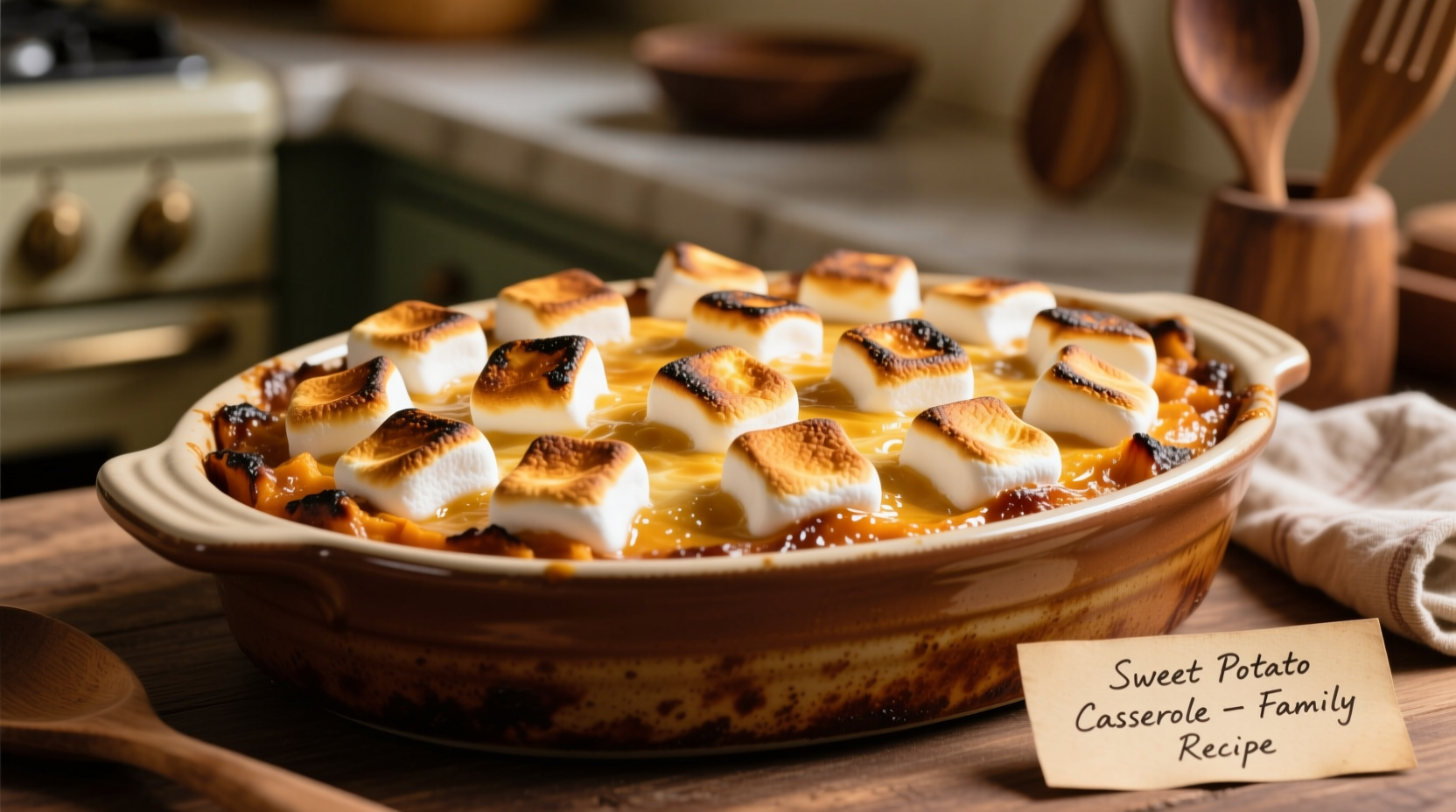
Soggy marshmallows typically result from adding them too early. Wait until the last 10 minutes of baking. Burnt marshmallows happen when the oven temperature is too high - keep it at 375°F maximum. For perfect browning, position the dish in the upper third of the oven.
Variations for Different Dietary Needs
This classic dish can accommodate various dietary preferences without sacrificing flavor:
- Vegan version: Substitute butter with coconut oil, use flax eggs (1 tbsp ground flax + 3 tbsp water per egg), and choose vegan marshmallows
- Lower sugar option: Reduce brown sugar to 1/4 cup and add 1/4 teaspoon stevia for equivalent sweetness
- Crunchy topping alternative
- Alcohol enhancement: Add 2 tablespoons bourbon to the sweet potato mixture for depth of flavor
Serving and Storage Recommendations
Serve sweet potato and marshmallow casserole immediately after baking for the best texture contrast between the warm, creamy base and toasted marshmallows. It pairs beautifully with roasted turkey, ham, or as part of a vegetarian main course.
For make-ahead convenience, prepare the sweet potato base up to two days in advance and refrigerate. Add marshmallows just before baking. Leftovers keep well covered in the refrigerator for 3-4 days and can be reheated at 350°F until warmed through (about 20 minutes). Freezing is not recommended as it affects the marshmallow texture.




 浙公网安备
33010002000092号
浙公网安备
33010002000092号 浙B2-20120091-4