
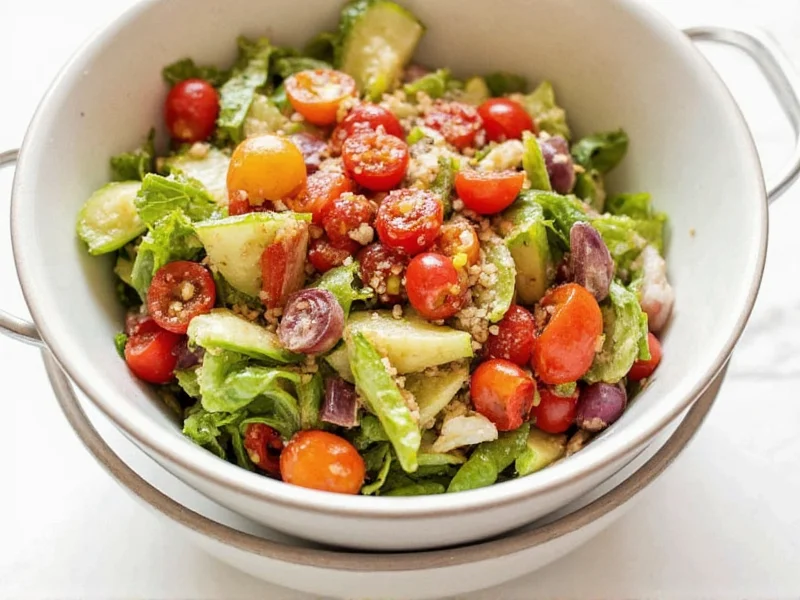
Understanding Supreme Salad Seasoning Composition
Supreme salad seasoning stands apart from conventional dressings through its dry formulation. This unique characteristic creates several advantages for salad preparation. The powder format eliminates the sogginess often associated with liquid dressings, preserving the crisp texture of greens longer. Most premium blends contain between 8-12 distinct ingredients working in harmony to create balanced flavor.
When examining supreme salad seasoning ingredients list details, you'll typically find:
| Primary Ingredients | Flavor Contribution | Common Variations |
|---|---|---|
| Dried garlic and onion | Base savory notes | Garlic powder vs. granulated |
| Herb blend (parsley, oregano, basil) | Earthy, aromatic elements | Mediterranean vs. Italian profiles |
| Salt and sodium alternatives | Flavor enhancer | Sea salt, potassium chloride |
| Citrus zest (dried lemon/orange) | Bright, acidic notes | Natural vs. artificial flavoring |
| Spice components (paprika, pepper) | Complexity and heat | Smoked vs. sweet paprika |
Historical Development of Dry Salad Seasonings
The evolution of supreme salad seasoning reflects broader food technology advancements. According to the Institute of Food Technologists' documented timeline, dry seasoning blends emerged from 1950s convenience food innovations when manufacturers adapted dry soup mix techniques for salad applications [1]. The "supreme" designation gained prominence in the 1980s as consumer demand shifted toward complex flavors beyond basic salt-and-pepper blends [1].
| Era | Key Developments | Consumer Impact |
|---|---|---|
| 1950-1960 | Adaptation of dry soup mix technology for salad seasonings | Introduction of shelf-stable, no-moisture-required flavoring |
| 1970-1980 | Health consciousness drives low-fat alternatives to creamy dressings | "Supreme" blends emerge with herb-forward profiles |
| 1990-2000 | Organic certification standards enable premium natural versions | Expansion beyond basic greens to grain and protein salads |
| 2010-Present | Diet-specific formulations (keto, vegan, low-sodium) | Integration into meal-prep culture for texture preservation |
[1] Institute of Food Technologists. (2014). Food Timeline: A Century of Food Science Innovation. Retrieved from https://www.ift.org/news-and-publications/food-technology-magazine/issues/2014/may/features/food-timeline
Nutritional Profile and Dietary Considerations
For health-conscious consumers researching supreme salad seasoning nutritional information, the dry format offers distinct benefits. A standard 1-teaspoon serving typically contains only 5-15 calories, making it significantly lower in calories than most oil-based dressings which can contain 50-100 calories per tablespoon. The sodium content requires attention, however, as many blends contain 100-300mg per serving.
Most premium supreme salad seasonings qualify as gluten-free supreme salad seasoning options, but always verify packaging as some budget varieties may include gluten-containing anti-caking agents. Vegan and vegetarian diets generally accommodate these seasonings, though certain 'supreme' blends might include dairy derivatives for enhanced flavor.
Optimal Usage Techniques for Maximum Flavor
Understanding how to use supreme salad seasoning properly transforms ordinary salads into restaurant-quality dishes. The dry nature requires a different application method than liquid dressings. For best results with supreme salad seasoning for salads:
- Apply seasoning to completely dry greens (moisture prevents even coating)
- Add 1-2 teaspoons per serving, tossing thoroughly to distribute evenly
- Allow 2-3 minutes for flavors to penetrate before serving
- Consider adding a small amount of olive oil (1/2 teaspoon) to help flavors adhere
This seasoning blend excels beyond traditional salads. Culinary professionals often use supreme salad seasoning as a versatile flavor enhancer for roasted vegetables, grilled proteins, and even popcorn. The 'supreme' designation typically indicates a more complex flavor profile suitable for multiple applications beyond basic green salads.
Contextual Application Boundaries
Supreme salad seasoning delivers optimal results only within specific parameters. Penn State Extension's food science guidelines confirm that dry seasonings require precise moisture control for proper adhesion and flavor distribution [1]. The following scenarios illustrate critical application boundaries:
| Ideal Conditions | Limitations and Risks |
|---|---|
| Crisp greens (kale, romaine) dried for 15+ minutes post-washing | Wet greens cause uneven coating and flavor pooling |
| Salads consumed within 30 minutes of preparation | Extended storage (>1 hour) with tomatoes/cucumbers causes sogginess |
| Application with 1/2 tsp oil for flavor binding | Dry application on low-fat vegetables yields muted flavor |
| Use in grain/pasta salads where moisture control is critical | Substitution in creamy dressings (e.g., ranch) creates texture failure |
[1] Penn State Extension. (2020). Seasoning and Flavoring Foods: Moisture Management Principles. Retrieved from https://extension.psu.edu/seasoning-and-flavoring-foods
Creating Homemade Supreme Salad Seasoning
For those seeking a customizable alternative, a simple homemade supreme salad seasoning recipe provides control over ingredients and sodium levels. This basic blend creates approximately 1/2 cup of seasoning:
- 3 tablespoons dried parsley
- 2 tablespoons dried dill
- 2 tablespoons dried chives
- 1 tablespoon garlic powder
- 1 tablespoon onion powder
- 1 tablespoon lemon zest (dried)
- 2 teaspoons sea salt
- 1 teaspoon black pepper
- 1 teaspoon paprika
- 1/2 teaspoon red pepper flakes (optional)
Mix all ingredients thoroughly in a bowl, then store in an airtight container away from light and moisture. Properly stored homemade supreme salad seasoning maintains freshness for 4-6 months. This DIY approach allows customization for specific dietary needs and flavor preferences, addressing common supreme salad seasoning substitution ideas when commercial products aren't available.
Storage and Shelf Life Guidelines
Dry seasonings maintain quality longer than liquid dressings but still require proper storage. Supreme salad seasoning shelf life typically ranges from 6-12 months when stored correctly in a cool, dark place. Exposure to humidity causes clumping and flavor degradation. For extended freshness, consider storing in the refrigerator, especially in humid climates.
Signs of expired supreme salad seasoning include faded color, diminished aroma, and clumping that doesn't break apart easily. While not dangerous, expired seasoning loses potency and may develop off-flavors that compromise your dishes.
Final Considerations for Culinary Success
Mastering the use of supreme salad seasoning elevates everyday salads into gourmet experiences. Whether using commercial blends or creating your own homemade supreme salad seasoning recipe, understanding the ingredient composition and proper application techniques ensures optimal results. The versatility of this seasoning extends far beyond basic green salads, making it a valuable pantry staple for health-conscious cooks seeking bold flavors without excess calories or moisture.
When selecting supreme salad seasoning products, read labels carefully to understand the ingredients list and nutritional profile. Premium 'supreme' designations typically indicate more complex flavor profiles with higher quality ingredients compared to basic salad seasonings. For those with specific dietary needs, the growing market offers various specialized supreme salad seasoning options including low-sodium, organic, and specialty flavor varieties.




 浙公网安备
33010002000092号
浙公网安备
33010002000092号 浙B2-20120091-4