
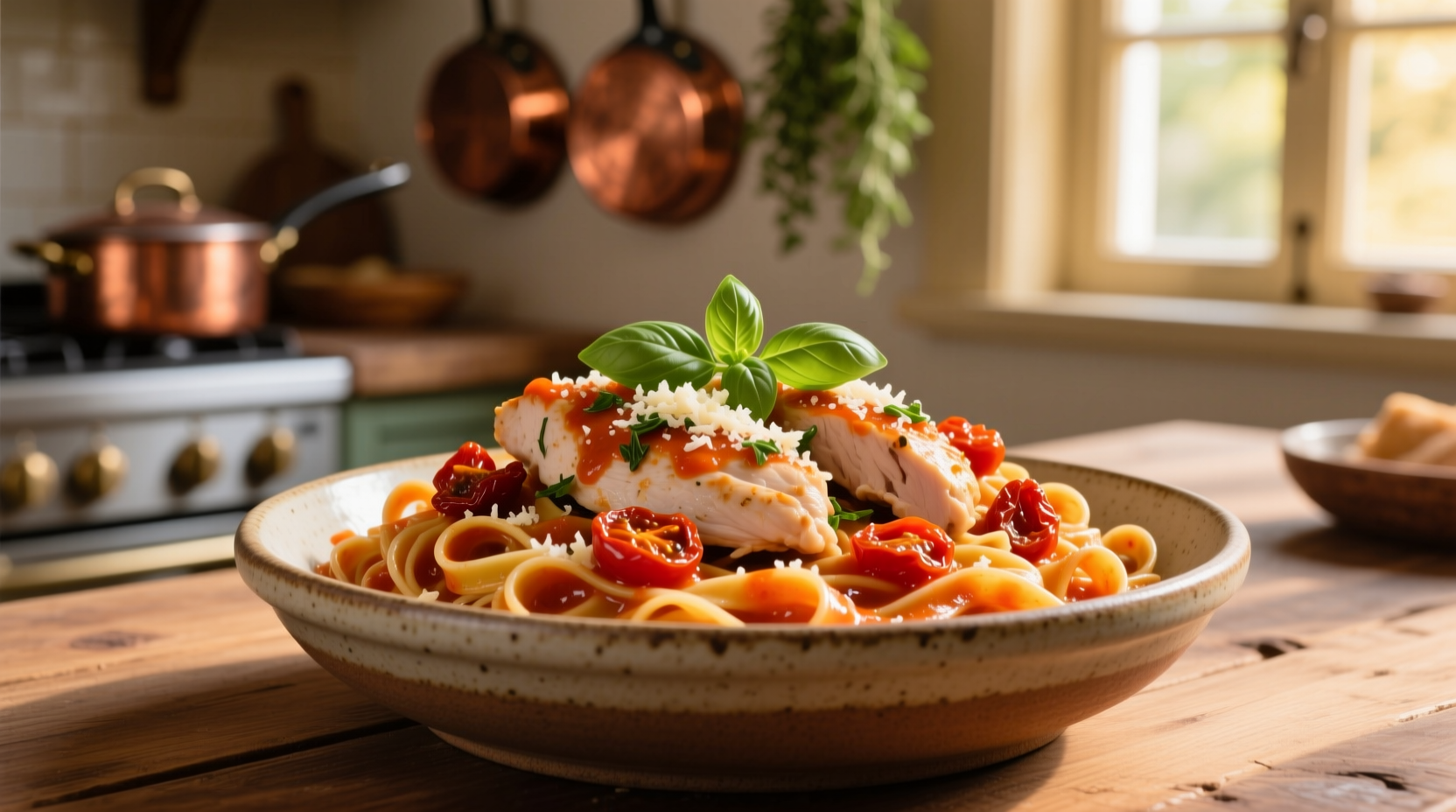
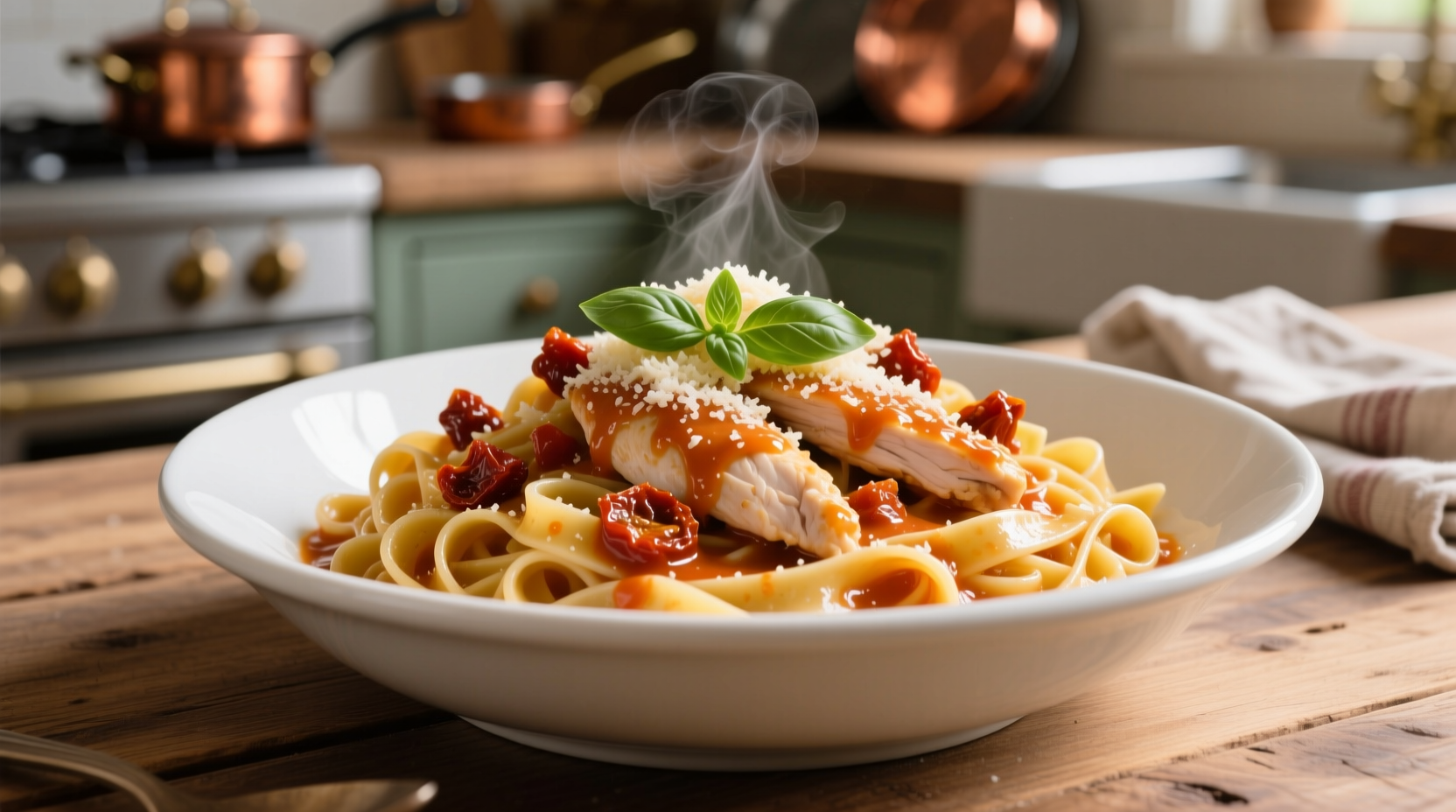
Nothing satisfies like a plate of creamy sundried tomato chicken pasta with tender chicken and perfectly al dente noodles. This versatile dish bridges weeknight simplicity with restaurant-quality flavor, making it a staple in kitchens worldwide. Our tested recipe delivers balanced acidity from quality tomatoes, juicy chicken prepared with proper technique, and a sauce that clings beautifully to your pasta.
The Essential Sundried Tomato Chicken Pasta Recipe
Follow this precise method for consistent results. The key lies in ingredient quality and proper technique rather than complexity.
Ingredients for 4 Servings
- 8 oz (225g) penne or fusilli pasta
- 2 boneless, skinless chicken breasts (about 1 lb/450g)
- ⅓ cup (80ml) high-quality olive oil
- ½ cup (120g) oil-packed sundried tomatoes, drained and sliced
- 3 garlic cloves, minced
- ½ cup (120ml) chicken broth
- ½ cup (120ml) heavy cream or full-fat coconut milk
- ¼ cup (25g) freshly grated Parmesan
- 2 tbsp fresh basil, chopped
- Salt and freshly ground black pepper to taste
- Red pepper flakes (optional)
Step-by-Step Instructions
- Prep chicken: Pat chicken dry and season with salt and pepper. Heat 2 tbsp olive oil in large skillet over medium-high heat.
- Cook chicken: Add chicken and cook 5-6 minutes per side until golden and internal temperature reaches 165°F (74°C). Transfer to plate and cover.
- Start sauce: In same skillet, add garlic and sundried tomatoes. Cook 1 minute until fragrant.
- Build base: Pour in chicken broth, scraping browned bits from pan. Simmer 3 minutes until slightly reduced.
- Add cream: Stir in cream and Parmesan until smooth. Simmer 2 minutes to thicken slightly.
- Cook pasta: While sauce simmers, cook pasta in salted boiling water until al dente (1 minute less than package directs).
- Combine: Slice chicken. Add drained pasta and chicken to sauce. Toss gently to coat.
- Finish: Stir in fresh basil and additional olive oil if needed. Adjust seasoning.
Understanding Sundried Tomato Varieties
The type of sundried tomatoes you choose significantly impacts flavor and texture. Professional chefs distinguish between two primary preparation methods:
| Tomato Type | Flavor Profile | Best For This Dish | Preparation Tip |
|---|---|---|---|
| Oil-packed | Mellow, rounded acidity | Ideal for creamy pasta sauces | Drain well but reserve oil for finishing |
| Dry-packed | Intense, concentrated flavor | When substituting for oil-packed | Soak in warm water 15 minutes first |
According to the USDA Agricultural Research Service, oil-packed sundried tomatoes retain more volatile compounds responsible for complex flavor development during the drying process compared to dry-packed varieties. This explains their superior performance in creamy sauces where flavor integration matters most.
Historical Context of Sundried Tomatoes in Italian Cuisine
Sundried tomatoes have evolved from peasant preservation technique to gourmet ingredient. This timeline shows their journey into mainstream pasta dishes:
- 16th Century: Tomatoes introduced to Europe from the Americas
- 18th Century: Southern Italian peasants begin sun-drying tomatoes for winter storage
- Early 1900s: Traditional preservation method in Calabria and Sicily
- 1970s: Gourmet chefs rediscover sundried tomatoes in specialty markets
- 1990s: Commercial production makes them widely available
- 2000s-Present: Sundried tomato chicken pasta becomes American-Italian bistro staple
Avoid These Common Preparation Mistakes
Even experienced home cooks make these critical errors that compromise your sundried tomato chicken pasta:
- Overcooking chicken: Remove chicken at 160°F (71°C) - carryover cooking will reach safe 165°F (74°C)
- Adding cream to boiling liquid: Causes curdling - maintain gentle simmer when incorporating dairy
- Using low-quality sundried tomatoes: Many commercial varieties contain preservatives that create bitter notes
- Skipping pasta water: Reserve ½ cup starchy water to help sauce adhere to noodles
- Adding cheese to boiling sauce: Creates clumping - remove from heat before adding Parmesan
When This Dish Shines: Context Boundaries
Sundried tomato chicken pasta works best in specific situations. Understanding these context boundaries ensures optimal meal planning:
- Ideal for: Weeknight dinners (30 minutes), casual entertaining, meal prep (holds well refrigerated)
- Not recommended: Formal dinner parties (lacks visual elegance), hot summer days (heavy cream base)
- Seasonal pairing: Best served spring through fall - pairs beautifully with seasonal asparagus or roasted vegetables
- Texture considerations: Avoid with sensitive eaters who dislike chewy tomato pieces - chop finely or puree sauce
Serving and Pairing Recommendations
Elevate your sundried tomato chicken pasta with these professional presentation techniques:
- Plating: Use tongs to twirl pasta vertically in bowl rather than piling horizontally
- Garnish: Finish with micro basil, lemon zest, and high-quality olive oil drizzle
- Wine pairing: Medium-bodied Italian white like Vermentino or unoaked Chardonnay
- Side dish: Simple arugula salad with lemon vinaigrette cuts through richness
- Accompaniment: Crusty bread for soaking up remaining sauce
Dietary Adaptations Without Sacrificing Flavor
Modify this recipe for various dietary needs while maintaining authentic flavor profiles:
- Gluten-free: Use bronze-die cut GF pasta and increase sauce thickness slightly
- Dairy-free: Substitute coconut cream and nutritional yeast for Parmesan
- Lower calorie: Replace half cream with additional chicken broth and add spinach
- Vegetarian: Omit chicken, add white beans and artichoke hearts for protein
Storage and Reheating Best Practices
Proper storage maintains quality for future meals. Follow these tested methods:
- Refrigeration: Store in airtight container up to 3 days - keep sauce slightly loose as it thickens when cold
- Reheating: Gently warm in skillet with splash of broth or water - never microwave which creates uneven texture
- Freezing: Not recommended as cream-based sauces separate upon thawing
- Reviving leftovers: Add fresh basil and lemon juice to restore brightness
Frequently Asked Questions
Here are answers to the most common questions about sundried tomato chicken pasta:




 浙公网安备
33010002000092号
浙公网安备
33010002000092号 浙B2-20120091-4