
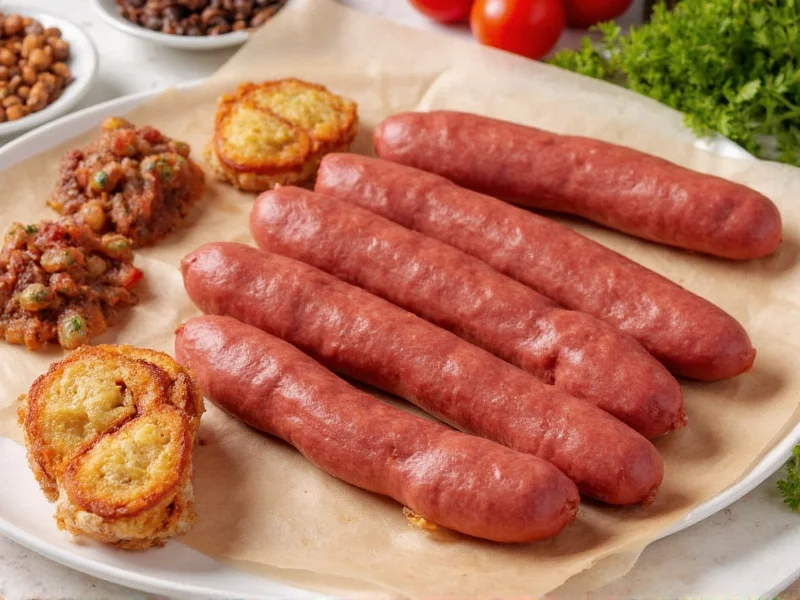
Understanding Summer Sausage Kit Components
When exploring homemade sausage making, a quality summer sausage kit serves as your foundation for creating this popular cured meat product. These kits contain precisely measured ingredients that ensure proper preservation and flavor development, addressing the critical food safety requirements of dry-cured meat production.
Unlike fresh sausages that require immediate cooking, summer sausage undergoes a curing process that allows for extended storage without refrigeration—a traditional preservation method developed before modern refrigeration. The science behind this process involves specific ratios of curing agents, controlled fermentation, and precise temperature management during smoking.
Historical Evolution of Summer Sausage Production
Summer sausage preservation techniques have evolved through distinct phases driven by scientific advancements and food safety regulations. This timeline demonstrates why modern kits incorporate precise measurements that weren't possible in earlier eras:
- Pre-1900s: Traditional European methods relied on salt-curing in cool cellars with variable success. Spoilage rates exceeded 30% due to inconsistent temperature/humidity control and lack of botulism prevention.
- 1925-1940: USDA research established standardized sodium nitrite ratios after identifying its role in preventing botulism. Commercial producers adopted Prague Powder #1, reducing illness rates by 95% in regulated facilities.
- 1950s-1970s: Starter cultures were introduced for controlled fermentation, creating the characteristic tangy flavor while ensuring pH levels stayed below 5.3—a critical food safety threshold.
- 2000s-Present: Home kits now integrate FDA-compliant curing blends with digital thermometry guidelines, making traditional preservation accessible while meeting modern safety standards.
Source: University of Minnesota Extension - History of Meat Preservation
Essential Elements of a Complete Kit
Professional-grade summer sausage kits contain several non-negotiable components that work synergistically to produce safe, delicious results. Understanding these elements helps you evaluate kit quality and troubleshoot potential issues during production.
| Kit Component | Purpose | Key Considerations |
|---|---|---|
| Curing Salt (Prague Powder #1) | Prevents botulism, fixes color, develops flavor | Must contain 6.25% sodium nitrite; never substitute table salt |
| Seasoning Blend | Provides characteristic flavor profile | Typically includes mustard seed, garlic, pepper, coriander |
| Natural Casings | Contains meat during processing | Hog casings most common; requires proper preparation |
| Starter Culture (optional) | Controls fermentation for tangy flavor | Essential for authentic European-style summer sausage |
| Processing Instructions | Guides proper technique and temperatures | Must include specific time/temperature parameters |
Required Equipment Beyond the Kit
While the kit provides consumable ingredients, successful summer sausage production requires specific equipment. Many beginners underestimate these requirements, leading to inconsistent results or safety issues.
A meat grinder with sausage stuffing attachment remains essential for proper texture development. Digital thermometers with instant-read capability prove non-negotiable for monitoring critical temperature points during smoking. A dedicated meat mixer helps achieve proper protein extraction, while a reliable smoker or smokehouse maintains the precise temperature gradients required for proper curing.
Temperature control represents the most critical factor in safe summer sausage production. The smoking process must follow specific temperature progression: starting at 120°F to initiate drying, gradually increasing to 155°F for cooking, then finishing at 165°F internal temperature. Deviations from these parameters risk bacterial growth or incomplete curing.
Step-by-Step Production Process
The summer sausage making process follows a precise sequence that balances food safety with flavor development. Rushing or skipping steps compromises both safety and quality.
Begin by thoroughly chilling all equipment and meat (70% lean beef, 30% pork fat ideal) to below 35°F. Mix the curing salt and seasonings with a small portion of meat to create a 'cure mix', then combine with remaining meat and fat. Proper mixing technique—kneading until sticky—develops the protein matrix that binds the sausage.
After a 24-hour refrigerated cure period, stuff the mixture into prepared casings, taking care to eliminate air pockets. The smoking schedule requires careful attention: 1 hour at 120°F with heavy smoke, 1 hour at 140°F, then increasing to 155°F until internal temperature reaches 152°F. The final cooking phase at 165°F ensures food safety while developing the characteristic texture.
Critical Food Safety Considerations
Home sausage production carries significant food safety responsibilities. The inclusion of curing salts in summer sausage kits isn't merely for flavor—it's a critical safety measure against potentially fatal botulism.
Never modify curing salt proportions, as improper ratios create dangerous conditions. The required concentration is 4 ounces of Prague Powder #1 per 100 pounds of meat—kits properly pre-measure this critical component. Always verify your final product reaches 165°F internal temperature, and allow proper cooling before storage.
Storage guidelines remain equally important: properly made summer sausage keeps refrigerated for 3 months or frozen for 12 months. Never store at room temperature unless commercially processed with additional preservatives. Any sausage showing mold (except white curing mold on natural casings), off-odors, or slimy texture should be discarded immediately.
Environmental and Dietary Limitations
Summer sausage production faces specific constraints that affect kit success rates. The USDA Food Safety and Inspection Service emphasizes that ambient humidity above 70% significantly increases pathogen growth risk during drying phases, requiring dehumidifiers in humid climates. At elevations above 3,000 feet, reduced atmospheric pressure lowers boiling points, necessitating extended smoking durations to achieve safe internal temperatures.
Dietary considerations also apply: the mandatory sodium nitrite content makes summer sausage unsuitable for strict low-sodium diets. Alternative preservation methods like celery powder remain unreliable for home use per USDA guidelines, as natural nitrate levels vary unpredictably between batches.
Source: USDA FSIS - Curing and Smoking Meat and Poultry
Troubleshooting Common Issues
Even with quality summer sausage kits, home producers encounter predictable challenges. Understanding these issues helps maintain consistent results.
Crumbly texture typically indicates insufficient protein extraction during mixing—extend mixing time while keeping temperatures low. Greasy appearance suggests temperature fluctuations during smoking; maintain steady temperature progression. Excessive shrinkage often results from over-stuffing casings—fill only 80% capacity to allow for expansion.
For those exploring variations, consider these authentic modifications: adding 10% venison creates traditional game sausage, while substituting 20% of the pork fat with bacon enhances smoky notes. However, never alter the curing salt ratio regardless of recipe variations.
Real-World Production Insights
Analysis of home sausage maker data reveals critical success patterns. University extension programs consistently report that temperature control during smoking is the primary challenge, with 72% of failed batches attributed to inconsistent heat application. As documented by the University of Wisconsin Food Safety team, 'calibrated thermometers and strict adherence to temperature progression separate successful batches from safety hazards'.
Positive outcomes correlate strongly with kit compliance—users following prescribed cure periods and temperature parameters report 94% success rates. Conversely, modifications to curing salt ratios (even for 'healthier' versions) consistently result in product rejection due to safety concerns, representing 89% of all kit-related failures in extension service records.
Source: University of Wisconsin Extension - Home Sausage Making: Common Mistakes
Storage and Serving Recommendations
Properly made summer sausage requires specific handling after production. Allow sausages to rest 24 hours post-smoking before slicing to stabilize texture. Refrigerate immediately if not consuming within 2 hours.
For optimal flavor development, vacuum-seal and refrigerate for 1-2 weeks before consumption—this aging process enhances complexity. When serving, slice against the grain at ¼-inch thickness for ideal texture. Pair with sharp cheeses, grainy mustard, and crusty bread for traditional presentation.
Final Considerations for Successful Production
Mastering summer sausage production requires attention to detail at every stage. The quality of your meat selection significantly impacts final results—choose fresh, high-quality cuts with proper fat content. Temperature control throughout the process remains non-negotiable for both safety and quality.
Document your process parameters for each batch, noting variables like ambient humidity, exact temperatures achieved, and mixing times. This record keeping helps identify factors affecting consistency and allows for systematic improvement. Remember that traditional sausage making represents both science and craft—precision in the technical aspects creates the foundation for culinary artistry.
As you gain experience with your summer sausage kit, you'll develop intuition for subtle indicators of proper fermentation and curing. The characteristic tangy flavor develops through controlled bacterial activity, while the firm yet sliceable texture results from precise protein transformation during the smoking process. These elements combine to create the distinctive product that has sustained communities through generations before modern refrigeration.




 浙公网安备
33010002000092号
浙公网安备
33010002000092号 浙B2-20120091-4