
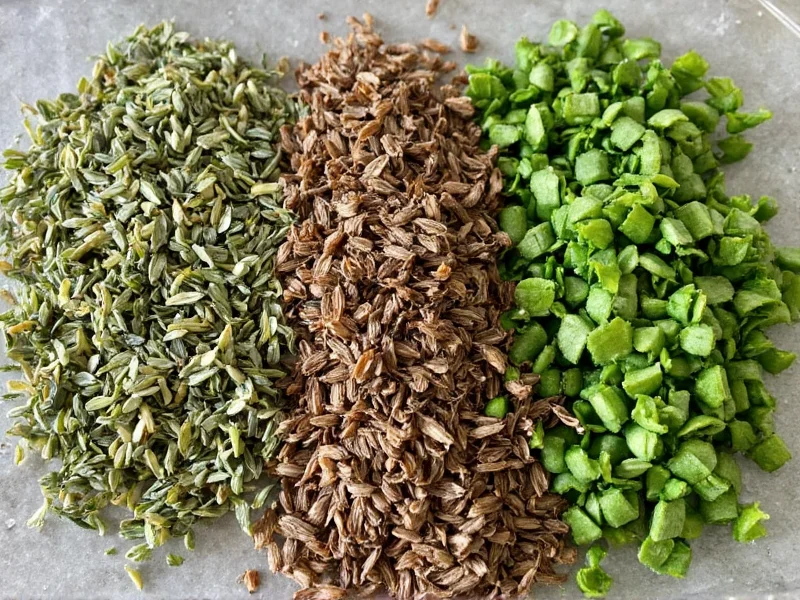
Understanding herb substitutions is essential for home cooks who often find themselves without fresh ingredients. Dried herbs offer convenience and longer shelf life, but their potency differs significantly from fresh varieties. Getting the conversion right prevents under-seasoned or overpowering dishes.
Why Dried and Fresh Herbs Require Different Measurements
Drying concentrates herbal flavors by removing moisture. Fresh herbs are approximately 80-90% water, while dried herbs contain only 5-10% moisture. This concentration means dried herbs deliver more intense flavor per volume. The general 1:3 ratio (dried:fresh) compensates for this potency difference, though specific herbs vary in their concentration levels.
Historical Development of Substitution Standards
The journey to today's standardized herb ratios spans millennia of culinary evolution. Ancient civilizations like the Egyptians (3000 BCE) discovered dried herbs required smaller quantities than fresh through empirical observation. Medieval European monasteries (500-1500 CE) refined these practices, documenting that “a pinch of dried herb equals a handful of fresh” in apothecary texts. The ratio gained formal recognition in Isabella Beeton's 1861 cookbook, which specified “1 teaspoon dried to 1 tablespoon fresh.” Modern validation came through USDA food science research in the 1950s, which quantified moisture loss and flavor concentration using chromatographic analysis. This historical progression from kitchen empiricism to scientific validation explains why the 1:3 ratio remains reliable across diverse culinary traditions today.
This timeline is documented in the University of Vermont Extension's comprehensive historical review of herb usage practices, which traces how preservation techniques evolved alongside culinary science.
Herb Substitution Reference Chart
| Herb | Fresh Measurement | Dried Measurement | Special Considerations |
|---|---|---|---|
| Basil | 1 tbsp | 1 tsp | Add dried basil early in cooking; fresh basil added at the end |
| Oregano | 1 tbsp | 1 tsp | Dried oregano is significantly more potent than fresh |
| Thyme | 1 tbsp | 1 tsp | Fresh thyme has more subtle flavor notes |
| Rosemary | 1 tbsp | 1.5 tsp | Dried rosemary is extremely concentrated; use sparingly |
| Parsley | 2 tbsp | 1 tsp | Fresh parsley primarily used as garnish; dried for cooking |
| Dill | 1 tbsp | 1 tsp | Fresh dill loses flavor quickly when cooked |
| Cilantro | 2 tbsp | 1 tsp | Dried cilantro loses distinctive flavor; fresh preferred |
Factors Affecting Herb Substitution Success
Several variables influence how well your dried-to-fresh herb substitution works. The age and storage conditions of dried herbs significantly impact potency—properly stored dried herbs maintain flavor for 1-2 years, while older herbs lose potency. Humidity, light exposure, and container type all affect dried herb quality.
Recipe type matters considerably when substituting dried herbs for fresh. In long-simmering dishes like stews and braises, dried herbs have time to rehydrate and distribute flavor evenly. For quick-cooking recipes or finishing touches, fresh herbs often provide superior results that dried versions cannot replicate.
Contextual Limitations: When Substitution Fails
While the 1:3 ratio works for many cooked dishes, substitution fails under specific conditions documented by food safety authorities. The University of Minnesota Extension identifies three critical boundary conditions where dried herbs cannot adequately replace fresh:
- Moisture-Poor Applications: In dry preparations like spice rubs or finishing salts (with less than ¼ cup liquid per teaspoon of dried herb), insufficient rehydration causes gritty texture and uneven flavor distribution.
- Short-Cooking Duration: For dishes cooked under 15 minutes (e.g., stir-fries), dried herbs lack time to rehydrate properly, producing bitter notes instead of integrated flavor. The extension recommends blooming dried herbs in oil first for quick-cook applications.
- High-Volatility Herbs: As confirmed by USDA sensory studies, herbs with delicate volatile compounds (cilantro, tarragon, chives) lose 60-80% of characteristic flavor during drying. Dried cilantro provides only 20% of fresh herb's impact in cold applications like salsa.
These context boundaries, detailed in the University of Minnesota Extension's herb usage guidelines, prevent common substitution failures by clarifying precise limitations.
Maximizing Flavor with Dried Herbs
To get the most from dried herbs in substitution scenarios, crush them between your fingers before adding to release essential oils. For most savory dishes, add dried herbs early in the cooking process to allow time for rehydration and flavor distribution. In tomato-based sauces or soups, dried herbs typically need 15-20 minutes of simmering to reach full flavor potential.
When adjusting recipes, start with less dried herb than the conversion chart suggests, then taste and adjust. Remember that salt content in some commercial dried herb blends affects overall seasoning—account for this when seasoning your dish. For the best results, store dried herbs in airtight containers away from heat and light to maintain potency between uses.
Common Substitution Mistakes to Avoid
Many home cooks make critical errors when substituting dried herbs for fresh. The most frequent mistake is using equal measurements rather than adjusting for potency differences, resulting in bland or overpowering dishes. Another common error involves adding dried herbs at the same stage as fresh—dried herbs need time to rehydrate, while fresh herbs often benefit from later addition.
Not accounting for herb-specific differences causes inconsistent results. While the 1:3 ratio works for most herbs, rosemary and thyme require different approaches due to their varying concentration levels. Understanding these nuances transforms substitution from guesswork into a reliable kitchen technique.




 浙公网安备
33010002000092号
浙公网安备
33010002000092号 浙B2-20120091-4