
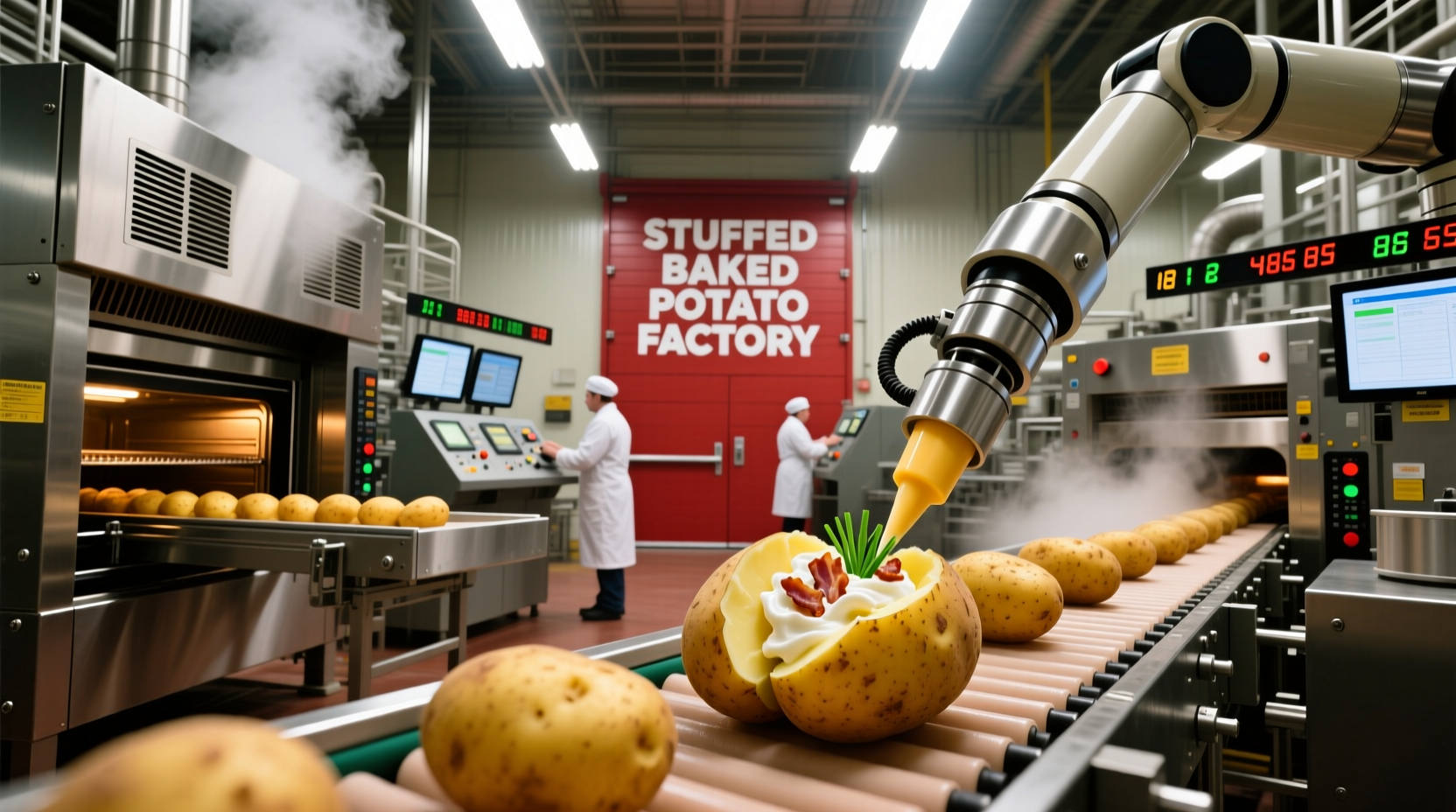
Commercial stuffed baked potato factories use specialized industrial processes to produce consistent, safe, and high-quality products at scale. These facilities follow strict food safety protocols, precise temperature controls, and standardized recipes to maintain product consistency while meeting FDA and USDA requirements for ready-to-eat foods.
Ever wondered how your favorite restaurant-style stuffed baked potatoes make it from concept to your local grocery freezer aisle? The industrial production of stuffed baked potatoes involves sophisticated food engineering that most consumers never see. Unlike homemade versions, factory-produced stuffed potatoes must maintain consistent quality, texture, and safety across thousands of units while meeting strict regulatory standards.
The Industrial Stuffed Potato Production Process
Commercial stuffed baked potato manufacturing follows a carefully controlled sequence that begins long before potatoes enter the facility. Understanding this process reveals why factory-made versions differ from what you'd create at home.
Raw Material Selection and Preparation
Russet potatoes dominate commercial production due to their ideal starch content and fluffy texture when baked. Factories source potatoes meeting specific size, shape, and sugar content requirements to ensure consistent results. Unlike home cooks who might use whatever's available, industrial producers require uniform potatoes that can be processed efficiently.
Upon arrival at the facility, potatoes undergo rigorous inspection. The USDA's Agricultural Marketing Service sets standards for processed potatoes, requiring them to be "free from serious damage, decay, or disease." Any potatoes failing these criteria get diverted to alternative uses like animal feed or processed potato products.
Cooking at Scale: Beyond the Home Oven
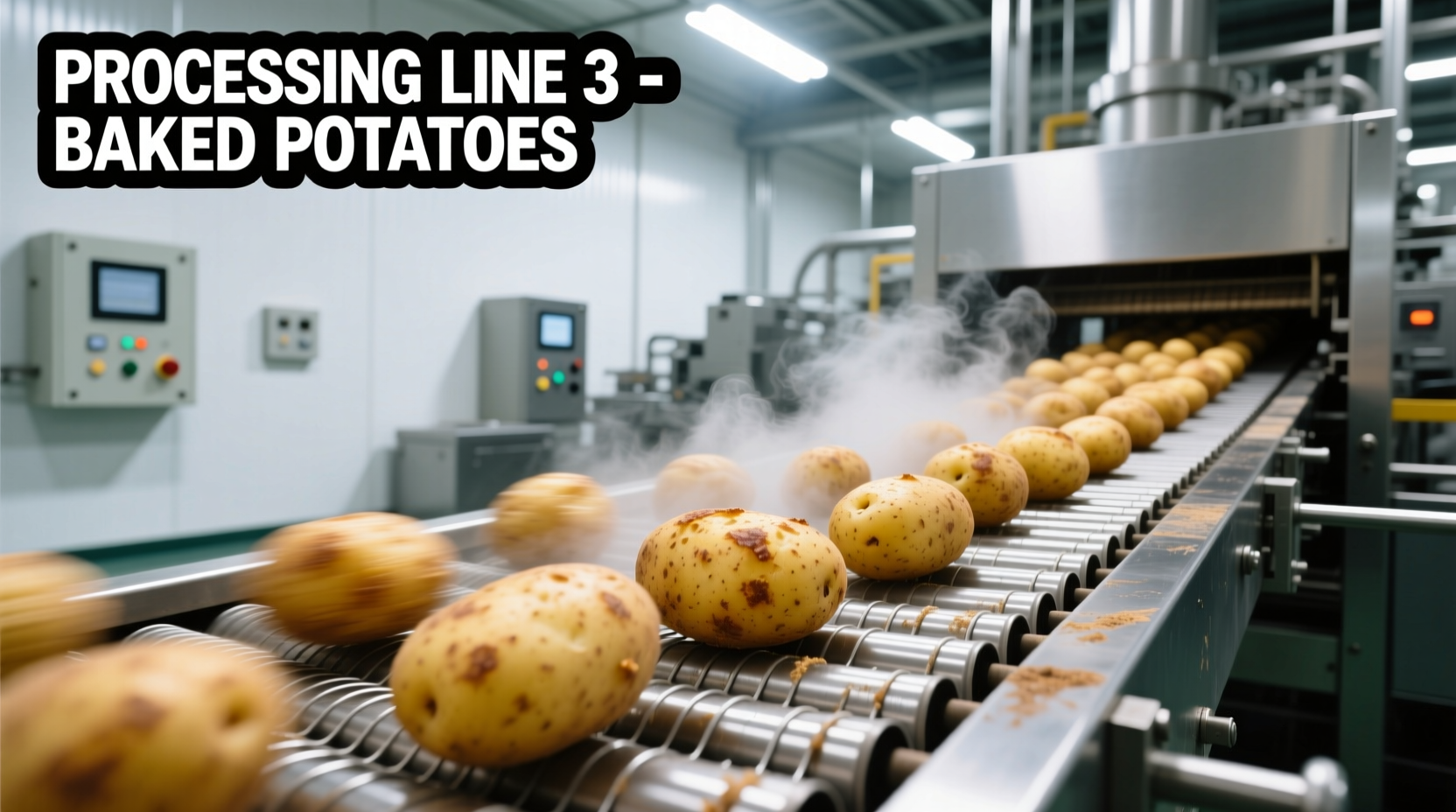
While home cooks might bake potatoes in a 400°F oven for 45-60 minutes, factories use continuous conveyor ovens that precisely control temperature and humidity. These industrial systems maintain 375-400°F environments with exact timing to achieve the perfect internal temperature of 205-210°F throughout each potato.
Unlike home baking where potatoes might cook unevenly, factory systems use infrared sensors to monitor internal temperatures in real-time. This precision prevents undercooked centers or overcooked exteriors that would compromise product quality at scale.
| Production Aspect | Home Preparation | Factory Production |
|---|---|---|
| Batch Size | 4-8 potatoes | 500-2,000+ per hour |
| Cooking Method | Oven or microwave | Continuous conveyor ovens |
| Temperature Control | Manual monitoring | Automated sensors throughout |
| Quality Consistency | Variable | Extremely consistent |
| Shelf Life | 2-3 days refrigerated | 6-12 months frozen |
Stuffing Application: Precision Engineering
The stuffing process represents where factory production truly diverges from home methods. Automated systems precisely cut each baked potato, remove a consistent portion of flesh, mix with predetermined ingredients, and reinject the filling using calibrated nozzles.
According to the FDA's Food Code, ready-to-eat foods like stuffed potatoes must be kept out of the temperature danger zone (41°F-135°F) to prevent bacterial growth. Factories implement rapid cooling systems that bring product temperatures below 41°F within 90 minutes of production - a timeline impossible to achieve consistently in home kitchens.
Freezing Technology for Extended Shelf Life
Most commercial stuffed potatoes undergo blast freezing at -40°F immediately after production. This rapid freezing process creates smaller ice crystals that preserve texture far better than home freezers can achieve. The National Potato Council reports that properly blast-frozen potatoes maintain quality for 9-12 months, compared to 2-3 months in standard home freezers.
Quality Control: Beyond Home Kitchen Standards
Factory production implements multiple quality checkpoints that home cooks rarely consider:
- Pre-production potato testing: Measuring sugar content to prevent darkening during baking
- Automated weight verification: Ensuring consistent potato size before processing
- Temperature monitoring: Continuous tracking throughout cooking and cooling phases
- Microbial testing: Regular sampling to verify food safety standards
- Sensory evaluation: Trained panels assess texture, flavor, and appearance
The evolution of stuffed potato production has followed a clear timeline from restaurant specialty to mass-market product. In the 1980s, stuffed potatoes were primarily restaurant offerings. The 1990s saw the first frozen versions using basic technology with inconsistent results. Modern facilities now employ precision engineering that delivers restaurant-quality product with supermarket convenience.
What Consumers Should Know
When selecting frozen stuffed baked potatoes, look for products with minimal ingredients and no artificial preservatives. The best options use real cheese, butter, and natural seasonings rather than flavor packets or powdered ingredients. Proper reheating instructions matter too - most quality products specify oven reheating rather than microwave for optimal texture.
Understanding the industrial process behind stuffed baked potatoes helps consumers appreciate the food science that makes consistent, safe, ready-to-eat versions possible. While homemade versions offer customization, factory production delivers reliability and convenience that fits modern lifestyles without compromising on quality when properly executed.




 浙公网安备
33010002000092号
浙公网安备
33010002000092号 浙B2-20120091-4