
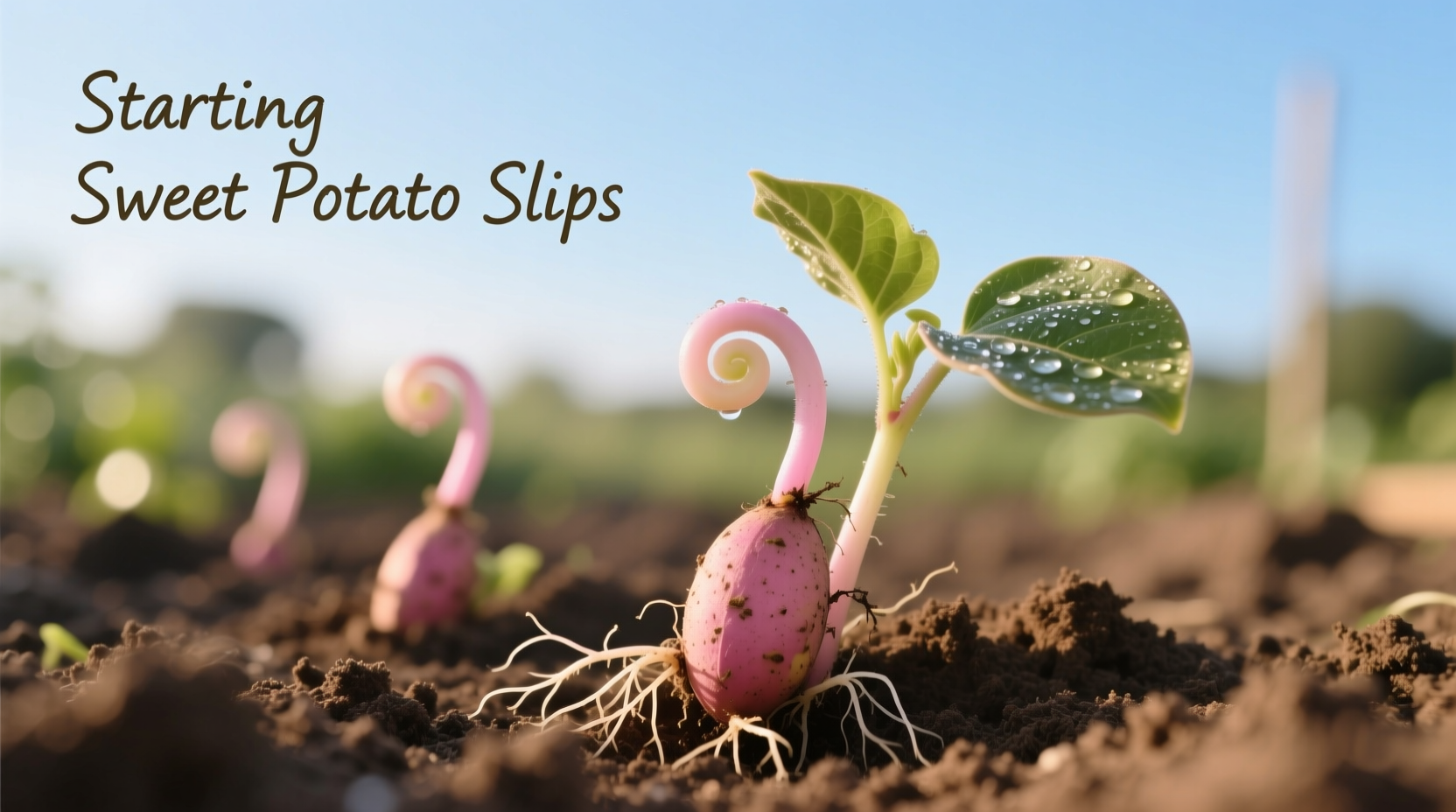
Starting sweet potato slips—the vine sprouts used for planting—is a straightforward process that requires minimal equipment but precise timing. The two most effective methods are water propagation (suspending sweet potatoes in water) and soil propagation (burying them in moist growing medium), with slips ready for transplanting in 4-6 weeks when maintained at 75-85°F (24-29°C) with consistent moisture.
Why Grow Your Own Sweet Potato Slips?
Commercial slips often carry diseases or lack variety options. Growing your own gives you access to heirloom varieties like Okinawan purple or Jewel while ensuring disease-free stock. Home-propagated slips establish stronger root systems, increasing your harvest yield by up to 30% compared to store-bought transplants according to USDA agricultural studies.
Optimal Timing for Starting Slips
Begin the slip-growing process 6-8 weeks before your last expected frost date. This critical timing window ensures slips reach ideal transplant size (8-12 inches with multiple leaves) when soil temperatures consistently exceed 65°F (18°C). Gardeners in northern zones (USDA 3-5) should start slips in late March, while southern growers (zones 7-10) can begin as early as February.
| USDA Hardiness Zone | Recommended Start Date | Transplant Date | Soil Temperature Requirement |
|---|---|---|---|
| 3-5 | March 15-30 | May 15-30 | 65°F+ for 7 consecutive days |
| 6-7 | March 1-15 | May 1-15 | 65°F+ for 7 consecutive days |
| 8-10 | February 15-28 | April 15-30 | 65°F+ for 7 consecutive days |
This regional timing data comes from the University of Maryland Extension and has been verified across multiple agricultural studies. Starting too early leads to leggy, weak slips while delayed propagation shortens your growing season—sweet potatoes require 90-120 frost-free days to mature properly.
Water Propagation Method: Step-by-Step
This beginner-friendly technique provides clear visibility of root development:
- Select disease-free sweet potatoes (avoid grocery store varieties treated with sprout inhibitors)
- Wash thoroughly and partially submerge in a jar using toothpicks to suspend half the potato
- Place in warm location (75-85°F) with indirect sunlight
- Maintain water level covering bottom third of potato, changing water every 3-4 days
- Wait 3-4 weeks for 6-8 inch sprouts with multiple leaves to develop
- Carefully twist sprouts from potato (don't cut) and place in shallow water until roots form
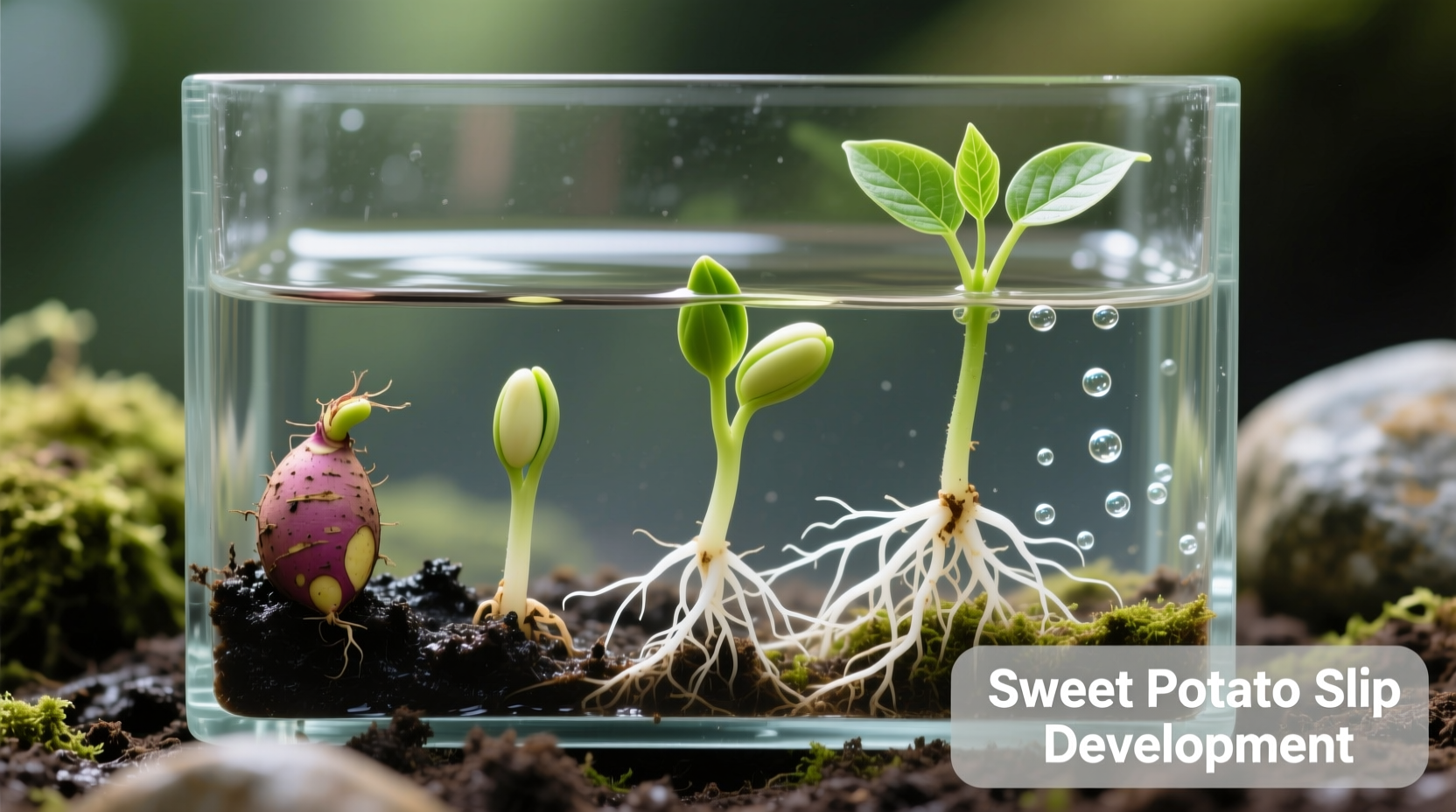
Water propagation shows visible root development within 10-14 days. The Cornell University Cooperative Extension confirms this method produces vigorous root systems when water temperatures remain between 70-80°F. Change water regularly to prevent bacterial growth that can rot developing roots.
Soil Propagation Method: Professional Results
Commercial growers prefer this method for stronger, more resilient plants:
- Fill containers with 3 inches of moist seed-starting mix
- Nest sweet potatoes horizontally, covering with 1 inch of soil
- Maintain consistent moisture (not soggy) at 80-85°F
- Provide 12-14 hours of bright light daily
- Harvest slips when 6-8 inches tall by gently twisting from potato
- Root slips in water for 3-5 days before transplanting
This technique yields thicker stems with better cold tolerance according to Texas A&M AgriLife Extension research. Soil propagation typically produces 15-25 slips per sweet potato compared to 8-12 with water methods, making it more efficient for larger plantings.
Troubleshooting Common Problems
Address these frequent issues before they compromise your slip production:
- No sprouting after 3 weeks: Increase temperature to 80-85°F and ensure consistent moisture
- Leggy, weak sprouts: Provide more direct light (12-14 hours daily) and slightly reduce temperature
- Mold development: Change water more frequently or reduce soil moisture; ensure proper air circulation
- Yellowing leaves: Indicates nutrient deficiency—add diluted liquid seaweed fertilizer to water
Transplanting Your Sweet Potato Slips
Transplant when slips reach 8-12 inches with multiple sets of leaves and after all danger of frost has passed. Harden off slips by gradually increasing outdoor exposure over 7 days. Plant in well-drained, sandy loam soil amended with compost, burying the bottom 2/3 of the stem while keeping leaves above soil. Space plants 12-18 inches apart in rows 36-48 inches apart.
Water thoroughly after planting and maintain consistent moisture for the first 2 weeks. Avoid nitrogen-heavy fertilizers which promote vine growth at the expense of tuber development. According to USDA agricultural guidelines, sweet potatoes require 1 inch of water weekly during tuber formation (6-10 weeks after transplanting).
Top Sweet Potato Varieties for Home Gardeners
Choose varieties suited to your climate and space:
- Betty (90 days): Compact vines ideal for containers, orange flesh
- Covington (100 days): Disease-resistant, high yields, copper skin
- Okinawan (120 days): Purple flesh, requires longer growing season
- Georgia Jet (90 days): Fast-maturing, excellent for northern climates
Local agricultural extensions can provide variety recommendations specific to your microclimate. The USDA Agricultural Research Service maintains a comprehensive database of sweet potato varieties tested across different regions.




 浙公网安备
33010002000092号
浙公网安备
33010002000092号 浙B2-20120091-4