
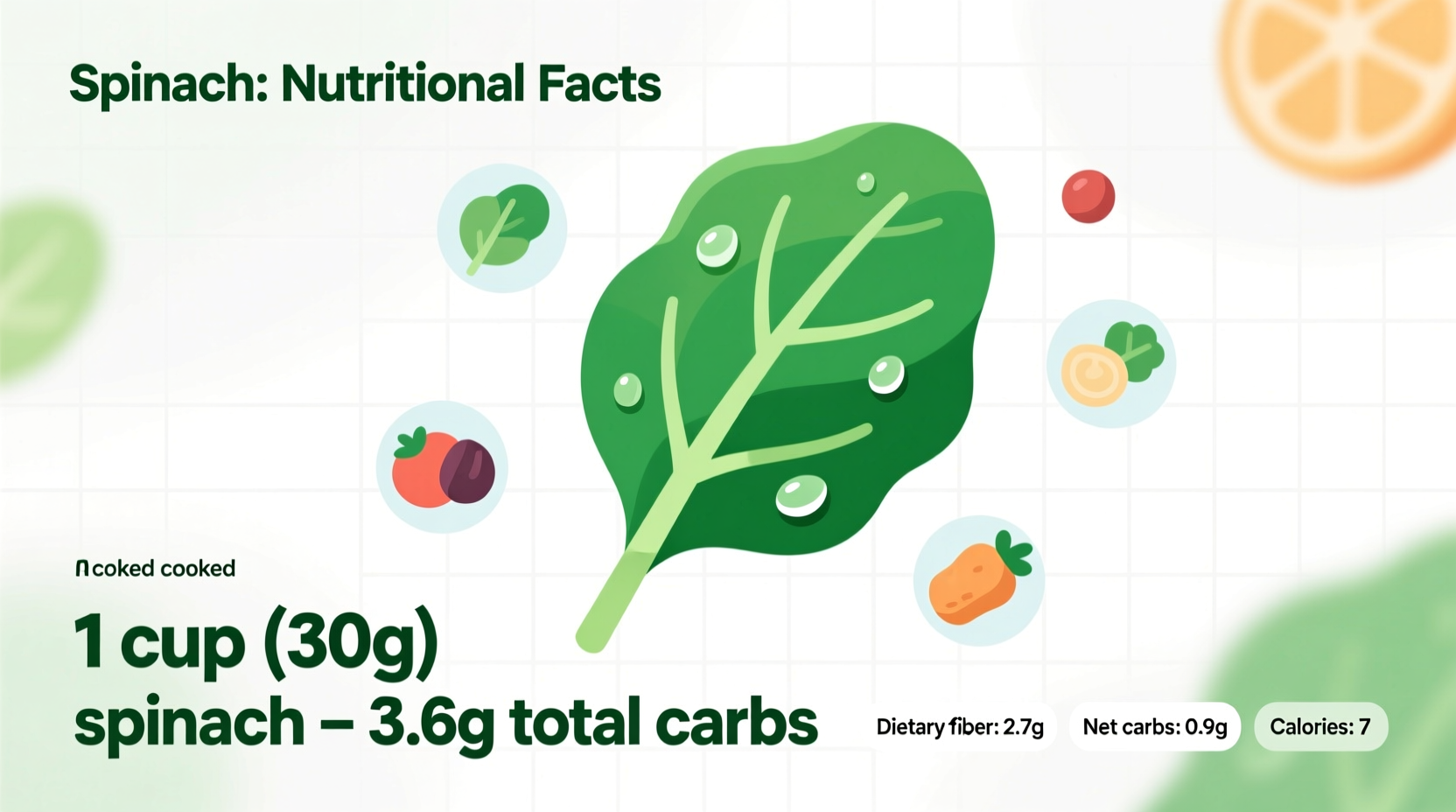
One cup (30g) of raw spinach contains just 0.4 grams of total carbohydrates, with 0.2 grams of dietary fiber, resulting in only 0.2 grams of net carbs. For cooked spinach, one cup (180g) provides approximately 7.1 grams of total carbs and 4.3 grams of fiber, yielding 2.8 grams of net carbs. This makes spinach an exceptional low-carb vegetable choice for various dietary approaches including keto, diabetic, and weight management plans.
Discover exactly how spinach fits into your nutritional goals with this comprehensive guide to spinach carbohydrate content. Whether you're following a strict keto diet, managing blood sugar levels, or simply tracking your daily nutrition, understanding the precise carb count in spinach helps you make informed dietary decisions without sacrificing nutrient density.
Spinach Nutrition Breakdown: Carbs and Beyond
Spinach stands out as one of the most nutrient-dense leafy greens available, offering minimal carbohydrates while delivering exceptional nutritional value. The carbohydrate composition varies significantly between raw and cooked preparations due to the reduction in volume during cooking.
When you cook spinach, its volume reduces substantially—approximately six cups of raw spinach cooks down to just one cup. This concentration effect explains why cooked spinach appears to have higher carb counts per cup, though the actual carb content per leaf remains consistent.
| Preparation | Serving Size | Total Carbs | Dietary Fiber | Net Carbs |
|---|---|---|---|---|
| Raw | 1 cup (30g) | 0.4g | 0.2g | 0.2g |
| Cooked | 1 cup (180g) | 7.1g | 4.3g | 2.8g |
| Raw | 100g | 1.4g | 0.9g | 0.5g |
| Cooked | 100g | 3.6g | 2.2g | 1.4g |
Data sourced from the USDA FoodData Central, the authoritative nutritional database maintained by the United States Department of Agriculture. This official government resource provides scientifically verified nutritional information used by healthcare professionals and researchers worldwide.
Why Spinach Carb Count Matters for Your Diet
The exceptionally low carbohydrate content in spinach makes it an ideal vegetable for multiple dietary approaches. For those following a ketogenic diet, where daily net carb intake typically ranges from 20-50 grams, spinach provides substantial volume and nutrients without significantly impacting carb counts.
Individuals managing diabetes benefit from spinach's minimal effect on blood sugar levels. The American Diabetes Association consistently recommends non-starchy vegetables like spinach as foundation foods for diabetes-friendly meal planning due to their low glycemic impact and high nutrient density.
Raw vs. Cooked: Understanding the Carb Difference
The dramatic difference in carb counts between raw and cooked spinach stems from water content reduction during cooking. Raw spinach contains about 91% water, while cooked spinach retains only about 93% water by weight but in a much smaller volume.
When tracking carbohydrates for medical or dietary reasons, always consider your preparation method. Many people unknowingly consume larger quantities of cooked spinach without realizing the concentrated carb content. For strict keto followers, measuring raw spinach by volume provides more accurate carb tracking.
Spinach Compared to Other Leafy Greens
While all leafy greens rank among the lowest-carb vegetables, spinach holds a particularly advantageous position. Compared to alternatives:
- Kale (1 cup raw): 1.4g total carbs, 0.9g fiber, 0.5g net carbs
- Romaine lettuce (1 cup): 1.5g total carbs, 0.7g fiber, 0.8g net carbs
- Arugula (1 cup): 0.7g total carbs, 0.3g fiber, 0.4g net carbs
- Swiss chard (1 cup cooked): 3.7g total carbs, 1.6g fiber, 2.1g net carbs
This comparison shows spinach's superior carb profile, especially when consumed raw. The Harvard T.H. Chan School of Public Health consistently identifies spinach as one of the most nutritionally efficient vegetables for low-carb dietary patterns.
Practical Applications for Daily Nutrition
Maximize spinach's nutritional benefits while maintaining your carb goals with these practical strategies:
- For salads: Use generous portions (3-4 cups) of raw spinach without significantly impacting daily carb totals
- For smoothies: Add 1-2 cups raw spinach for nutrient boost with minimal carb addition
- For cooking: Measure raw spinach before cooking to accurately track carb content
- For meal prep: Combine spinach with protein sources and healthy fats for balanced, low-carb meals
Nutrition professionals at the Mayo Clinic frequently recommend incorporating at least 2 cups of raw leafy greens daily as part of a balanced diet, with spinach being an excellent choice due to its favorable carb-to-nutrient ratio.
Beyond Carbs: The Complete Nutritional Profile
While carb content matters for specific dietary needs, spinach's true value lies in its exceptional nutrient density. One cup of raw spinach provides:
- 181% of your daily vitamin K needs
- 56% of vitamin A (as beta-carotene)
- 15% of folate requirements
- Significant amounts of manganese, magnesium, and iron
- Powerful antioxidants like lutein and zeaxanthin
The Centers for Disease Control and Prevention (CDC) classifies spinach as a 'dark green vegetable' in their dietary guidelines, recommending regular consumption for optimal health outcomes. This nutrient powerhouse delivers substantial health benefits with minimal carbohydrate impact.
Common Questions About Spinach and Carbohydrates
Understanding spinach's carbohydrate content helps address specific dietary concerns. Whether you're following a strict keto protocol or simply monitoring your carbohydrate intake, these insights provide practical guidance for incorporating spinach into your meal planning routine.




 浙公网安备
33010002000092号
浙公网安备
33010002000092号 浙B2-20120091-4