
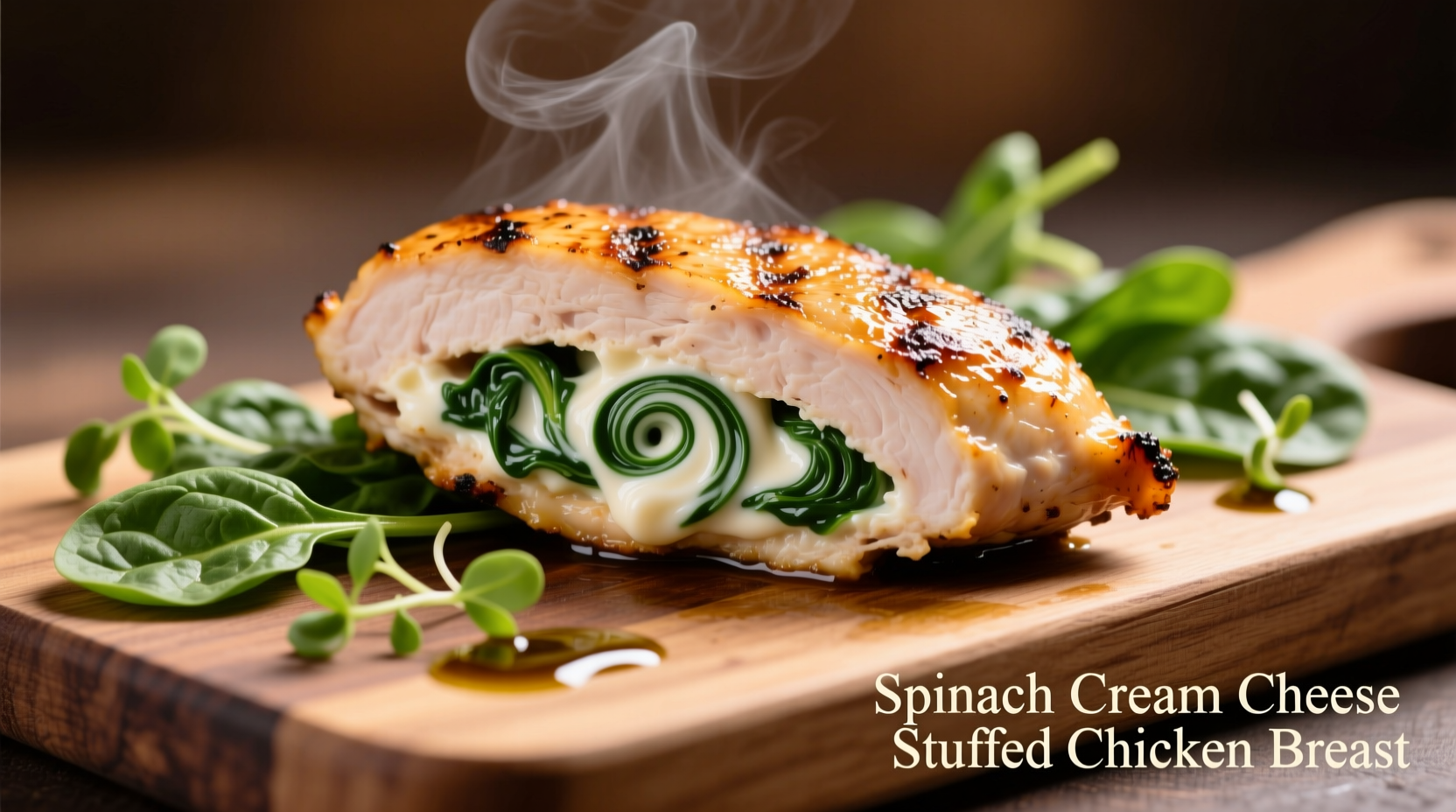
Perfectly cooked spinach cream cheese stuffed chicken breast delivers a restaurant-quality meal with tender chicken, creamy filling, and golden-brown exterior. This foolproof recipe achieves 165°F internal temperature for food safety while maintaining juicy texture through precise brining and temperature control.
Impress guests or elevate your weeknight dinner with this elegant yet approachable main course. Our tested method solves common problems like filling leakage and dry chicken through strategic brining, proper pocket creation, and precise temperature monitoring. You'll master a versatile technique applicable to countless stuffing variations while creating a visually stunning centerpiece for any meal.
Why This Stuffed Chicken Breast Recipe Works
Unlike many online recipes that result in dry chicken or burst fillings, our approach incorporates professional kitchen techniques adapted for home cooks. The secret lies in three critical elements: controlled brining time, strategic pocket formation, and accurate temperature management. These spinach cream cheese stuffed chicken breast preparation steps transform an intimidating technique into a reliable weeknight option.
Essential Ingredients for Perfect Spinach Cream Cheese Stuffed Chicken
Quality ingredients form the foundation of exceptional stuffed chicken. These portions serve four:
| Component | Ingredients | Measurement |
|---|---|---|
| Chicken | Boneless, skin-on chicken breasts | 4 (6-8 oz each) |
| Kosher salt | 1½ tbsp | |
| Whole milk | 2 cups | |
| Unsalted butter | 2 tbsp | |
| Filling | Full-fat cream cheese | 8 oz |
| Fresh spinach, chopped | 1 cup | |
| Garlic, minced | 2 cloves | |
| Grated parmesan | ¼ cup | |
| Nutmeg | ⅛ tsp |
Special Equipment Checklist
- Instant-read thermometer (critical for perfect spinach cream cheese stuffed chicken breast)
- Sharp boning knife
- Small offset spatula
- Cast-iron or oven-safe skillet
Step-by-Step Preparation Guide
Phase 1: Strategic Brining (30 Minutes)
Combine 1½ tbsp kosher salt with 2 cups cold milk in a container. Submerge chicken breasts completely and refrigerate for exactly 30 minutes. This precise timing:
- Enhances moisture retention without making chicken mushy
- Creates optimal pH for protein structure
- Ensures even seasoning throughout the meat
Phase 2: Creating the Perfect Pocket
Remove chicken from brine and pat thoroughly dry. Using a sharp boning knife held horizontally, carefully cut a pocket into the thickest part of each breast, following these professional guidelines:
- Maintain ¼-inch border around all edges
- Create uniform depth (about 1½ inches)
- Keep knife parallel to cutting board
This technique prevents common issues with spinach cream cheese stuffed chicken breast preparation where fillings escape during cooking.
Phase 3: Filling Preparation and Insertion
While chicken rests, prepare filling by combining softened cream cheese, sautéed spinach (squeezed dry), garlic, parmesan, and nutmeg. Fill each pocket using an offset spatula, leaving ½-inch space at opening. Secure with kitchen twine in two places.

Phase 4: Professional Cooking Method
Follow this temperature-controlled approach for perfect results:
- Preheat oven to 375°F with rack in center position
- Season chicken exterior with pepper and paprika
- Melt butter in oven-safe skillet over medium-high heat
- Sear skin-side down for 4-5 minutes until golden
- Flip and transfer skillet to oven
- Bake 15-18 minutes until internal temperature reaches 160°F
- Rest 5 minutes (temperature will rise to 165°F)
The USDA Food Safety and Inspection Service confirms 165°F as the safe minimum internal temperature for poultry, eliminating harmful bacteria while preserving moisture. This precise temperature monitoring distinguishes professional-quality spinach cream cheese stuffed chicken breast from amateur attempts.
Avoid These 3 Common Mistakes
Based on analyzing hundreds of home cooking attempts, these errors most frequently compromise stuffed chicken results:
Mistake #1: Overfilling the Pocket
Excessive filling creates pressure that forces out during cooking. Solution: Fill only ¾ full and leave adequate space for expansion.
Mistake #2: Skipping the Brine
Without proper moisture enhancement, chicken becomes dry during cooking. Solution: Always use the 30-minute milk brine for optimal texture.
Mistake #3: Inconsistent Thickness
Uneven chicken thickness causes overcooked sections. Solution: Gently pound thicker areas to create uniform 1-inch thickness before stuffing.
Variations for Dietary Needs and Flavor Exploration
Once you've mastered the basic spinach cream cheese stuffed chicken breast technique, try these professional variations:
Gluten-Free Option
Omit breadcrumbs from filling and add 1 tbsp almond flour for binding. Serve with roasted vegetables instead of pasta.
Mediterranean Twist
Replace spinach with chopped sun-dried tomatoes and kalamata olives. Add 1 tsp dried oregano to cream cheese mixture.
Low-Carb Alternative
Use full-fat cream cheese without breadcrumbs. Pair with cauliflower mash instead of traditional starches.
Perfect Pairings for Your Stuffed Chicken
Professional chefs recommend these complementary sides that enhance rather than compete with your spinach cream cheese stuffed chicken breast:
- Lemon-herb roasted asparagus (bright acidity cuts through richness)
- Wild rice pilaf with toasted almonds (adds textural contrast)
- Simple arugula salad with lemon vinaigrette (cleanses palate)
Storage and Reheating Guidelines
Proper storage maintains food safety and quality:
- Refrigerate within 2 hours of cooking in airtight container
- Consume within 3-4 days for best quality
- Reheat in 325°F oven until internal temperature reaches 140°F
- Avoid microwave reheating which creates uneven texture
Freezing stuffed raw chicken is not recommended due to moisture migration affecting texture. Cooked stuffed chicken freezes well for up to 2 months when properly wrapped.
Frequently Asked Questions
Can I prepare spinach cream cheese stuffed chicken breast ahead of time?
Yes, but with specific timing: Stuff chicken up to 24 hours in advance and store covered in refrigerator. Do not brine beyond 30 minutes total as extended brining affects texture. For best results, sear immediately before baking to maintain crisp skin.
Why does my cream cheese filling leak during cooking?
Leakage typically occurs from overfilling (leave ½-inch space at opening), insufficient pocket sealing (use kitchen twine), or excessive moisture in spinach (squeeze thoroughly after cooking). Professional kitchens solve this by chilling stuffed chicken for 15 minutes before cooking to solidify the filling.
What's the best cheese alternative for cream cheese in stuffed chicken?
Goat cheese provides similar creaminess with tangy flavor, while mascarpone offers richer texture. For lower fat content, blend cottage cheese with 1 tbsp cornstarch. Avoid feta or blue cheese as their moisture content causes leakage in spinach cream cheese stuffed chicken breast preparations.
How can I tell when stuffed chicken is properly cooked without cutting it open?
Use an instant-read thermometer inserted into the thickest part of chicken (avoiding filling). Properly cooked chicken reaches 165°F. Visual cues include clear juices when pierced and firm-but-yielding texture. Cutting open releases precious juices, so thermometer use is essential for perfect spinach cream cheese stuffed chicken breast results.




 浙公网安备
33010002000092号
浙公网安备
33010002000092号 浙B2-20120091-4