
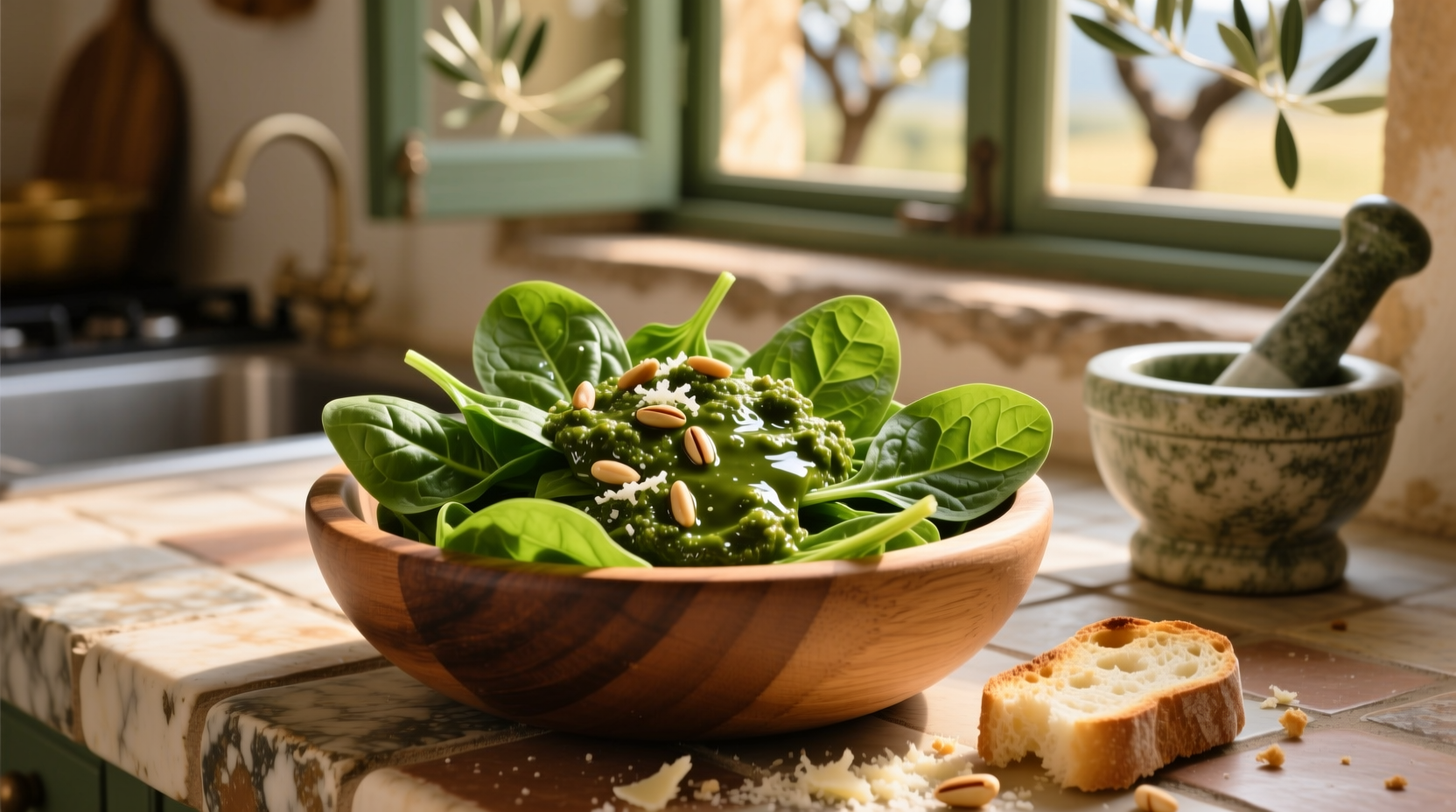
Looking to elevate your pesto game while packing in extra nutrients? Spinach-boosted pesto delivers the familiar flavor you love with added health benefits and vibrant color. As a professional chef with experience in both fine dining and home cooking environments, I've perfected techniques to incorporate spinach without compromising the authentic pesto experience.
Why Spinach Works Perfectly in Pesto
Traditional pesto relies on basil's bright flavor, but adding spinach creates a nutritional powerhouse without sacrificing taste. The mild flavor of spinach complements rather than competes with basil's aromatic profile. When properly incorporated, spinach enhances texture while contributing essential nutrients that pure basil pesto lacks.
| Nutrient Comparison | Traditional Basil Pesto (¼ cup) | Spinach-Basil Pesto (¼ cup) |
|---|---|---|
| Calories | 220 | 195 |
| Vitamin K | 95% DV | 210% DV |
| Vitamin A | 15% DV | 55% DV |
| Iron | 4% DV | 12% DV |
| Calcium | 6% DV | 15% DV |
Data sourced from USDA FoodData Central (2023) shows spinach significantly boosts nutritional content while only slightly reducing calorie count due to its high water content. This makes spinach-basil pesto an ideal choice for health-conscious cooks without sacrificing flavor.
Optimal Spinach-to-Basil Ratio for Perfect Flavor Balance
The secret to exceptional spinach pesto lies in the ratio. While some recipes replace all basil with spinach (creating a different sauce entirely), the most successful versions maintain a 3:1 basil-to-spinach ratio. This balance preserves pesto's signature flavor while gaining nutritional benefits.
For best results, use fresh baby spinach rather than mature leaves. Baby spinach has a milder flavor and tender texture that blends smoothly without requiring pre-cooking. Mature spinach contains more fiber and can create a slightly stringy texture in the finished sauce.
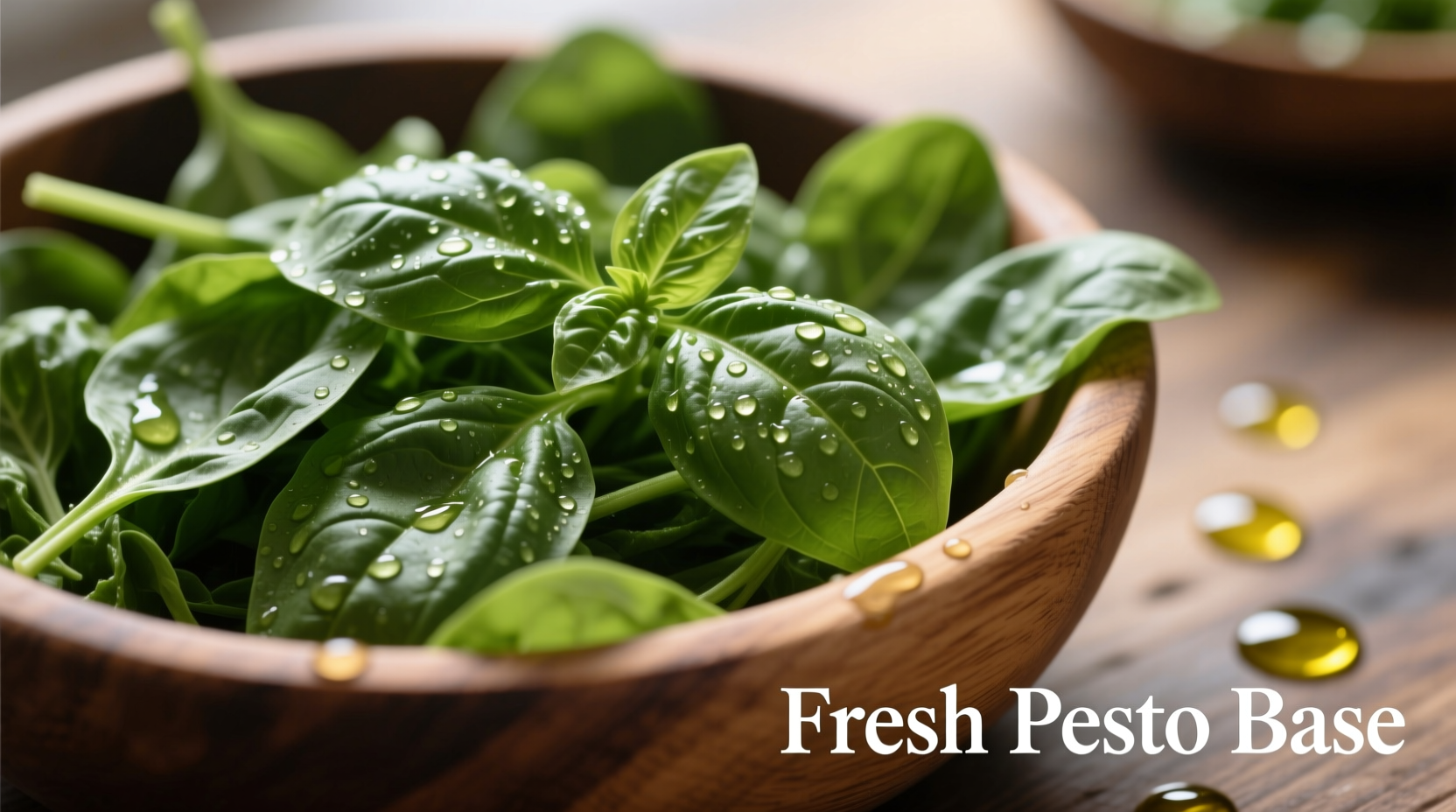
Step-by-Step Spinach Pesto Recipe
This professional chef-tested method ensures vibrant color and balanced flavor every time:
- Combine 2 cups fresh basil leaves, ½ cup fresh baby spinach, ⅓ cup pine nuts, and 2 garlic cloves in food processor
- Pulse until coarsely chopped
- With processor running, slowly add ½ cup extra virgin olive oil
- Add ½ cup freshly grated Parmesan and 2 tablespoons lemon juice
- Pulse until smooth, scraping sides as needed
- Season with sea salt to taste (about ¼ teaspoon)
Pro tip: Add the lemon juice at the end to prevent oxidation. The acid helps maintain the vibrant green color for up to 5 days when properly stored.
When Spinach Pesto Works Best (and When It Doesn't)
Understanding context boundaries helps you use spinach pesto effectively. This variation shines in:
- Cold pasta salads where vibrant color matters
- Sandwich spreads needing extra nutritional value
- Dips for vegetables or crackers
- As a base for pizza sauces
However, traditional basil pesto remains superior for:
- Hot pasta dishes where spinach can become slightly bitter
- Dishes requiring the distinct floral notes of pure basil
- When serving to guests unfamiliar with spinach variations
Storage Secrets for Maximum Freshness
Spinach pesto maintains its vibrant color longer than traditional pesto when stored properly. Follow these professional storage techniques:
- Press plastic wrap directly onto the pesto surface before sealing container
- Add 1-2 tablespoons extra olive oil on top as a protective barrier
- Store in airtight container in refrigerator for up to 5 days
- Freeze in ice cube trays then transfer to freezer bags for up to 6 months
When freezing, leave ½ inch headspace in containers to allow for expansion. Thaw overnight in refrigerator for best results.
Creative Ways to Use Spinach Pesto
Move beyond pasta with these professional chef-approved applications:
- Protein marinade: Coat chicken or fish 30 minutes before cooking
- Breakfast boost: Swirl into scrambled eggs or omelets
- Grain enhancer: Toss with quinoa, farro, or couscous
- Soup finish: Stir into minestrone or vegetable soup just before serving
- Vegetable drizzle: Elevate roasted vegetables with a vibrant finish
Troubleshooting Common Spinach Pesto Issues
Even experienced cooks encounter these challenges. Here's how to fix them:
- Brown discoloration: Increase lemon juice to 3 tablespoons and ensure spinach is thoroughly dry before blending
- Too thick: Add ice-cold water 1 tablespoon at a time until desired consistency
- Bitter taste: Use only the leaves (no stems) and add 1 teaspoon honey to balance flavors
- Separation: Re-emulsify by slowly drizzling in additional olive oil while blending




 浙公网安备
33010002000092号
浙公网安备
33010002000092号 浙B2-20120091-4