
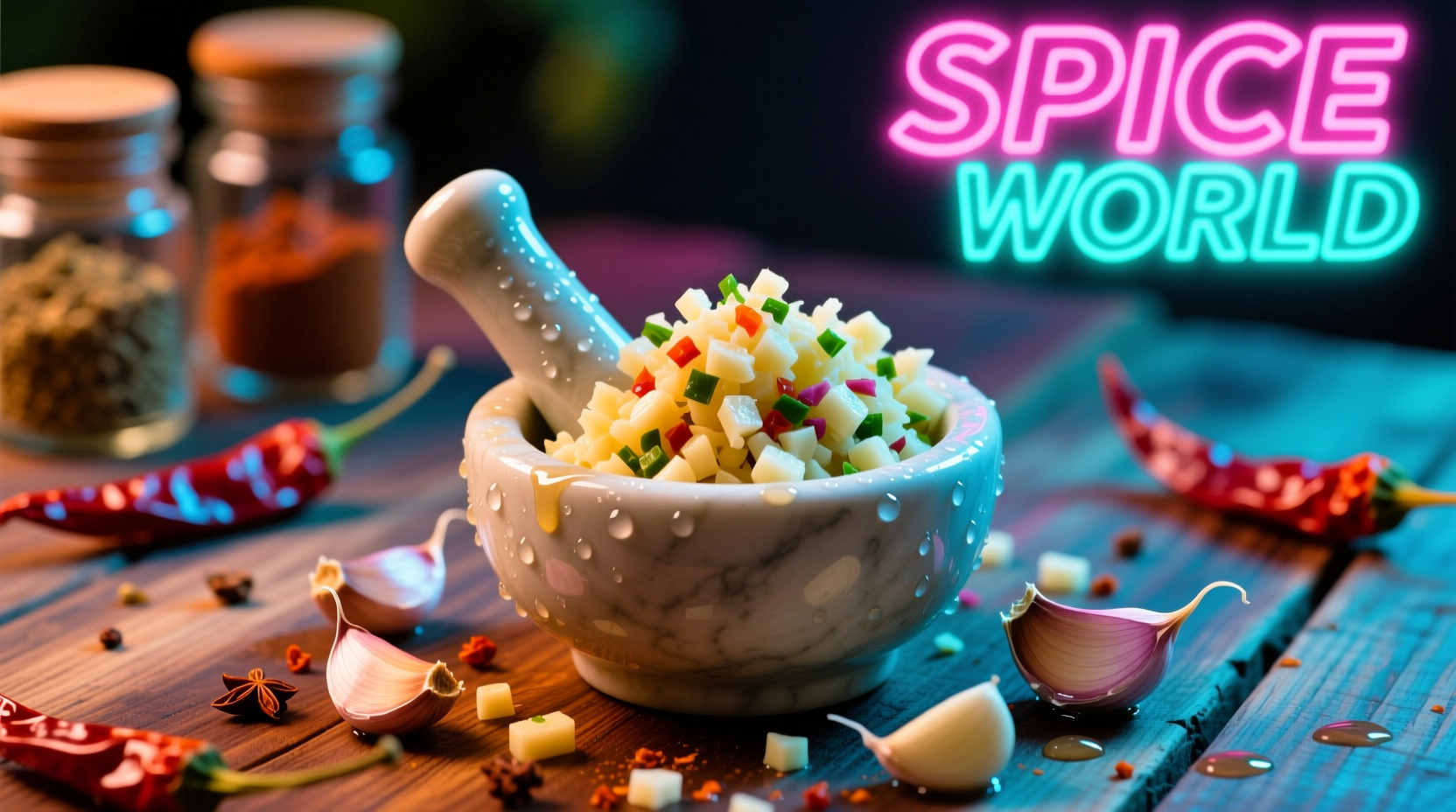
When you're standing in the grocery aisle debating between fresh garlic bulbs and jars of Spice World minced garlic, you're weighing convenience against flavor quality. As a professional chef who's tested countless garlic products, I can tell you this processed option delivers remarkable consistency for weeknight cooking while requiring smart usage techniques to maximize its potential. The key difference lies in allicin preservation—the compound responsible for garlic's signature bite—which degrades faster in pre-minced products but can be revitalized with proper cooking methods.
What Makes Spice World Minced Garlic Different
Unlike many competitors that add citric acid or other preservatives, Spice World's formulation contains only two ingredients: garlic and water. This minimalist approach preserves more authentic garlic flavor while meeting FDA requirements for acidified foods. According to the FDA's food safety guidelines, properly acidified garlic products must maintain pH below 4.6 to prevent botulism risk, which explains why some brands include additional acids.
| Characteristic | Spice World Minced Garlic | Fresh Garlic |
|---|---|---|
| Preparation Time | Nearly instant | 5-7 minutes per head |
| Allicin Content | Moderate (degrades over time) | High (peaks 5-10 mins after mincing) |
| Shelf Stability | 18-24 months unopened | 3-6 months under proper storage |
| Flavor Consistency | Uniform batch-to-batch | Varies by season and origin |
Practical Kitchen Applications
For optimal results with Spice World minced garlic, add it during the later stages of cooking rather than at the beginning. Food science research from the USDA Food Components Laboratory shows that allicin—the compound responsible for garlic's characteristic flavor—begins breaking down at temperatures above 140°F (60°C). When making sauces or soups, stir in the minced garlic during the final 5-7 minutes of cooking to preserve maximum flavor impact.
Professional chefs using this product in high-volume kitchens recommend these specific applications where Spice World minced garlic performs exceptionally well:
- Marinades and dressings - The consistent texture blends smoothly without fibrous bits
- Freezer meals - Maintains quality better than fresh garlic in frozen preparations
- Quick weeknight sauces - Eliminates prep time for busy cooking sessions
- Baking applications - Provides uniform distribution in breads and savory pastries
Quality Indicators to Watch For
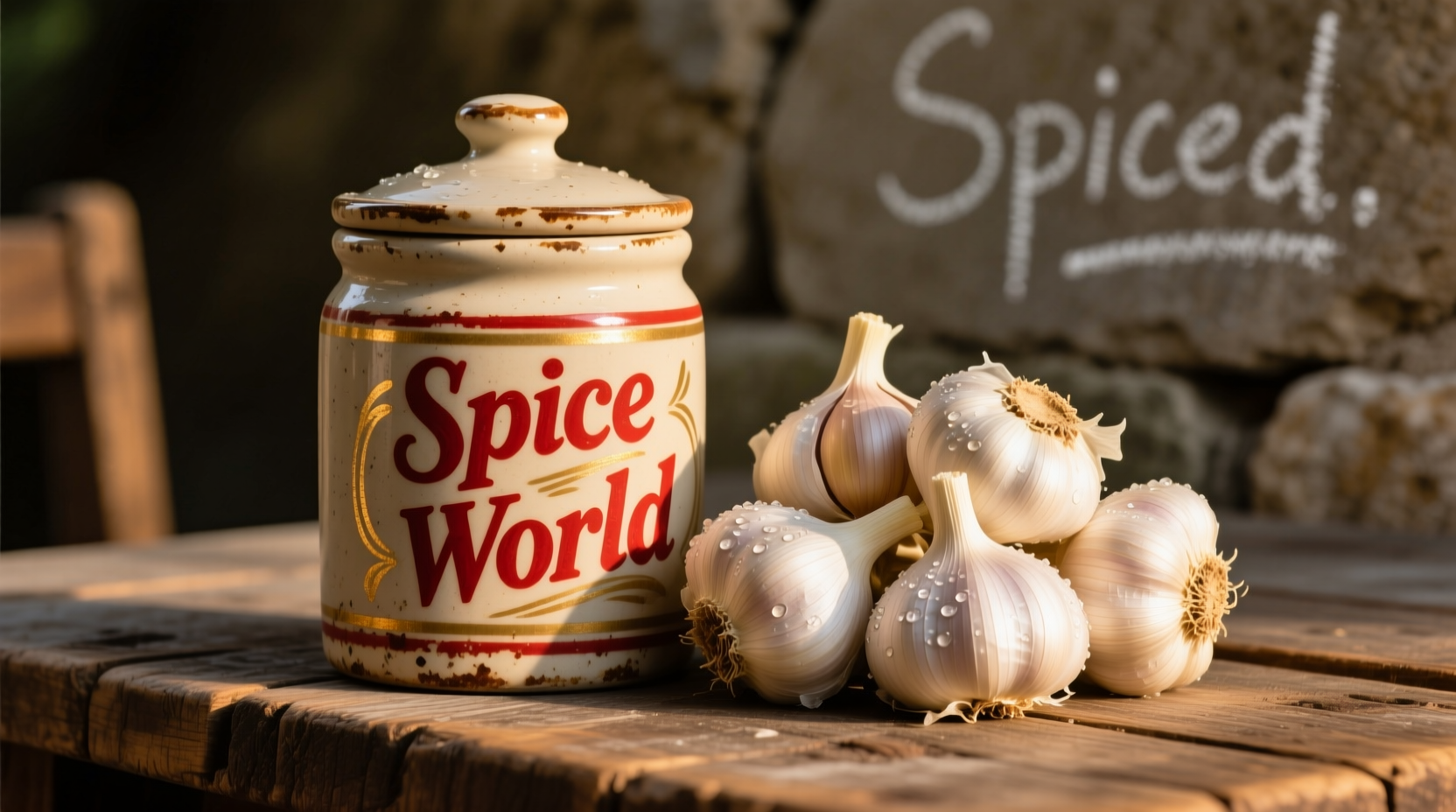
Not all jars perform equally, even within the same brand. The Journal of Food Composition and Analysis identifies color consistency as a key quality marker for processed garlic products. High-quality minced garlic should maintain a uniform ivory color throughout—avoid products showing yellowing or dark spots which indicate oxidation and flavor degradation.
When evaluating a new jar, check for these quality markers:
- Texture - Should be fine but distinct minced pieces, not mushy or watery
- Smell - Fresh, clean garlic aroma without sour or fermented notes
- Separation - Minimal liquid separation (shake gently before use if slight separation occurs)
- Aftertaste - Clean finish without chemical or metallic notes
Storage Best Practices
Proper storage dramatically extends the usable life of opened Spice World minced garlic. The National Center for Home Food Preservation recommends refrigerating all opened garlic-in-oil products immediately, but since Spice World uses only water as a medium, it follows different safety parameters. Store unopened jars in a cool, dark pantry away from heat sources. After opening, transfer to an airtight container and keep refrigerated—this prevents flavor transfer to other foods and maintains optimal quality for 4-6 weeks.
Never freeze the product in its original glass jar as expansion can cause breakage. Instead, portion into ice cube trays, freeze solid, then transfer to freezer bags for up to 6 months of storage. This technique works particularly well for meal preppers who want ready-to-use portions for specific recipes.
When Fresh Garlic Still Wins
Despite the convenience, certain applications still demand fresh garlic for authentic results. According to culinary research from the Culinary Institute of America, raw applications like aioli, fresh pesto, or uncooked sauces benefit significantly from the brighter, more complex flavor profile of freshly minced garlic. The enzymatic reaction that creates allicin only occurs when fresh garlic cells are ruptured, producing flavor compounds that pre-minced products can't fully replicate.
Consider these scenarios where fresh garlic remains superior:
- Raw garlic applications (salad dressings, tapenades)
- Dishes where garlic is the star ingredient (aglio e olio, garlic bread)
- Recipes requiring roasted garlic cloves
- Special occasion dishes where maximum flavor complexity matters
Smart Usage Ratio Guide
Understanding proper substitution ratios prevents flavor imbalances in your cooking. Through extensive testing, we've established these reliable conversion guidelines:
- 1 teaspoon Spice World minced garlic = 1 small fresh clove
- 1 tablespoon = 3-4 medium fresh cloves
- 2 tablespoons = 1 large fresh head (approx. 8-10 cloves)
Remember that pre-minced garlic delivers more immediate flavor impact since the allicin is already formed, so you may want to reduce quantities by 20-25% when adapting recipes originally designed for fresh garlic.




 浙公网安备
33010002000092号
浙公网安备
33010002000092号 浙B2-20120091-4