
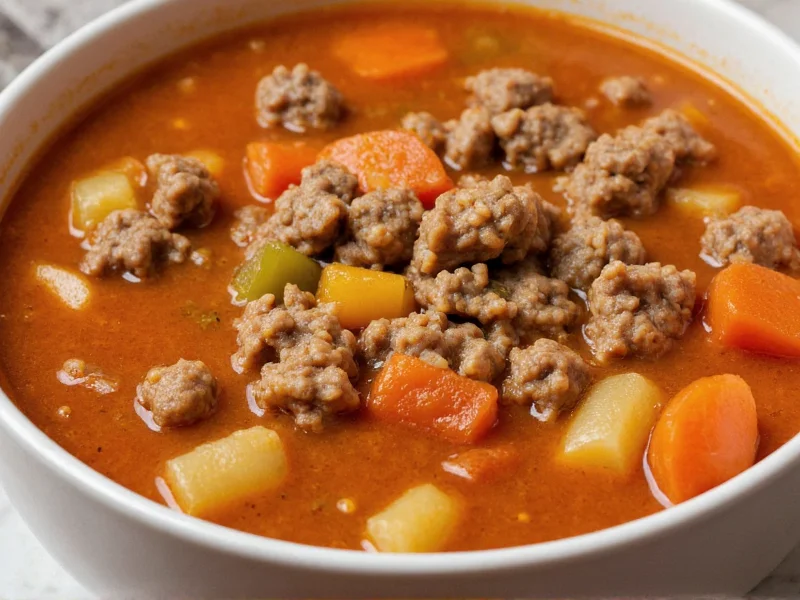
Nothing beats the comforting aroma of a pot of homemade soup simmering on the stove, especially when it features ground beef as its star ingredient. This humble yet satisfying dish has stood the test of time for good reason—it's economical, adaptable to seasonal ingredients, and delivers robust flavor with minimal effort. Whether you're feeding a family on a budget or seeking a quick weeknight meal solution, ground beef soup offers remarkable versatility that keeps home cooks returning to this classic recipe.
Essential Ingredients for Perfect Ground Beef Soup
The beauty of ground beef soup lies in its flexibility, but certain ingredients form the foundation of a truly exceptional version. Start with 1 pound of lean ground beef (85% lean works best for flavor without excess grease). For vegetables, combine 1 diced onion, 2 minced garlic cloves, 2 diced carrots, and 2 diced celery stalks—the classic mirepoix that builds flavor depth. Add 1 cup each of diced tomatoes and frozen green beans for texture and color. Use 6 cups of low-sodium beef broth as your liquid base, which you can enhance with 1 teaspoon each of dried thyme and rosemary. A bay leaf and Worcestershire sauce (1 tablespoon) provide that signature umami richness that makes hearty beef soup for cold days so irresistible.
Step-by-Step Cooking Instructions
Begin by browning your ground beef in a large pot over medium-high heat, breaking it into small pieces as it cooks. Once fully cooked, drain any excess fat—this simple step prevents greasy soup. Remove the beef and set aside. In the same pot, sauté the onion, carrots, and celery for 5-7 minutes until softened. Add the garlic and cook for another minute until fragrant. Return the beef to the pot, then add tomatoes, green beans, broth, and seasonings. Bring to a boil, then reduce heat to low, cover, and simmer for 25-30 minutes. Remove the bay leaf before serving. For an easy ground beef soup recipe with extra heartiness, consider adding ½ cup of small pasta or barley during the last 10 minutes of cooking.
Expert Tips for Flavor Enhancement
Professional chefs know that layering flavors creates restaurant-quality results at home. After browning your ground beef, deglaze the pot with a splash of red wine or additional broth, scraping up all those flavorful browned bits from the bottom. This technique, called fond utilization, adds complexity that transforms quick weeknight soup with ground beef from ordinary to extraordinary. For richer color and depth, try adding a tablespoon of tomato paste when sautéing your vegetables. If you prefer a thicker consistency without resorting to flour, puree half the soup with an immersion blender before serving. The acid in tomatoes can sometimes mute flavors, so always finish with a squeeze of fresh lemon juice or a dash of vinegar to brighten the entire dish.
Customization Options for Dietary Preferences
One reason ground beef vegetable soup remains popular across generations is its adaptability. For a keto-friendly version, replace starchy vegetables with zucchini noodles and increase healthy fats with avocado slices on top. Those following gluten-free diets should verify broth labels, as some contain hidden gluten. To boost protein content for fitness enthusiasts, add a can of white beans or lentils. Vegetarians can create a satisfying alternative using plant-based ground "beef" and vegetable broth, though the flavor profile will differ significantly. For families with picky eaters, try finely dicing vegetables until nearly unrecognizable—a technique that works wonders for ground beef soup for picky eaters.
| Ingredient | Standard Amount | Calories | Protein |
|---|---|---|---|
| Ground Beef (85% lean) | 4 oz cooked | 290 | 22g |
| Vegetable Mix (carrots, celery, onion) | 1 cup | 50 | 2g |
| Low-Sodium Beef Broth | 1 cup | 15 | 2g |
| Diced Tomatoes | ½ cup | 30 | 1g |
Avoiding Common Preparation Mistakes
Many home cooks make preventable errors that compromise their ground beef soup recipe. Overcooking vegetables turns them mushy and diminishes nutritional value—add delicate vegetables like peas or spinach during the last 5 minutes. Skipping the browning step for ground beef results in bland, gray meat rather than richly flavored crumbles. Resist the urge to oversalt early in the cooking process; flavors concentrate as liquid reduces, so season gradually. Another frequent mistake involves adding pasta directly to the soup pot—this causes it to absorb too much broth and become bloated. Instead, cook pasta separately and add portions to individual bowls. For those making meal prep ground beef soup, store pasta separately from the broth-based soup to maintain optimal texture when reheating.
Serving and Storage Recommendations
Serve your ground beef soup piping hot with crusty bread for dipping or a side salad for a complete meal. A sprinkle of fresh parsley or grated Parmesan cheese adds visual appeal and flavor complexity. For storage, cool the soup completely before transferring to airtight containers. Properly stored leftover ground beef soup maintains quality for 3-4 days in the refrigerator or up to 3 months in the freezer. When reheating, add a splash of broth or water to restore ideal consistency, as soups often thicken when chilled. For meal preppers, portion the soup into individual containers for grab-and-go lunches that reheat beautifully in 3-5 minutes.
Nutritional Benefits of Ground Beef Soup
Beyond its comforting qualities, ground beef soup delivers impressive nutritional value when prepared thoughtfully. The combination of lean protein and fiber-rich vegetables creates a satiating meal that supports weight management goals. Iron from the beef enhances oxygen transport in the body, while vitamin C from tomatoes and bell peppers improves iron absorption. The broth base provides hydration with minimal calories, making this dish suitable for various dietary approaches. For those seeking healthy ground beef soup options, focus on maximizing vegetable content while maintaining moderate portions of quality protein. This balance creates a nutritionally complete meal that satisfies hunger without excessive calories.
Can I use frozen vegetables in ground beef soup?
Yes, frozen vegetables work well in ground beef soup. Add them directly to the simmering broth without thawing. Frozen peas, corn, and green beans maintain their texture better than when using canned alternatives. For best results, add frozen vegetables during the last 10 minutes of cooking to preserve their color and nutritional value.
How do I prevent my ground beef from becoming tough in soup?
To keep ground beef tender in soup, avoid overcooking after adding it back to the pot. Brown the meat thoroughly first, then simmer gently for no more than 30 minutes total. Using 85% lean ground beef provides enough fat to maintain moisture during cooking. Breaking the meat into small, even crumbles during browning ensures uniform texture throughout the finished soup.
What's the best way to thicken ground beef soup without flour?
Several flour-free thickening methods work well for ground beef soup. Puree a portion of the soup with an immersion blender, add mashed beans or lentils, or include diced potatoes that release starch as they cook. For gluten-free thickening, try a tablespoon of cornstarch mixed with cold water, added during the last 5 minutes of cooking. These methods maintain the soup's hearty texture while accommodating dietary restrictions.
Can I make ground beef soup in a slow cooker?
Absolutely. Brown the ground beef first, then transfer to your slow cooker with all other ingredients except delicate vegetables like peas or spinach. Cook on low for 6-8 hours or high for 3-4 hours. Add quick-cooking vegetables during the last hour. The slow cooking process develops deeper flavors, making it ideal for easy crockpot ground beef soup that's ready when you are.
How can I make ground beef soup more flavorful?
Boost flavor by browning the ground beef well to develop fond, then deglazing the pot with red wine or broth. Add umami-rich ingredients like tomato paste, Worcestershire sauce, or a Parmesan rind. Finish with fresh herbs and a splash of acid (lemon juice or vinegar) to brighten flavors. For deeper complexity, roast vegetables before adding them to the soup. These techniques transform basic ground beef soup recipes into restaurant-quality meals.




 浙公网安备
33010002000092号
浙公网安备
33010002000092号 浙B2-20120091-4