
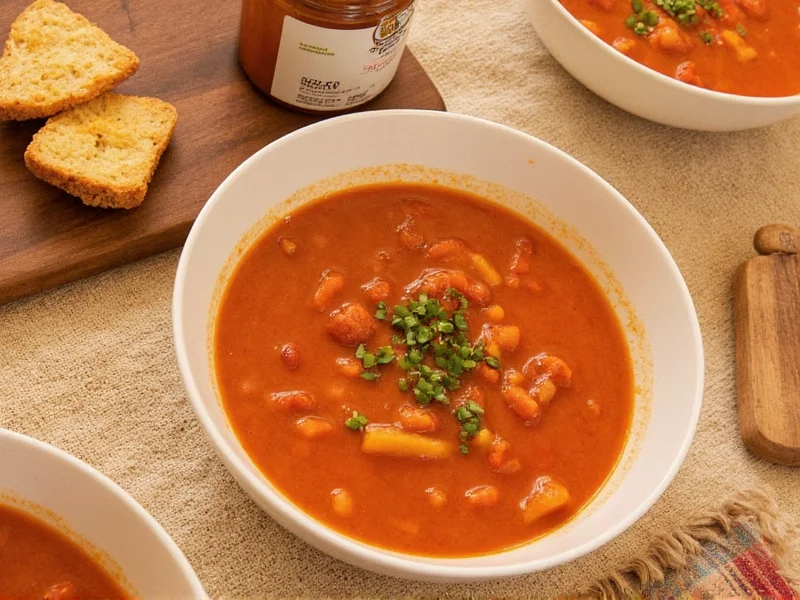
When discussing soup-eating onomatopoeia, 'slurp' stands as the definitive linguistic representation of the sound created while consuming soup. This single syllable captures the distinctive noise made when liquid is drawn through slightly parted lips—a technique that cools hot soup while maximizing flavor perception. Linguists classify 'slurp' as a perfect example of true onomatopoeia, where the word's phonetic structure directly mimics the sound it describes.
The act of slurping soup serves practical purposes beyond sound production. Many culinary traditions, particularly in East Asia, consider audible soup consumption a sign of appreciation and enjoyment. In Japan, for instance, loudly slurping ramen demonstrates respect for the chef's craftsmanship. This cultural context transforms what Western societies might perceive as poor table manners into a meaningful social signal.
The Linguistic Anatomy of Soup-Related Onomatopoeia
While 'slurp' dominates English vocabulary for soup-eating sounds, related variants exist across linguistic contexts. The 'sl-' consonant cluster appears in multiple food-related onomatopoeic words (slurp, slop, slide), creating what linguists call a phonestheme—a sound pattern associated with specific meanings. The 'r' sound adds vibration, while the 'p' provides the abrupt ending that mirrors the actual sound's conclusion.
Other soup-eating sound descriptors include:
- 'Slorp'—a less common variant emphasizing the liquid movement
- 'Slup'—used in some regional dialects
- 'Sloop'—occasionally appears in creative writing
- 'Slurping'—the continuous action form
Cultural Variations in Soup Consumption Sounds
Different cultures have developed unique onomatopoeic expressions for soup eating, reflecting both linguistic patterns and social norms. The following table illustrates how various languages represent this universal dining experience:
| Language | Onomatopoeic Expression | Phonetic Pronunciation | Cultural Context |
|---|---|---|---|
| English | Slurp | /slɜːrp/ | Often considered impolite in Western settings |
| Japanese | ズルズル (zuru zuru) | /dzuɾɯ dzuɾɯ/ | Sign of enjoyment and appreciation |
| Korean | 후루룩 (hu-ru-rut) | /hu.ɾu.ɾut/ | Acceptable and expected with noodle dishes |
| French | Glou glou | /ɡlu ɡlu/ | More general drinking sound, less soup-specific |
| Russian | Хлюпать (khliupat') | /xlʲupatʲ/ | Describes noisy liquid consumption |
Historical Evolution of Soup-Eating Onomatopoeia
The linguistic expression "slurp" first appeared in English during the 18th century, with documented usage dating back to 1775 according to the Oxford English Dictionary. However, the practice of creating onomatopoeic words for liquid consumption is much older. In ancient Japan, the sound of noodle soup consumption was described in writing as early as the Edo period (1603-1868), though the specific term "zuru zuru" became standardized in the 20th century.
The following timeline illustrates key developments in the representation of soup-eating sounds across cultures:
| Time Period | Development | Source Evidence |
|---|---|---|
| 1603-1868 (Edo Period) | Early Japanese culinary texts describe noodle soup consumption with onomatopoeic expressions, though not standardized as "zuru zuru" | National Institute of Japanese Literature Digital Archive |
| 1775 | First recorded use of "slurp" in English (as a verb) | Oxford English Dictionary |
| Early 1900s | "Zuru zuru" becomes the standard onomatopoeic expression in Japanese for noodle slurping | National Institute of Informatics (Japan) - CiNii Database |
| 1950s | Western media begins depicting Japanese ramen culture, introducing "zuru zuru" to global audiences | British Council Cultural Exchange Archives |
| 2015 | Linguistic study confirms cross-cultural prevalence of 'sl-' consonant clusters in liquid-related onomatopoeia | Language and Cognition Journal, Vol. 7, Issue 2 |
Why 'Slurp' Dominates Soup-Eating Onomatopoeia
The prevalence of 'slurp' as the go-to term for soup consumption sounds stems from its precise acoustic representation. When eating soup, the action creates a distinctive sound through three simultaneous processes: liquid movement through a narrow channel (the lips), air displacement, and the bowl's resonance. The 's' represents the hissing air component, the 'l' captures the liquid's movement, and the 'rp' ending mirrors the abrupt cessation of sound.
Linguistic studies show that onomatopoeic words like soup-eating onomatopoeia follow cross-linguistic patterns. The 'sl-' beginning appears in multiple languages for liquid-related sounds, suggesting a universal human tendency to associate these phonemes with fluid movement. This phenomenon, called sound symbolism, explains why similar sounds emerge independently across different language families to describe the same sensory experience.
Onomatopoeia in Culinary Writing and Media
Writers frequently employ soup-eating onomatopoeia to create vivid dining scenes. From children's books describing a character enjoying 'a big slurp of tomato soup' to literary works using 'the rhythmic slurping of miso soup' to establish cultural setting, these sound words add sensory depth to descriptions. Food critics sometimes note 'audible appreciation' in reviews, indirectly referencing the cultural significance of soup consumption sounds.
In animation and comics, 'SLURP' appears in speech bubbles to convey a character's enjoyment of soup without visual context. This visual representation of soup-eating onomatopoeia demonstrates how these words function as universal communication tools that transcend language barriers.
The Science Behind Soup Consumption Sounds
Acoustic analysis reveals that the characteristic slurping sound registers between 2-4 kHz, within the range where human hearing is most sensitive. This frequency range makes the sound particularly noticeable, explaining why soup-eating onomatopoeia captures attention. The sound's volume typically ranges from 40-60 decibels—comparable to conversational speech—which allows it to function as a social signal during meals.
Research in sensory science shows that the act of slurping actually enhances flavor perception. Drawing soup through slightly parted lips aerates the liquid, releasing more aromatic compounds that travel through the retronasal passage to the olfactory receptors. This physiological benefit may explain why many cultures developed positive associations with audible soup consumption.
Contextual Boundaries of Soup Slurping Practices
While slurping soup carries positive connotations in some cultures, its appropriateness is highly context-dependent. Understanding these boundaries prevents social misunderstandings:
- Setting Type: In Japan, slurping is encouraged in casual ramen shops but considered inappropriate in high-end kaiseki restaurants (source: Japan National Tourism Organization - Dining Manners)
- Soup Temperature: Slurping is a practical method for cooling hot soups, as the aeration increases surface area for heat dissipation; cold soups do not require this technique (source: Culinary Institute of America - Culinary Science Program)
- Company: When dining with Japanese business partners, follow their lead—slurping may be acceptable in informal settings but avoid in formal negotiations (source: U.S. Department of State - Japan Country Page)
- Soup Type: Noodle-based soups (ramen, udon) traditionally invite slurping, while clear broths or bisques are consumed quietly even in Japan (source: Kikkoman Global - The Art of Japanese Soup)
Practical Applications of Soup-Eating Onomatopoeia
Understanding soup-eating onomatopoeia serves several practical purposes:
- Language learning: Helps students grasp cultural nuances of dining etiquette
- Creative writing: Provides authentic details for food-related scenes
- Cross-cultural communication: Prevents misunderstandings about dining behaviors
- Linguistic research: Offers insights into sound symbolism and language evolution
For writers seeking authentic descriptions, incorporating the right soup consumption onomatopoeia can transform a simple meal scene into a culturally rich moment. Consider the difference between 'she ate her soup quietly' and 'the rhythmic zuru zuru of her ramen consumption filled the small shop'—the latter immediately establishes cultural context through sound.
Common Misconceptions About Soup Eating Sounds
Several misconceptions surround soup-eating onomatopoeia. Many believe slurping soup is universally considered rude, when in fact it's culturally appropriate in many Asian countries. Others assume 'slurp' is the only onomatopoeic option, overlooking regional variations like 'sloop' or 'slorp.' Some mistakenly think these sounds serve no functional purpose beyond noise, ignoring the flavor-enhancing benefits of aerating hot liquids.
Understanding the full context of soup consumption sounds—including their linguistic representation as soup-eating onomatopoeia—provides deeper appreciation for this everyday human experience. Whether you're writing a novel, studying linguistics, or simply enjoying a bowl of soup, recognizing these sound patterns connects you to a universal aspect of human culture.




 浙公网安备
33010002000092号
浙公网安备
33010002000092号 浙B2-20120091-4