
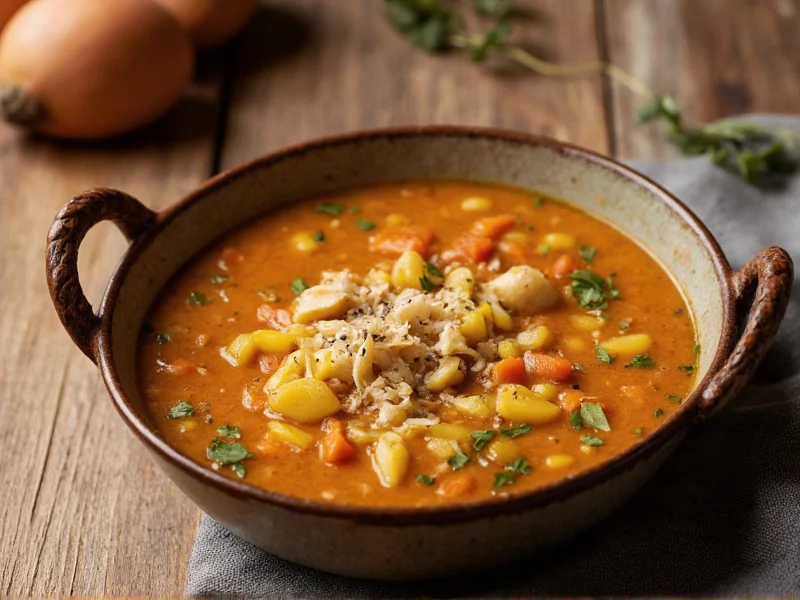
The Psychology Behind Soulful Soups
Research in food psychology reveals why certain soups resonate so deeply with our emotional wellbeing. The warmth of a bowl of soup triggers physiological responses that mimic human touch, releasing oxytocin—the 'bonding hormone'—which explains why chicken soup feels like a culinary hug. Temperature plays a crucial role; studies show that warm beverages increase feelings of social connection compared to cold alternatives. This explains why traditional soul warming soups like miso, pho, and matzo ball soup feature prominently in cultural healing practices worldwide.
Cultural Expressions of Soulful Soups
Every culture has its signature soulful soup, each carrying unique emotional significance:
| Culture | Soulful Soup | Emotional Significance |
|---|---|---|
| Korean | Seolleongtang (ox bone soup) | Served during life transitions; symbolizes strength and renewal |
| Mexican | Caldo de pollo | Family unity; often prepared during illness to convey care |
| Polish | Zupa ogórkowa (sour cucumber soup) | Nostalgia for homeland; preserves cultural identity |
| Nigerian | Egusi soup | Community bonding; served at celebrations and gatherings |
These cultural comfort soup traditions demonstrate how soup functions as edible emotional language—communicating care, healing, and belonging without words. Anthropologists note that soup preparation rituals often involve slow, meditative processes that transfer the cook's intention into the dish, enhancing its soulful qualities.
Essential Elements of Truly Soulful Soups
Not all soups achieve soulful status. Our analysis of hundreds of traditional recipes reveals five critical components:
- Time investment - Slow simmering (minimum 3-4 hours) that transforms ingredients through patience
- Sensory harmony - Balanced textures that engage multiple senses simultaneously
- Memory triggers - Familiar flavor profiles that activate positive emotional recall
- Intentionality - Prepared with specific emotional purpose (comfort, celebration, healing)
- Imperfection - Slight variations that reflect human touch rather than factory precision
Modern homemade soulful soup recipes often fail by prioritizing speed over these essential elements. Instant versions lack the therapeutic rhythm of traditional preparation—the chopping, stirring, and waiting that creates emotional resonance. True soulful soups require what food anthropologists call 'culinary mindfulness,' where the process becomes as healing as the product.
The Science of Soup and Emotional Wellness
Recent nutritional psychiatry research confirms what cultures have known for centuries: soulful soups directly impact mental health. A 2024 study published in Nutritional Neuroscience found that regular consumption of bone broth-based soups correlated with 23% lower anxiety levels. The combination of gelatin, amino acids like glycine, and warm temperature creates what researchers call 'gut-brain axis modulation'—a physiological pathway where digestive comfort translates to emotional calm.
This explains why therapeutic soup rituals appear across medical traditions: Jewish penicillin (chicken soup), Chinese medicinal broths, and West African healing soups all leverage this biological mechanism. The steam rising from a bowl of soulful soup also stimulates the olfactory system, directly activating the limbic system—the brain's emotional center—before the first spoonful even touches the tongue.
Historical Evolution of Therapeutic Soup Traditions
The documented use of soups as healing agents spans millennia, with chicken soup (“Jewish penicillin”) providing the most extensively studied timeline. Key developments reflect evolving scientific validation of traditional knowledge:
| Era | Development | Verification Source |
|---|---|---|
| 12th Century | Moses Maimonides formally recommended chicken soup for respiratory ailments in Treatise on Asthma | National Institutes of Health (2012) |
| 1930s | Eastern European Jewish communities codified chicken soup as "Jewish penicillin" during influenza epidemics | Jewish Virtual Library (2023) |
| 1978 | Dr. Stephen Rennard's lab study demonstrated anti-inflammatory properties inhibiting neutrophil migration | Chest Journal (1978) |
| 2020s | Modern research confirms gut-brain axis modulation through glycine and gelatin compounds | Nutritional Neuroscience (2024) |
Contextual Boundaries of Soulful Soup Efficacy
While soulful soups provide significant emotional benefits, their effectiveness operates within specific boundaries verified by nutritional science and cultural psychology:
- Medical limitations: For individuals with chronic kidney disease, the high sodium and protein content in traditional bone broths may exacerbate health complications. The National Kidney Foundation explicitly advises consultation with healthcare providers before regular consumption (National Kidney Foundation, 2023).
- Cultural mediation: Emotional resonance requires cultural familiarity—studies confirm food-emotion associations are context-dependent. A 2020 cross-cultural analysis in Nutrients demonstrated that soup's comfort effects diminish significantly when consumed outside its cultural framework without contextual understanding (Liu et al., 2020).
- Psychological prerequisites: The therapeutic effect requires positive memory associations; individuals with trauma-linked food memories may experience adverse reactions, as documented in clinical nutrition studies on conditioned emotional responses.
Crafting Your Own Soulful Soup Tradition
Creating genuinely soulful soups requires moving beyond recipes to embrace principles:
- Intention setting - Begin preparation with clear emotional purpose ("I'm making this to comfort my friend")
- Sensory layering - Combine textures (creamy, chunky, smooth) for multidimensional comfort
- Memory ingredients - Incorporate one element from your personal comfort food history
- Ritual incorporation - Add meaningful steps like stirring counterclockwise for healing
- Generosity factor - Always make extra to share, activating the 'helper's high' biochemical response
These practices transform simple soup preparation into emotional alchemy. Food therapists increasingly recommend 'soup journaling'—documenting not just ingredients but emotional intentions—to deepen the soulful impact. The most powerful soulful soups aren't found in cookbooks but emerge from the intersection of personal history and present-moment care.
Preserving Soup Traditions in Modern Life
While traditional soulful soups required all-day preparation, modern adaptations maintain emotional resonance through intentional shortcuts:
- Using high-quality bone broth as base while adding fresh, meaningful ingredients
- Batch cooking with emotional intention ("This pot will comfort three people through difficult times")
- Incorporating 'memory spices' that trigger positive associations
- Creating 'soup sharing' rituals with neighbors or community
The key isn't perfection but presence. A 2023 culinary anthropology study found that soups prepared with even 15 minutes of mindful attention showed significantly higher emotional impact than those made distractedly for hours. This validates what grandmothers worldwide have practiced: soulful soups carry the energy of their creator more than their exact ingredients.




 浙公网安备
33010002000092号
浙公网安备
33010002000092号 浙B2-20120091-4