
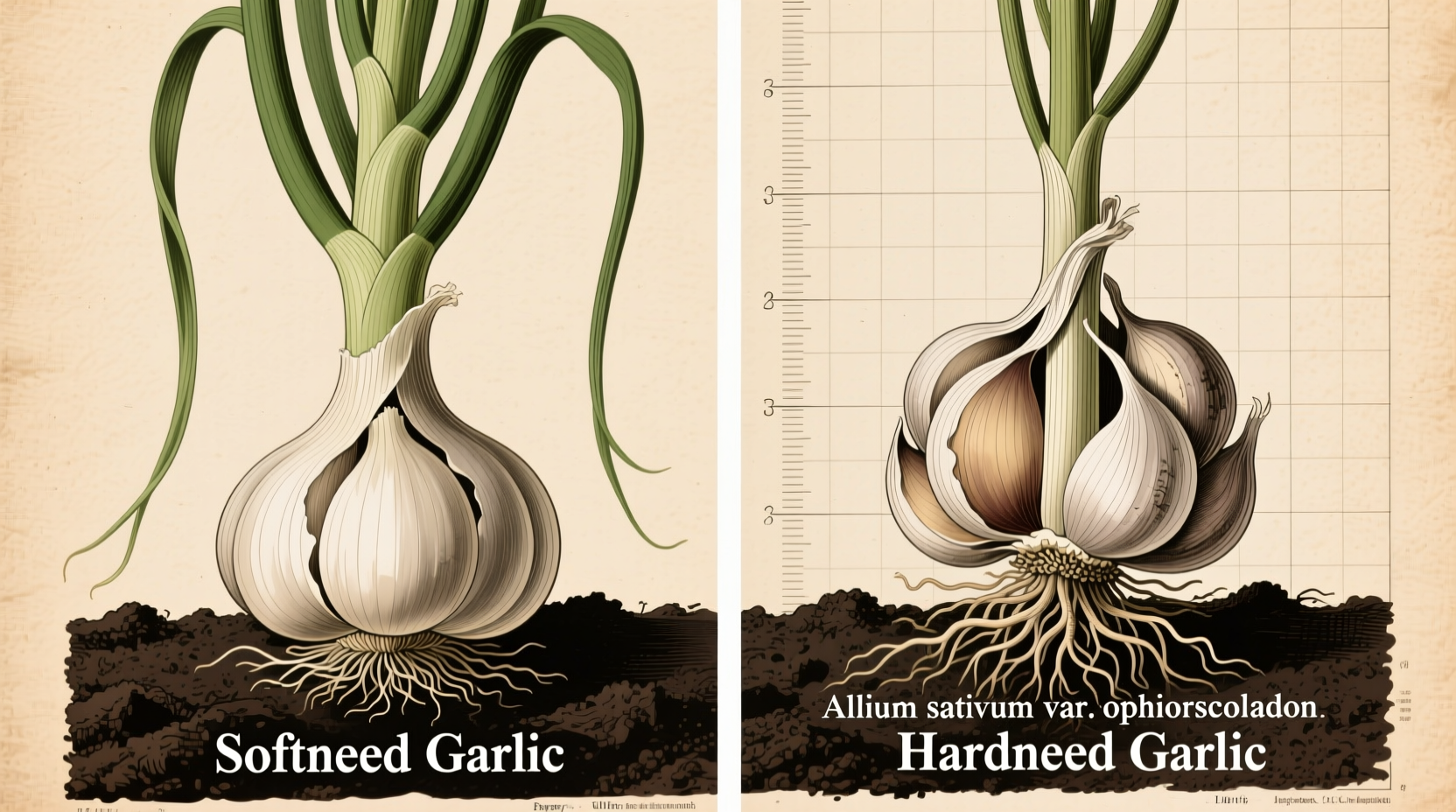
Softneck garlic offers longer storage (9-12 months) and flexible stems ideal for braiding, while hardneck garlic delivers more complex flavor and easier peeling but stores for only 4-6 months. Choose softneck for commercial use and long-term storage, hardneck for superior taste and cold climate growing.
When selecting garlic for your kitchen or garden, understanding the fundamental differences between softneck and hardneck varieties is essential. This comprehensive guide cuts through the confusion with science-backed comparisons, practical usage tips, and clear selection criteria—helping you make the right choice based on your climate, storage needs, and culinary preferences.
Why Garlic Type Matters: Beyond Just Flavor
Garlic isn't just garlic. The distinction between softneck (Allium sativum var. sativum) and hardneck (Allium sativum var. ophioscorodon) varieties affects everything from your cooking results to your gardening success. While both belong to the same species, their biological differences create significant practical implications for home cooks and growers alike.
| Characteristic | Softneck Garlic | Hardneck Garlic |
|---|---|---|
| Stem Type | Soft, pliable stem (no central stalk) | Rigid central flowering stalk (scape) |
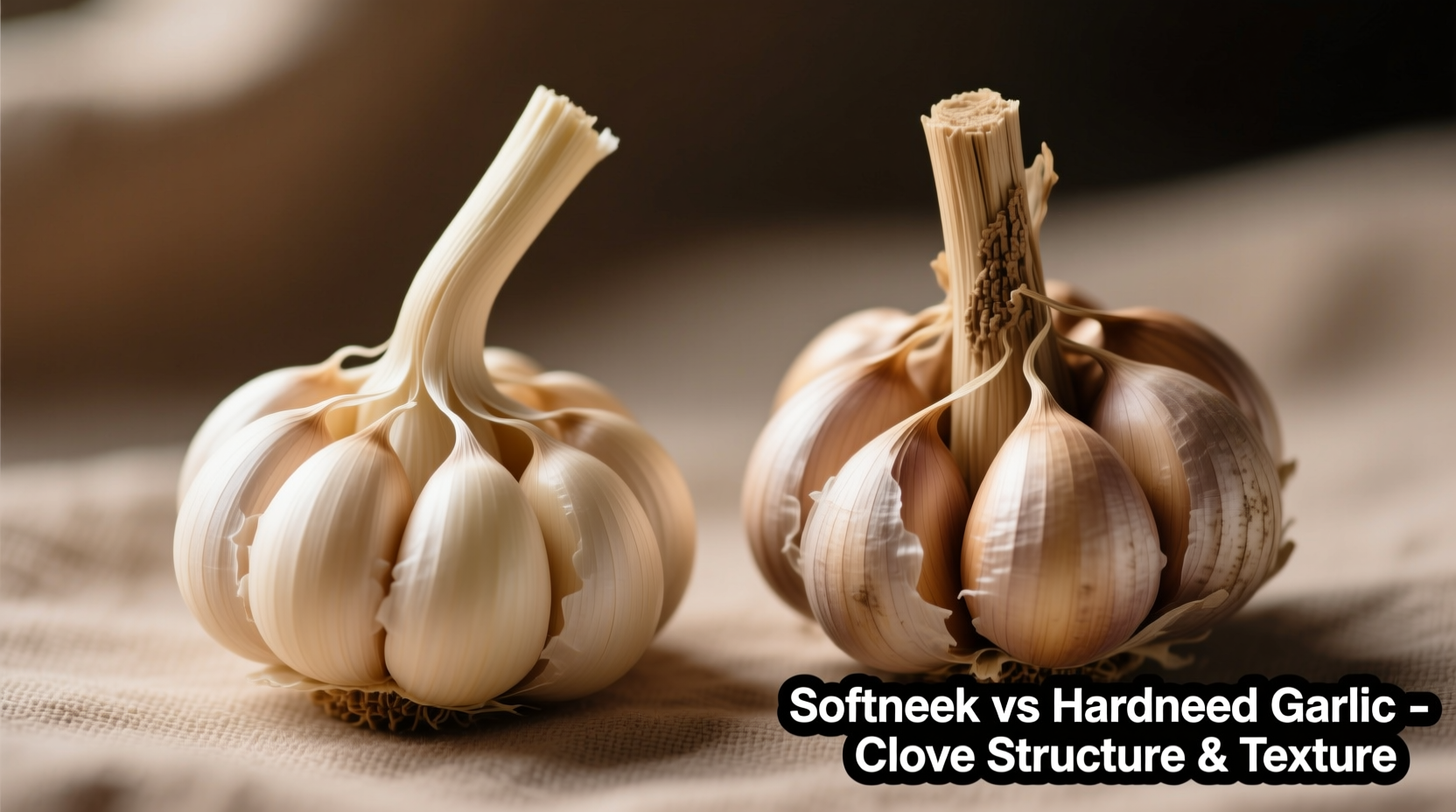
| Cloves Per Bulb | 12-40 (multiple layers) | 4-12 (single layer) |
| Storage Life | 9-12 months | 4-6 months |
| Peeling Difficulty | More difficult (tighter skins) | Easier (looser skins) |
| Flavor Profile | Milder, more consistent | More complex, robust |
| Cold Hardiness | Less tolerant (USDA zones 7-9) | More tolerant (USDA zones 3-7) |
| Common Varieties | Silverskin, Artichoke | Rocambole, Porcelain, Purple Stripe |
Growing Requirements: Matching Garlic to Your Climate
Your geographic location should be the first consideration when choosing between softneck and hardneck garlic. According to the USDA Agricultural Research Service, hardneck varieties require a period of vernalization (exposure to cold temperatures) to form proper bulbs, making them ideal for northern climates with cold winters. Softneck varieties, conversely, thrive in milder winter regions where temperatures rarely drop below freezing.
Gardeners in USDA zones 3-7 typically achieve best results with hardneck garlic, which develops its characteristic central stalk when exposed to cold temperatures. The University of Vermont Extension notes that hardneck varieties produce edible scapes (flower stalks) in late spring, which many growers harvest as a secondary crop. Softneck varieties dominate commercial production in California's Central Valley (zones 8-9), where mild winters don't provide sufficient chilling for hardnecks.
Storage Science: Why Softnecks Last Longer
The storage difference between these varieties isn't arbitrary—it's rooted in botanical structure. Softneck garlic's multiple layers of cloves create a more protective environment that slows moisture loss and sprouting. Research from the University of California Cooperative Extension shows softneck varieties maintain quality for 9-12 months when stored at 60-65°F with 60-70% humidity.
Hardneck garlic's single layer of larger cloves makes it more vulnerable to moisture loss and sprouting. For optimal hardneck storage, the Oregon State University Extension recommends keeping bulbs at 32-40°F with 60-70% humidity—conditions that extend shelf life to 4-6 months. Attempting to store hardneck garlic at room temperature typically results in sprouting within 2-3 months.
Culinary Performance: Flavor, Texture, and Application
Professional chefs consistently report that hardneck garlic delivers more complex flavor profiles with subtle variations between varieties. The James Beard Foundation's culinary research notes that hardneck varieties like Rocambole develop nuanced flavors ranging from nutty to slightly sweet when roasted, while softnecks maintain a more consistent, milder profile ideal for commercial food production.
From a practical kitchen perspective, hardneck garlic's larger, easier-to-peel cloves make preparation faster—a significant advantage when working with multiple bulbs. Softneck's smaller, tightly packed cloves require more effort to separate but provide more uniform pieces ideal for commercial processing. When substituting one for the other in recipes, remember that hardneck's stronger flavor may require using 25% less than softneck to achieve equivalent taste intensity.
Selection Guide: Choosing Based on Your Needs
Rather than declaring one variety superior, the right choice depends entirely on your specific requirements:
- Choose softneck garlic if: You need long-term storage (9+ months), live in a mild climate (zones 7-9), want flexible stems for braiding, or prefer a milder, consistent flavor profile
- Choose hardneck garlic if: You prioritize flavor complexity, live in a cold climate (zones 3-7), want easier peeling, enjoy harvesting scapes, or use garlic within 6 months
Commercial producers overwhelmingly select softneck varieties for their extended shelf life and mechanical harvesting compatibility. Small-scale growers and culinary enthusiasts often prefer hardneck for its superior flavor and gardening experience. The Rodale Institute's organic farming research shows that home gardeners in northern climates typically achieve better yields and flavor with hardneck varieties, while southern growers succeed with softnecks.
Practical Tips for Maximum Garlic Performance
Regardless of which variety you choose, these evidence-based practices optimize your garlic experience:
- Storage: Keep garlic in mesh bags or open baskets—never plastic containers which trap moisture. The National Center for Home Food Preservation confirms that proper air circulation prevents mold and sprouting.
- Planting: For hardnecks, plant cloves 6-8 weeks before first frost with pointed end up, 2-3" deep. Softnecks can be planted slightly shallower in milder climates.
- Cooking: Crush hardneck garlic and let it rest 10 minutes before cooking to maximize allicin development. Softneck benefits from slightly longer cooking times to develop full flavor.
- Preserving: Freeze peeled cloves in olive oil for up to 6 months—this method works better with softneck's smaller cloves.
Common Questions About Garlic Varieties
Understanding these frequently asked questions helps clarify common misconceptions about garlic types:




 浙公网安备
33010002000092号
浙公网安备
33010002000092号 浙B2-20120091-4