
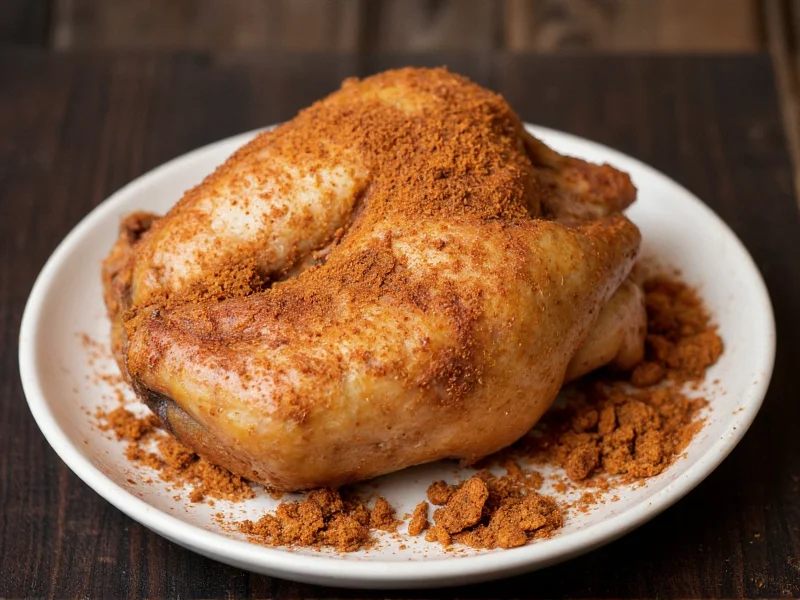
Understanding the Smoked Element in Turkey Seasoning
Many home cooks wonder what makes turkey seasoning "smoked"—it's primarily the inclusion of smoked paprika, which provides that distinctive campfire-like flavor without actual smoking. Unlike regular paprika, smoked paprika is made from peppers dried over oak fires, giving it a complex, woodsy note that complements turkey's mild flavor profile perfectly. Liquid smoke can substitute for smoked paprika in a pinch, but use sparingly (¼ teaspoon per tablespoon of smoked paprika) as it's significantly more concentrated.
Professional pitmasters emphasize that the smoked element should enhance, not overpower, the turkey. The ideal smoked turkey seasoning creates a harmonious balance where the smoke note is present but doesn't dominate the herb and spice components. This balance becomes especially crucial when preparing smoked turkey breast, where delicate meat requires a more subtle seasoning approach than darker meat portions.
Historical Evolution of Smoked Turkey Preparation
Modern smoked turkey seasoning reflects centuries of culinary adaptation. According to University of Wisconsin-Madison Food Safety research, traditional smoking required 12-72 hours exposure to wood smoke for preservation—a necessity before refrigeration (University of Wisconsin-Madison, 2020). The National Center for Home Food Preservation documents how innovations transformed this process:
- Pre-1950s: Open-fire smoking dominated, with turkey hung in smokehouses for days using hickory or applewood
- 1950s: Liquid smoke emerged as a faster alternative, though early formulations lacked complexity (Oregon State University Extension, 2021)
- 1980s: Spanish smoked paprika entered US markets, enabling authentic smoky notes in dry rubs (USDA Foreign Agricultural Service, 2017)
- Present: Modern blends prioritize flavor development within FDA food safety parameters for home cooking
These developments demonstrate how smoked turkey seasoning evolved from preservation necessity to accessible flavor technique while maintaining critical food safety standards.
Essential Ingredients and Their Roles
Each component in your smoked turkey seasoning serves a specific purpose in building complex flavor layers. Understanding these roles helps you adjust the blend to your preferences while maintaining balance:
| Ingredient | Primary Function | Substitution Options |
|---|---|---|
| Smoked Paprika | Provides signature smoky depth | Chipotle powder (½ amount) or liquid smoke (few drops) |
| Garlic Powder | Creates savory umami foundation | Fresh minced garlic (double amount, mix with oil) |
| Onion Powder | Adds sweet complexity | Caramelized onion powder or shallot powder |
| Dried Thyme | Earthy herbal note | Marjoram or oregano (use ⅔ amount) |
| Dried Rosemary | Pine-like aromatic quality | Sage (use half amount) or fresh rosemary (triple amount) |
| Characteristic | Homemade Blend | Commercial Blend (Average) |
|---|---|---|
| Sodium Content (per tsp) | 150mg (adjustable) | 675mg (USDA FoodData Central, 2023) |
| Artificial Additives | None | Commonly contains anti-caking agents per FDA regulations (21 CFR 182.2) |
| Ingredient Transparency | Full control over quality and source | "Spices" and "natural flavors" often unspecified (FDA labeling rules) |
Perfect Homemade Smoked Turkey Seasoning Recipe
This tested recipe creates enough seasoning for a 12-14 pound turkey, with precise ratios that prevent common pitfalls like excessive saltiness or overwhelming smoke flavor. The measurements follow professional chef standards for balanced seasoning that penetrates the meat properly.
Basic Smoked Turkey Seasoning Blend
- ¼ cup (25g) smoked paprika (key for authentic smoked turkey seasoning)
- 2 tablespoons (14g) garlic powder
- 2 tablespoons (14g) onion powder
- 1½ tablespoons (8g) dried thyme
- 1½ tablespoons (6g) dried rosemary, finely crushed
- 1 tablespoon (18g) fine sea salt
- 1½ teaspoons (4g) freshly ground black pepper
- 1 teaspoon (3g) brown sugar (optional, enhances browning)
- ½ teaspoon (1g) cayenne pepper (optional, for subtle heat)
Preparation Method
- Combine all ingredients in a small bowl, breaking up any rosemary clumps with your fingers
- Whisk thoroughly for 60 seconds to ensure even distribution (critical for consistent flavor)
- Transfer to an airtight container and store in a cool, dark place
- For best flavor development, let the blend rest for 24 hours before use
This homemade smoked turkey seasoning recipe yields approximately 1 cup of seasoning. Properly stored in an airtight container away from light and heat, it maintains peak flavor for 4-6 months. For extended shelf life, divide into smaller portions and freeze what you won't use within six months.
Application Techniques for Maximum Flavor
How you apply smoked turkey seasoning significantly impacts results. Professional chefs use these methods depending on preparation style:
Dry Brining Method (Best for Whole Smoked Turkey)
For optimal flavor penetration, combine 3 tablespoons of seasoning with 2 tablespoons olive oil to create a paste. Gently loosen turkey skin and rub ⅔ of the mixture directly on the meat. Apply remaining mixture to skin surface. Refrigerate uncovered for 12-24 hours before smoking. This technique allows flavors to penetrate deeply while helping skin crisp during cooking.
Direct Rub Application (Ideal for Smoked Turkey Breast)
For boneless turkey breast portions, use a 1:3 ratio of seasoning to oil (1 tablespoon seasoning to 3 tablespoons oil). Massage thoroughly into all surfaces, including any crevices. Let rest 30 minutes at room temperature before placing on smoker. This proportion prevents the seasoning from burning while ensuring adequate flavor transfer.
Troubleshooting Common Seasoning Issues
Even experienced cooks encounter challenges with smoked turkey seasoning. Here's how to address frequent problems with context-aware solutions:
When Smoke Flavor Overpowers
If your smoked turkey seasoning tastes too smoky, reduce smoked paprika by 25% in your next batch and increase complementary herbs like thyme by 10%. For immediate correction on already seasoned turkey, create a neutralizing paste of equal parts honey and olive oil, and apply thinly to the surface before continuing cooking. Note: This technique is ineffective for turkeys smoked above 275°F where surface sugars rapidly caramelize (USDA Food Safety Guidelines, 2022).
Seasoning Burning During Smoking
Sugar content in some seasoning blends causes burning at high temperatures. Solution: Omit sugar from your smoked turkey seasoning when cooking above 250°F, or apply seasoning during the final hour of smoking. Alternatively, create a barrier by rubbing turkey with thin layer of mustard before applying dry rub. Important limitation: This method doesn't prevent burning in electric smokers with direct heating elements (National Center for Home Food Preservation, 2021).
Variations for Special Dietary Needs
Adapt this traditional smoked turkey seasoning blend for various dietary requirements without sacrificing flavor:
Low-Sodium Smoked Turkey Seasoning
Replace salt with 2 tablespoons dried lemon zest and 1 tablespoon potassium chloride. Increase smoked paprika by 1 tablespoon to compensate for reduced flavor enhancement from salt. This version maintains depth while reducing sodium by 75%, perfect for heart-healthy diets.
Spicy Cajun-Style Smoked Turkey Blend
Add 1 tablespoon each of cayenne pepper and dried oregano to the base recipe, plus 2 teaspoons celery seed. Reduce black pepper to ½ teaspoon. This variation creates a Louisiana-inspired smoked turkey seasoning ideal for those who enjoy bold flavors with their smoked turkey breast.
Pro Tips from Professional Pitmasters
Seasoned barbecue experts recommend these advanced techniques for perfect smoked turkey every time:
- Layer flavors: Apply half your seasoning before smoking, then reapply during the final hour for complex flavor development
- Temperature matters: For smoking below 225°F, increase smoked paprika by 20% as lower temperatures reduce smoke absorption
- Resting is crucial: Let seasoned turkey rest uncovered in refrigerator for at least 4 hours (ideally overnight) to allow flavors to penetrate
- Moisture control: Pat turkey completely dry before seasoning application—any surface moisture prevents proper adhesion
Remember that the ideal smoked turkey seasoning ratio varies slightly based on your specific smoker and wood type. If using strong smoking woods like hickory or mesquite, reduce smoked paprika by 15% to prevent flavor competition. For milder woods like apple or cherry, maintain the standard ratio or increase by 10% for more pronounced seasoning flavor.




 浙公网安备
33010002000092号
浙公网安备
33010002000092号 浙B2-20120091-4