
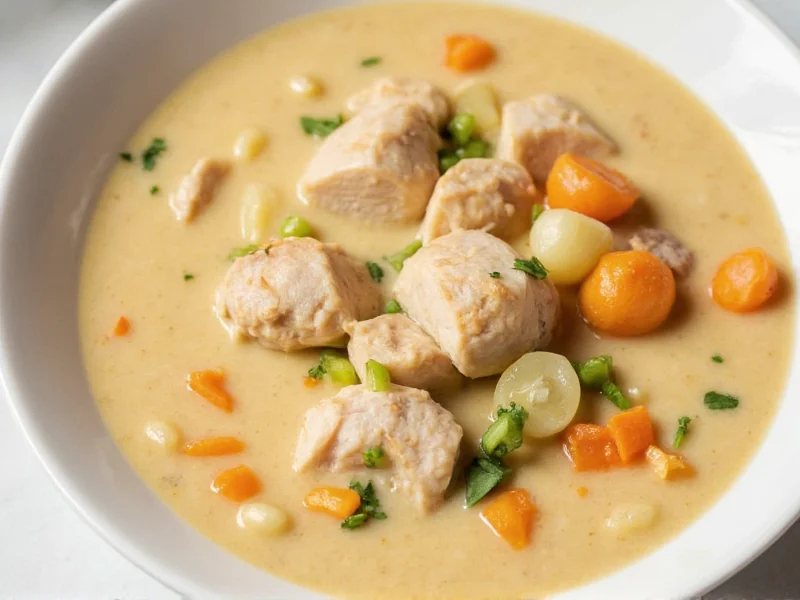
Why Slow Cooking Chicken Breast with Cream of Chicken Soup Works
Slow cooking chicken breast with cream of chicken soup creates consistently moist results by providing a protective liquid barrier during cooking. The soup's starches and fats help retain moisture in the lean chicken breast, which typically dries out easily. This method requires minimal prep time while delivering restaurant-quality tenderness through gentle, even heat distribution.
Essential Ingredients for Perfect Results
Using quality ingredients makes a significant difference in your slow cooker chicken breast recipes with cream of chicken soup. Here's what you'll need for the basic recipe serving 4-6 people:
- 1.5-2 pounds boneless, skinless chicken breasts (even thickness preferred)
- 1 can (10.5 oz) cream of chicken soup (regular or healthy request)
- 1/2 cup chicken broth (low sodium recommended)
- 1 teaspoon garlic powder
- 1 teaspoon onion powder
- 1/2 teaspoon dried thyme
- Salt and black pepper to taste
- Optional: 1/4 cup grated Parmesan cheese for finishing
| Cooking Method | Time | Temperature | Result |
|---|---|---|---|
| Slow Cooker LOW | 3-4 hours | 170-200°F | Perfectly tender, juicy |
| Slow Cooker HIGH | 2-2.5 hours | 250-300°F | Risk of dryness |
| Oven (350°F) | 25-30 minutes | 350°F | Requires monitoring |
Step-by-Step Cooking Instructions
Follow these precise steps for the best slow cooker chicken breast with cream of chicken soup:
- Pat chicken breasts dry with paper towels to ensure proper seasoning adherence
- Season both sides generously with salt, pepper, garlic powder, onion powder, and thyme
- Arrange chicken in a single layer at the bottom of your slow cooker
- Mix cream of chicken soup and broth until smooth, then pour over chicken
- Cover and cook on LOW for 3-4 hours (never on HIGH for chicken breast)
- Check internal temperature reaches 165°F using a meat thermometer
- Remove chicken carefully to prevent shredding (it will be very tender)
- Let rest 5 minutes before slicing against the grain
Avoiding Common Mistakes in Slow Cooker Chicken Recipes
Many home cooks encounter dry or stringy chicken when preparing slow cooker chicken breast recipes with cream of chicken soup. These issues typically stem from:
- Overcooking: Chicken breast continues cooking after removal from heat. Remove at 160°F to reach 165°F during resting.
- Cooking on HIGH: The higher temperature causes proteins to contract too quickly, squeezing out moisture.
- Crowding the cooker: Arrange chicken in a single layer with space between pieces for even cooking.
- Using frozen chicken: Always use thawed chicken for proper cooking time calculations.
- Skipping the rest period: Let chicken rest 5 minutes after cooking to redistribute juices.
Historical Development of Soup-Based Slow Cooking
The marriage of condensed soup and slow cooking evolved through key milestones:
- 1897: Campbell's introduces condensed soup technology, making shelf-stable soup concentrates practical for home use (Campbell's Company History)
- 1971: The first Crock-Pot slow cooker hits the market, enabling consistent low-temperature cooking (Smithsonian National Museum of American History)
These innovations converged in home kitchens during the 1970s-1980s, with cream of chicken soup becoming a staple for slow-cooked chicken breast recipes due to its ability to maintain moisture in lean proteins. Modern adaptations continue this tradition while addressing contemporary health considerations.
Recipe Boundaries: Ideal Conditions and Limitations
This slow cooker chicken breast method delivers optimal results under specific conditions, as supported by food safety research:
- Ideal for: 4-6 servings (1.5-2 lbs boneless chicken breast) in standard 4-6 quart slow cookers. The liquid-to-meat ratio ensures even heat distribution without overcrowding (USDA Food Safety Guidelines).
- Avoid for: Large batches exceeding 2.5 lbs chicken, as overcrowding creates uneven cooking temperatures. The USDA advises slow cookers should be filled no more than two-thirds full for safety.
- Never use with frozen chicken without adjusting time (though thawing is recommended). The USDA states: "For food safety, it is recommended that you thaw meat and poultry in the refrigerator before putting them into a slow cooker" due to potential time spent in the danger zone (40°F-140°F).
- Not suitable for slow cookers with hot-spot issues (common in older models). Test your cooker's heat distribution with water before relying on it for lean proteins.
Understanding these boundaries prevents common failures and aligns with evidence-based food safety practices.
Serving Suggestions for Creamy Chicken Breast
Your slow cooker chicken breast with cream of chicken soup pairs beautifully with various sides. The creamy sauce created during cooking serves as an instant gravy:
- Over mashed potatoes with the cooking liquid as gravy
- With steamed rice or quinoa to absorb the flavorful sauce
- Sliced atop salad greens with cherry tomatoes and cucumber
- With roasted vegetables like asparagus, carrots, or green beans
- As a filling for sandwiches or wraps with lettuce and mayo
Delicious Variations to Try
Once you've mastered the basic slow cooker chicken breast recipes with cream of chicken soup, experiment with these tasty variations:
- Lemon Herb: Add 2 tablespoons fresh lemon juice and 2 tablespoons chopped fresh herbs (rosemary, thyme, parsley)
- Mushroom Cream: Stir in 8 ounces sliced mushrooms with the soup mixture
- Cajun Style: Add 1-2 tablespoons Cajun seasoning to the spice mix
- Cheesy Version: Mix in 1/2 cup shredded cheddar or Gouda during the last 30 minutes
- Broccoli Chicken: Add 2 cups fresh broccoli florets during the last hour of cooking
Storage and Reheating Guidelines
Proper storage ensures your slow cooker chicken breast with cream of chicken soup maintains quality:
- Refrigeration: Store in airtight container for up to 4 days
- Freezing: Freeze in portion-sized containers for up to 3 months
- Reheating on Stovetop: Gently warm in skillet with 1-2 tablespoons broth
- Reheating in Microwave: Cover and heat at 50% power in 1-minute intervals
- Never reheat multiple times as this degrades texture and safety




 浙公网安备
33010002000092号
浙公网安备
33010002000092号 浙B2-20120091-4