
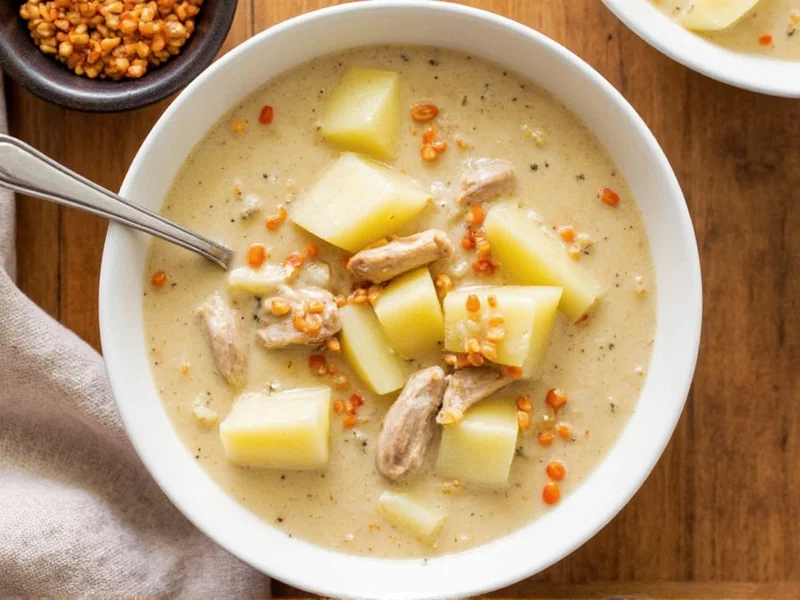
Why This Slow Cooker Chicken Recipe Works
Understanding the science behind this classic combination explains its enduring popularity. Bone-in chicken thighs provide consistent moisture during extended cooking, while baby potatoes maintain their structure better than russets in liquid environments. The condensed cream of chicken soup acts as both flavor base and thickening agent, creating a velvety sauce without requiring roux or additional thickeners. This recipe exemplifies perfect slow cooker chemistry where ingredients enhance rather than compete with each other.
Complete Ingredient List
For optimal results in your slow cooker chicken and potatoes with cream of chicken soup preparation, gather these precise ingredients:
| Ingredient | Quantity | Preparation Notes |
|---|---|---|
| Bone-in, skin-on chicken thighs | 2 lbs (about 6 pieces) | Pat dry before adding |
| Baby potatoes | 1.5 lbs | Halved if larger than 1.5 inches |
| Condensed cream of chicken soup | 1 can (10.5 oz) | Regular version, not reduced sodium |
| Chicken broth | 1 cup | Low-sodium preferred |
| Yellow onion | 1 medium | Diced |
| Garlic | 3 cloves | Minced |
| Dried thyme | 1 tsp | Or 1 tbsp fresh |
| Black pepper | 1/2 tsp | Freshly ground |
| Olive oil | 1 tbsp | For optional searing |
Step-by-Step Cooking Instructions
Follow these precise steps for the best slow cooker chicken and potatoes with cream of chicken soup results:
- Prep ingredients: Dry chicken thoroughly with paper towels. Cut larger potatoes in half. Dice onion and mince garlic
- Optional sear (recommended): Heat olive oil in skillet over medium-high heat. Sear chicken skin-side down for 3-4 minutes until golden. This step enhances flavor through Maillard reaction
- Layer ingredients: Place potatoes and onions in slow cooker base. Add garlic, thyme, and pepper. Place chicken skin-side up on top
- Prepare sauce: Whisk cream of chicken soup with chicken broth until smooth. Pour evenly over chicken
- Cook: Cover and cook on LOW for 6-7 hours or HIGH for 3-4 hours. Do not remove lid during cooking
- Finish: Remove chicken, shred with forks, and return to pot. Stir gently to combine with potatoes and sauce
Temperature and Timing Guide
Proper temperature control ensures food safety and optimal texture in your creamy chicken potato slow cooker meal:
| Cooking Setting | Minimum Time | Maximum Time | Internal Temperature |
|---|---|---|---|
| LOW | 6 hours | 8 hours | 165°F (chicken) |
| HIGH | 3 hours | 4.5 hours | 165°F (chicken) |
Always verify doneness with an instant-read thermometer. Chicken must reach 165°F internally. Potatoes should be fork-tender but not disintegrated.
Common Mistakes to Avoid
Prevent these frequent errors when making your one pot slow cooker chicken with potatoes:
- Using boneless chicken breasts: They'll become dry and stringy during extended cooking. Bone-in thighs maintain moisture
- Overfilling the slow cooker: Never fill beyond 2/3 capacity to allow proper heat circulation
- Adding dairy products early: Cream, milk, or sour cream added at the beginning may curdle. Add these during the last 30 minutes
- Stirring during cooking: Opening the lid and stirring releases heat and extends cooking time by 20-30 minutes per instance
- Using reduced-sodium soup: Standard condensed soup provides necessary flavor concentration that low-sodium versions lack
Variations and Substitutions
Adapt this best slow cooker chicken and potatoes with cream of chicken soup recipe for different dietary needs:
- Gluten-free: Use gluten-free cream of chicken soup or make your own sauce with cornstarch slurry (2 tbsp cornstarch + 1/4 cup cold water)
- Dairy-free: Substitute cream of chicken soup with dairy-free alternative or use mushroom soup
- Vegetable boost: Add 1 cup sliced carrots or 2 cups chopped celery with the potatoes
- Herb variations: Replace thyme with rosemary (1 tsp dried) or poultry seasoning (1.5 tsp)
- Spicy version: Add 1/4 tsp cayenne pepper or 1 diced jalapeño with the onions
Serving and Storage Recommendations
Maximize enjoyment of your comfort food slow cooker chicken recipe with these professional tips:
- Serving: Garnish with fresh parsley and serve with crusty bread to soak up the creamy sauce. Pairs perfectly with green beans or a simple salad
- Refrigeration: Store in airtight container for up to 4 days. The flavors improve overnight as ingredients meld
- Freezing: Freeze portions for up to 3 months. Thaw overnight in refrigerator before reheating
- Reheating: Warm gently on stove over medium-low heat, adding small amounts of broth if sauce has thickened too much
Frequently Asked Questions
Can I use frozen chicken in this slow cooker recipe?
Yes, but increase cooking time by 1-2 hours on LOW setting. Ensure chicken reaches 165°F internally before serving. For food safety, never cook frozen chicken on HIGH setting as it may spend too long in the danger zone (40°F-140°F).
Why does my slow cooker chicken and potatoes recipe turn out watery?
Excess liquid typically occurs when using potatoes with high water content or not using condensed soup. To fix watery results, increase the soup to broth ratio (use 3/4 cup broth instead of 1 cup), or remove the lid during the last 30-60 minutes of cooking to allow evaporation.
How can I make this recipe healthier without sacrificing flavor?
For a lighter version, use boneless skinless chicken thighs instead of skin-on, and substitute half the cream of chicken soup with additional broth plus 2 tbsp cornstarch. Increase vegetables by adding mushrooms or carrots. The skin contributes significantly to flavor, so consider using a small amount of the removed skin to infuse broth before discarding.
Can I add other vegetables to this slow cooker chicken potatoes soup base?
Absolutely. Add hard vegetables like carrots or turnips at the beginning with the potatoes. Include softer vegetables like peas or spinach during the last 30 minutes of cooking. Avoid adding cabbage or broccoli early as they develop strong odors during extended cooking.
What's the best way to thicken the sauce if it's too thin?
Create a slurry with 1 tbsp cornstarch and 2 tbsp cold water. Remove 1 cup of cooking liquid, whisk in the slurry, then return to the slow cooker. Cook on HIGH for 15-20 minutes until thickened. Avoid flour as it can create lumps in dairy-based sauces.




 浙公网安备
33010002000092号
浙公网安备
33010002000092号 浙B2-20120091-4