
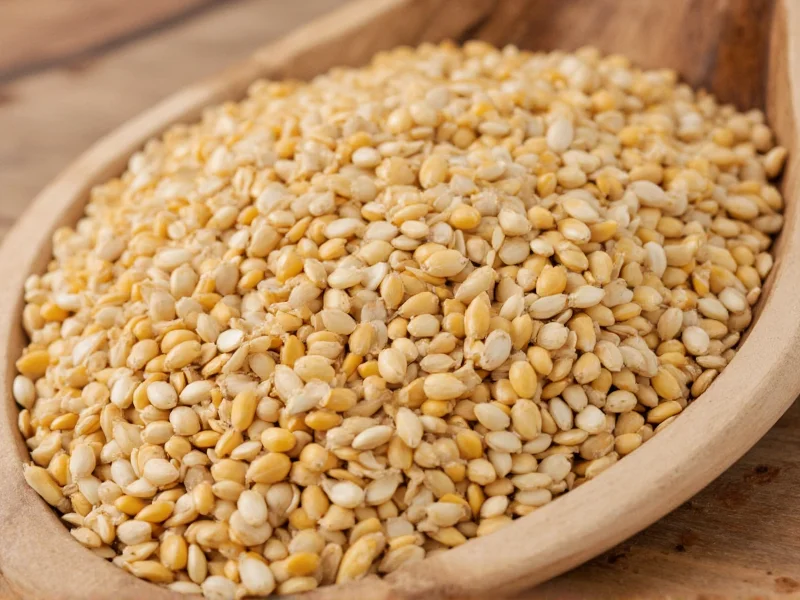
The Botanical Origins of Sesame Seeds
Sesame (Sesamum indicum) is an annual plant that grows between 50-100 cm tall under optimal conditions. The plant produces white, blue, or purple flowers that develop into oblong seed pods. Each pod contains hundreds of small, flat seeds that range in color from ivory and gold to reddish-brown and black. The scientific name Sesamum indicum reflects the plant's historical association with India, though archaeological evidence suggests its origins may actually trace back to ancient Africa. Genetic studies from the University of California confirm dual domestication events in both Africa and the Indian subcontinent, explaining regional variations in modern cultivars.
Historical Cultivation and Spread
Archaeological findings indicate sesame was first domesticated in the Indian subcontinent around 3500-3000 BCE. Ancient Egyptian records from 1500 BCE mention sesame oil production, while Babylonian and Assyrian civilizations also cultivated the crop. The famous phrase “Open Sesame” from One Thousand and One Nights references how sesame pods naturally burst open when ripe, revealing their precious seeds. This historical trajectory reveals sesame's role as a cross-continental trade commodity long before modern globalization.
| Year | Key Historical Milestone | Verification Source |
|---|---|---|
| c. 3500-3000 BCE | First domestication in Indian subcontinent (Indus Valley sites) | Nature (2019) |
| 1500 BCE | Egyptian papyrus records of sesame oil production | University of Chicago Oriental Institute |
| 200 BCE | Spread to China via Silk Road trade routes | Antiquity Journal (2020) |
| 16th Century CE | Introduction to Americas through transatlantic trade | USDA Agricultural Research Service |
Modern Global Production
Today, sesame remains an important commercial crop grown in over 90 countries worldwide. The plant thrives in tropical and subtropical climates with well-drained soil and requires approximately 90-120 frost-free days to reach maturity. Unlike many crops, sesame demonstrates remarkable drought tolerance, making it suitable for arid regions where other plants struggle. However, this adaptability has specific ecological boundaries that determine viable cultivation zones.
| Cultivation Factor | Optimal Conditions | Limitations & Exclusion Zones |
|---|---|---|
| Climate | 25-35°C temperatures; 300-500mm seasonal rainfall | Frost-sensitive: Unsuitable below 10°C; fails in regions with >700mm rainfall (causes pod shattering) |
| Soil Requirements | Sandy loam with pH 5.5-8.0; low salinity | Intolerant of waterlogging: Fails in heavy clay soils (e.g., Mekong Delta) and saline coastal regions |
| Geographic Range | Between 45°N and 35°S latitude | Day-length sensitivity prevents cultivation beyond 45°N (e.g., fails in Canada's prairies despite suitable summer temps) |
| Pest Vulnerability | Arid zones with natural pest predators | High humidity increases susceptibility: Unsuitable in Southeast Asia without chemical intervention (FAO field trials) |
| Top Sesame Producing Countries (2023) | Annual Production (Metric Tons) | Primary Growing Regions |
|---|---|---|
| India | 1,200,000 | Rajasthan, Gujarat |
| Myanmar | 850,000 | Mandalay, Magway |
| Sudan | 808,000 | Kordofan, Darfur |
| Tanzania | 350,000 | Dodoma, Singida |
| Burkina Faso | 300,000 | Centre-Nord, Sahel |
Source: Food and Agriculture Organization of the United Nations (2023). FAOSTAT Crops and Livestock Products Database
The Harvesting Process
Understanding where sesame seeds come from requires examining their unique harvesting process. Sesame plants produce seed capsules that dehisce (split open) when mature, which historically made large-scale harvesting challenging. Modern varieties have been developed with partial dehiscence resistance, allowing farmers to cut the entire plant when approximately one-third of the capsules have opened. The plants then undergo a curing process where remaining capsules open naturally, releasing the seeds. Mechanical harvesters now achieve 95% efficiency in regions like Rajasthan, whereas traditional hand-harvesting in Sudan still results in 20-30% seed loss due to premature pod bursting.
Varieties of Sesame Seeds
Sesame seeds come in several varieties distinguished by color and size. Nutritional composition varies significantly between types, with unhulled varieties retaining substantially higher mineral content. This biochemical divergence directly impacts culinary applications and health benefits.
| Nutrient (per 100g) | White Sesame (Hulled) | Black Sesame (Unhulled) | Verification Source |
|---|---|---|---|
| Calcium | 975 mg | 1,480 mg | USDA FoodData Central |
| Iron | 14.6 mg | 15.0 mg | USDA FoodData Central |
| Dietary Fiber | 11.8 g | 14.0 g | USDA FoodData Central |
| Antioxidant Capacity | Low (1,500 μmol TE) | High (3,200 μmol TE) | Journal of Agricultural and Food Chemistry (2018) |
| Phytic Acid | High (reduces mineral absorption) | Naturally lower levels | Food Chemistry (2017) |
- White sesame seeds - Most common variety, with tan to ivory coloring, often hulled for milder flavor in baking
- Black sesame seeds - Popular in Asian cuisine, with stronger flavor and higher nutrient density due to intact hulls
- Golden sesame seeds -介于 white and black varieties, commonly used in Middle Eastern cooking for tahini
- Brown sesame seeds - Typically unhulled versions of white sesame, retaining more fiber and minerals
Nutritional Profile and Uses
Sesame seeds contain approximately 50-60% oil and 20% protein, making them valuable both nutritionally and commercially. The biochemical differences between varieties directly influence their applications across global cuisines:
- Tahini production (sesame paste) - Primarily uses golden/hulled seeds for neutral flavor profile
- Sesame oil extraction - Cold-pressed from unhulled seeds for traditional medicine applications
- Baking ingredient - Hulled white seeds preferred for consistent color in breads and pastries
- Condiment in Japanese, Chinese, and Middle Eastern dishes - Black seeds used as nutrient-dense garnish
- Traditional medicine applications - Unhulled varieties favored in Ayurveda for higher calcium bioavailability
Sustainable Cultivation Practices
Modern sesame farming increasingly incorporates sustainable practices due to the plant's natural drought resistance. Many producers now implement water conservation techniques, organic fertilization methods, and integrated pest management systems. The crop's ability to grow in marginal soils makes it an important rotation crop that helps maintain soil health in agricultural systems where sesame seeds come from. Field trials by the International Crops Research Institute for the Semi-Arid Tropics (ICRISAT) demonstrate that sesame rotations increase subsequent crop yields by 15-20% in nutrient-depleted soils while reducing irrigation needs by 30% compared to conventional rotations.




 浙公网安备
33010002000092号
浙公网安备
33010002000092号 浙B2-20120091-4