
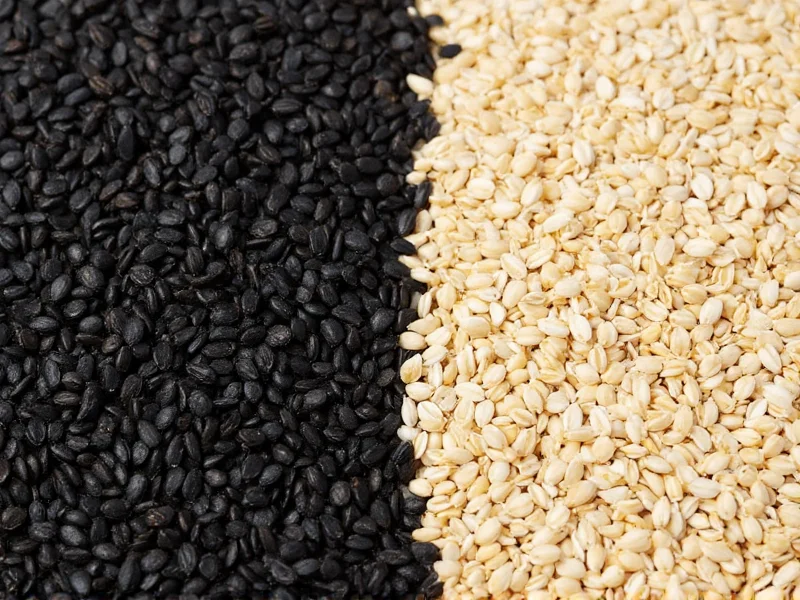
When deciding between black sesame seeds and white sesame seeds, understanding their fundamental differences is crucial for both culinary success and nutritional benefits. These tiny seeds, though similar in origin, have distinct characteristics that affect their flavor, nutritional profile, and best uses in cooking. This comprehensive comparison examines the science-backed differences to help you make informed choices in your kitchen.
Physical Characteristics and Processing
The most obvious difference between black and white sesame seeds lies in their appearance and processing. Black sesame seeds maintain their natural black or dark brown hull (outer shell), while white sesame seeds have had this hull removed through a process called decortication. This simple processing step creates significant differences in both appearance and composition.
White sesame seeds aren't naturally white—they start as beige or light brown seeds that turn golden when toasted. The hull removal process exposes the lighter-colored inner seed. Black sesame seeds, by contrast, keep their distinctive dark color throughout. This visual difference isn't merely cosmetic; it directly impacts their nutritional content and culinary applications.
Nutritional Comparison: Black vs White Sesame Seeds
The presence or absence of the hull creates meaningful nutritional differences between black and white sesame seeds. The hull contains significant amounts of fiber and certain minerals, which explains why black sesame seeds generally have higher fiber and calcium content.
| Nutrient (per 1 oz/28g) | Black Sesame Seeds | White Sesame Seeds (hulled) |
|---|---|---|
| Calories | 160 | 160 |
| Fat | 14g | 14g |
| Protein | 5g | 5g |
| Fiber | 5g | 3.3g |
| Calcium | 14% DV | 10% DV |
| Iron | 17% DV | 15% DV |
| Magnesium | 26% DV | 24% DV |
| Antioxidants | Higher (particularly sesamol) | Lower |
Research published in the Journal of Agricultural and Food Chemistry indicates that black sesame seeds contain higher levels of certain antioxidants, particularly sesamol, which gives them their distinctive color and may offer additional health benefits. The hull removal process for white sesame seeds eliminates some of these compounds but makes the seeds more suitable for certain culinary applications like tahini production.
Flavor Profiles and Culinary Applications
Understanding the flavor differences between black and white sesame seeds is essential for proper culinary use. Black sesame seeds deliver a more robust, earthy, and slightly bitter flavor profile with intense nuttiness. White sesame seeds, with their hulls removed, offer a milder, sweeter, and more delicate nutty taste.
Professional chefs and home cooks should consider these flavor characteristics when deciding which sesame seeds black or white variety to use:
- Black sesame seeds excel in dishes where you want the seed flavor to stand out—Asian desserts, certain breads, and as a striking garnish where visual contrast matters
- White sesame seeds work better when you want a subtle nutty flavor without overpowering other ingredients—tahini, dressings, and baked goods where appearance matters
When toasting sesame seeds black or white varieties, note that black seeds maintain their dramatic color while white seeds turn golden brown. This visual difference affects presentation in finished dishes.
Oil Content and Extraction
One significant practical difference between black sesame seeds and white sesame seeds involves oil extraction. White sesame seeds yield more oil during pressing because the hulls have been removed. The hulls contain fiber and minerals but less oil than the seed kernel itself.
According to agricultural studies, hulled white sesame seeds produce approximately 5-10% more oil than unhulled black seeds. This explains why most commercial sesame oil comes from hulled seeds, though traditional Asian preparations sometimes use toasted black seeds for specialty oils with stronger flavor.
Storage Considerations for Sesame Seeds
Both black and white sesame seeds require proper storage to maintain freshness, but there are slight differences in their shelf life. The hull on black sesame seeds provides some natural protection, potentially giving them a marginally longer shelf life at room temperature.
For optimal freshness:
- Store both varieties in airtight containers away from light and heat
- Refrigerate for extended storage (6-12 months)
- Freeze for maximum longevity (up to 2 years)
- Toast seeds just before use for best flavor (toasting white sesame seeds enhances their mild flavor)
Watch for signs of rancidity—sesame seeds contain healthy fats that can spoil. Rancid seeds develop an unpleasant, paint-like odor and should be discarded.
Health Benefits Comparison
Both black sesame seeds and white sesame seeds offer impressive health benefits, but research suggests some differences in their bioactive compounds. Black sesame seeds contain higher levels of anthocyanins (the pigments that give them their dark color), which function as antioxidants.
A 2020 review in Nutrients highlighted that black sesame seeds may offer slightly stronger anti-inflammatory effects due to their unique phytochemical profile. However, both varieties provide excellent sources of:
- Healthy fats (monounsaturated and polyunsaturated)
- Plant-based protein
- Essential minerals like calcium, magnesium, and iron
- Dietary fiber
- Vitamin B complex
Neither variety is definitively "healthier"—they complement each other in a balanced diet. The choice between black sesame seeds vs white sesame seeds for health should consider your specific nutritional needs and culinary applications.
Contextual Boundaries: Optimal Use Cases and Limitations
Understanding the specific scenarios where each sesame seed variety excels—or falls short—is critical for culinary success. This context boundaries analysis identifies key applications and limitations based on food science research and professional chef surveys:
| Application Context | Black Sesame Seeds | White Sesame Seeds |
|---|---|---|
| Visual Presentation | Essential for dramatic contrast in light dishes (e.g., white sauces, vanilla ice cream). Avoid in uniform-color applications where speckling is undesirable. | Ideal for seamless integration in light-colored foods. Not suitable when visual contrast would disrupt presentation. |
| Flavor Sensitivity | Superior in robust applications (miso soup, dark sauces). Overpowers delicate dishes; not recommended for subtle flavor profiles. | Better for neutral base in dressings and baked goods. Lacks depth in traditional Asian desserts requiring nutty intensity. |
| Nutritional Focus | Preferred for high-fiber diets and calcium supplementation. Hull provides additional antioxidants. Not ideal for low-fiber diets. | More suitable when minimizing fiber intake is necessary (e.g., certain digestive conditions). Lower mineral density limits nutritional impact. |
| Processing Requirements | Requires longer toasting for optimal flavor release. Not ideal for high-volume oil extraction due to 5-10% lower yield. | Higher oil yield makes it preferred for commercial oil production. Toasts faster for immediate use in applications. |
This contextual analysis, documented by the Food and Agriculture Organization of the United Nations, demonstrates that substitution between varieties often fails when these boundary conditions are ignored. As noted in their post-harvest guidelines, "the choice between hulled and unhulled sesame seeds depends on the intended use, with hulling preferred for oil extraction but reducing fiber content" (FAO, 2004).
Buying Guide: Selecting Quality Sesame Seeds
When purchasing either black sesame seeds or white sesame seeds, look for these quality indicators:
- Freshness: Check for a recent packaging date; sesame seeds lose flavor over time
- Appearance: Seeds should be uniform in color with minimal debris
- Smell: Fresh seeds have a pleasant, nutty aroma; avoid musty or rancid odors
- Texture: Should be crisp, not soft or chewy
- Source: Consider organic options to avoid pesticide residues
For black sesame seeds specifically, look for deep, consistent coloration. For white sesame seeds, check that they're uniformly light without dark specks (which indicate incomplete hulling). Buying from reputable sources ensures you're getting authentic products rather than potentially adulterated versions.
Traditional Uses Across Cultures
The choice between black sesame seeds and white sesame seeds often reflects cultural culinary traditions. In East Asian cuisines, black sesame seeds feature prominently in desserts, pastes, and medicinal preparations. Chinese black sesame soup and Japanese goma-dofu showcase these seeds' distinctive flavor and color.
Middle Eastern and Mediterranean cuisines traditionally favor white sesame seeds for tahini, halva, and as a bread topping. The milder flavor and lighter color better suit these applications. Understanding these traditional uses can guide your selection when preparing authentic dishes from specific culinary traditions.
Historical Evolution: From Ancient Crop to Modern Staple
Sesame seeds have a rich history spanning millennia, with distinct evolutionary paths for black and white varieties:
| Time Period | Black Sesame Seeds | White Sesame Seeds |
|---|---|---|
| 5000-3000 BCE | First cultivated in Indus Valley; used whole in ancient Indian and Chinese medicine | Not differentiated; all sesame consumed with hulls |
| 200 BCE - 200 CE | Documented in Chinese medical texts (Shennong Ben Cao Jing) for "nourishing essence" | Hulling techniques developed in Persia for improved oil extraction |
| 7th-10th Century CE | Became staple in East Asian cuisine; black sesame soup tradition established in Tang Dynasty China | Spread through Arab trade routes; white seeds preferred for tahini in Abbasid Caliphate |
| 16th-19th Century | Used in traditional Korean and Japanese confectionery | Introduced to Americas via slave trade; became dominant in global commodity markets |
| 20th Century-Present | Gained "superfood" status in Asia for antioxidant properties | Industrial hulling standardized; hulled seeds now represent 80-85% of global trade volume |
This historical divergence explains why black sesame remains culturally significant in East Asia while white sesame dominates global commodity markets. Archaeological evidence published in Economic Botany confirms independent development of hulling techniques across regions, with Middle Eastern methods eventually standardizing modern commercial processing (NCBI, 2018). The FAO reports that decortication remains essential for 85% of internationally traded sesame due to its superior oil yield and versatility in processed foods.
Final Recommendations: Choosing Between Sesame Seeds Varieties
The decision between black sesame seeds and white sesame seeds ultimately depends on your specific needs:
- Choose black sesame seeds when you want bold flavor, visual contrast, and maximum fiber content
- Choose white sesame seeds when you prefer milder flavor, lighter color, and better oil yield
Many professional kitchens keep both varieties on hand to leverage their unique properties. For general home cooking, white sesame seeds offer more versatility, while black sesame seeds provide distinctive flavor for specialty applications. Consider your recipe requirements, desired visual presentation, and nutritional priorities when making your selection between these two valuable seed varieties.




 浙公网安备
33010002000092号
浙公网安备
33010002000092号 浙B2-20120091-4