
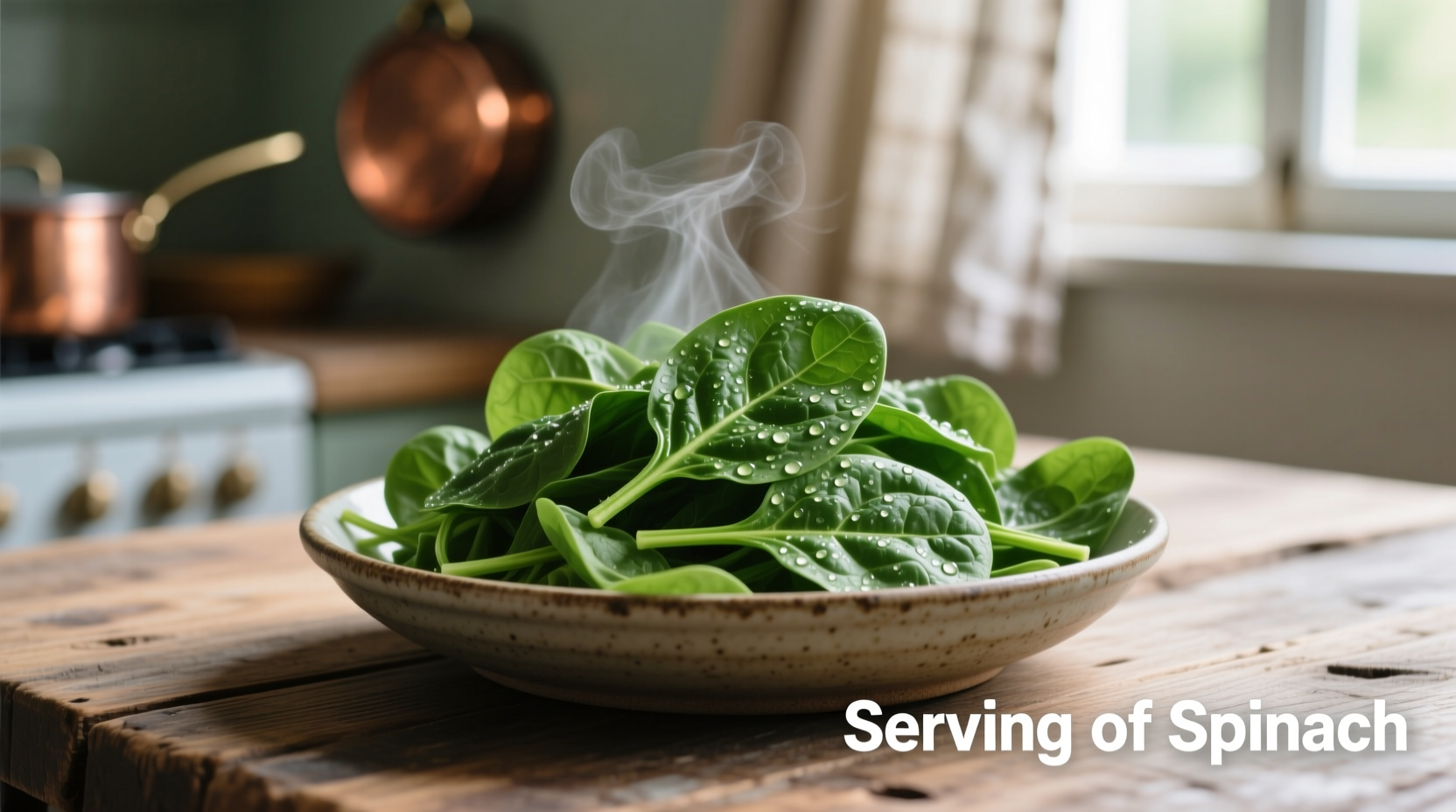
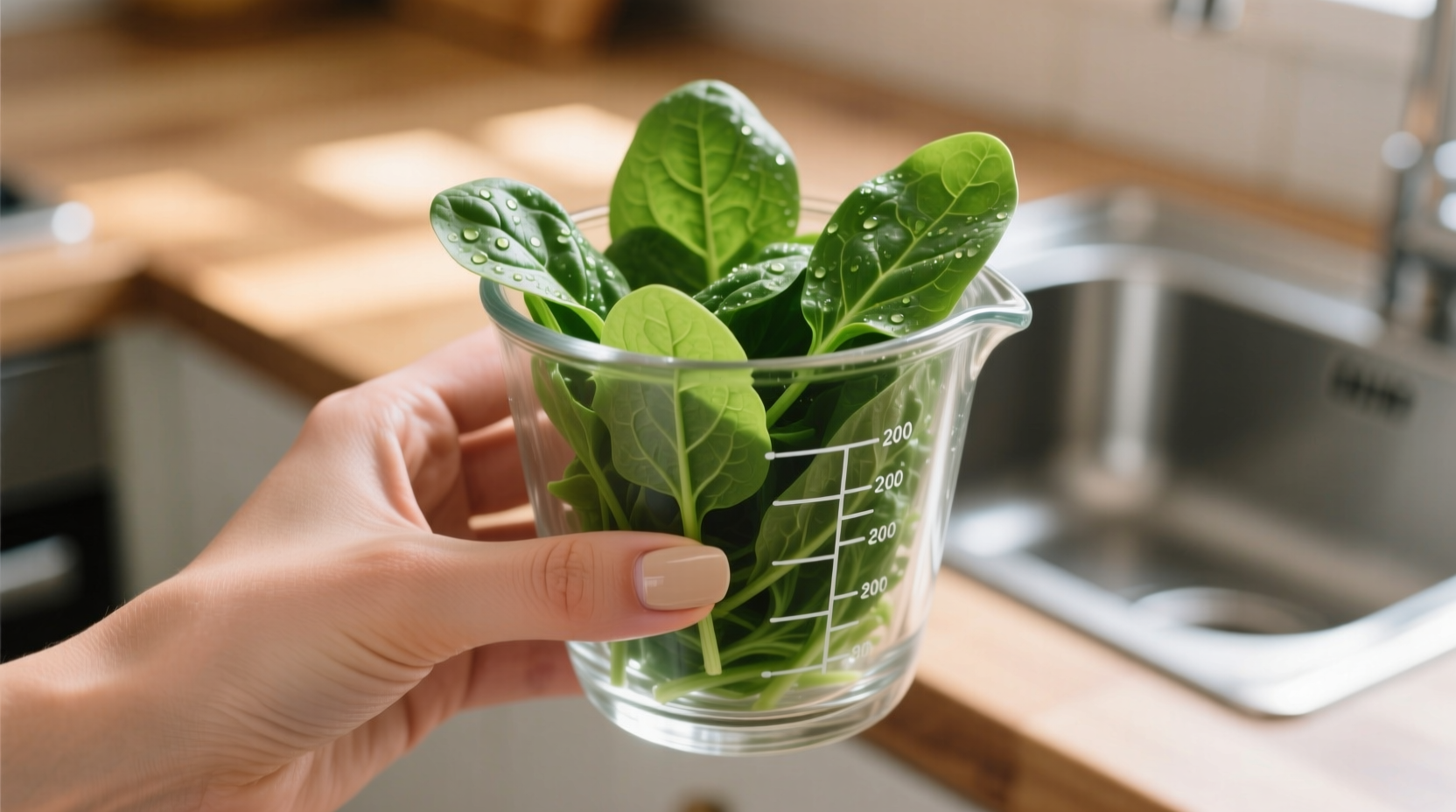
A standard serving of raw spinach is 1 cup (30 grams), while a serving of cooked spinach is 1½ cups or ½ cup (90 grams). One serving provides over 100% of your daily vitamin K needs, 36% of vitamin A, and just 7 calories, making it one of the most nutrient-dense foods you can eat.
Spinach isn't just a leafy green—it's a nutritional powerhouse that deserves a regular spot on your plate. But how much should you actually eat to reap these benefits? Understanding proper spinach serving sizes transforms this humble vegetable from an afterthought into a strategic component of your healthy eating plan.
Why Spinach Serving Size Matters More Than You Think
Unlike many vegetables, spinach undergoes dramatic volume changes when cooked, which confuses even experienced cooks. Getting the portion right affects both nutritional intake and recipe success. The USDA's FoodData Central confirms that spinach shrinks to about one-tenth its raw volume when cooked, meaning 10 cups of raw spinach yields approximately 1 cup cooked.
| Preparation Method | Raw Volume | Cooked Volume | Weight | Calories |
|---|---|---|---|---|
| Raw (loose) | 1 cup | N/A | 30g | 7 |
| Raw (packed) | 1 cup | N/A | 60g | 14 |
| Cooked | N/A | ½ cup | 90g | 21 |
Visualizing Your Spinach Servings
Forget measuring cups for a moment—here's how to eyeball proper portions:
- Raw spinach serving: A mound about the size of a standard baseball (1 cup)
- Cooked spinach serving: Equivalent to half a standard baseball (1½ cups raw becomes ½ cup cooked)
- For salads: Two baseball-sized mounds (2 cups) makes a substantial side salad
- For smoothies: A clenched handful (about 2 cups raw) blends perfectly into one serving
According to the 2020-2025 Dietary Guidelines for Americans, adults should consume 2-3 cups of dark, leafy greens weekly. One daily serving of spinach (1 cup raw or ½ cup cooked) helps you consistently meet this recommendation without overwhelming your meal planning.
Nutritional Impact of Proper Spinach Servings
What makes spinach servings particularly valuable is their extraordinary nutrient density. A single cooked serving (½ cup) delivers:
- Vitamin K: 483% of Daily Value (essential for blood clotting and bone health)
- Vitamin A: 105% of Daily Value (supports vision and immune function)
- Folate: 15% of Daily Value (crucial for cell growth and metabolism)
- Manganese: 13% of Daily Value (supports bone development and metabolism)
- Iron: 8% of Daily Value (enhanced absorption when paired with vitamin C)
The Harvard T.H. Chan School of Public Health emphasizes that spinach's vitamin K content plays a critical role in bone mineralization, with research showing regular consumption correlates with reduced fracture risk. However, they caution that individuals on blood thinners should maintain consistent spinach intake rather than fluctuating dramatically.
Practical Serving Strategies for Different Cooking Methods
How you prepare spinach directly impacts how much you should serve:
Raw Spinach Applications
For salads, sandwiches, or smoothies, use these guidelines:
- Side salad: 2 cups raw per person (50g)
- Main salad: 4-5 cups raw per person (100-125g)
- Smoothies: 1-2 cups raw (25-50g) per serving
Cooked Spinach Applications
When heat is applied, adjust your expectations:
- Steamed spinach: Start with 4-5 cups raw per person (yields 1 cup cooked)
- Sauteed spinach: 5 cups raw per person (the wilting happens quickly!)
- Casseroles or dips: 6 cups raw per serving (shrinks significantly during baking)
Special Considerations for Different Age Groups
Serving sizes aren't one-size-fits-all. The Academy of Nutrition and Dietetics recommends these adjustments:
- Children (2-3 years): ¼ cup cooked spinach (60g) or 1 cup raw (30g)
- Children (4-8 years): ½ cup cooked spinach (90g) or 1½ cups raw (45g)
- Adults: ½ cup cooked spinach (90g) or 1-2 cups raw (30-60g) per serving
- Seniors: Maintain standard servings but consider chopped or pureed forms for easier consumption
For parents introducing spinach to toddlers, pediatric nutritionists recommend starting with just 2 tablespoons of pureed cooked spinach and gradually increasing. The iron and folate in spinach support healthy development, but excessive portions can overwhelm young digestive systems.
Maximizing Nutrient Absorption from Your Spinach Servings
How you serve spinach affects how much nutrition you actually absorb:
- Add healthy fats: Toss cooked spinach with 1 teaspoon of olive oil to boost absorption of fat-soluble vitamins A, E, and K
- Pair with vitamin C: Add lemon juice or bell peppers to increase iron absorption by up to 400%
- Avoid overcooking: Steam for just 3-4 minutes to preserve water-soluble vitamins
- Don't wash after cooking: Rinsing cooked spinach washes away valuable nutrients that have migrated to the surface
Research published in the Journal of Agricultural and Food Chemistry shows that light cooking actually increases the bioavailability of certain nutrients in spinach, particularly beta-carotene. However, raw spinach preserves more vitamin C and folate. The ideal approach? Incorporate both raw and cooked spinach into your weekly meal plan.
Common Spinach Serving Mistakes to Avoid
Even experienced cooks make these portion errors:
- Underestimating shrinkage: Starting with only 2 cups raw when a recipe calls for 1 cup cooked
- Overpacking raw spinach: Pressing down too hard when measuring raw leaves (doubles the actual serving)
- Ignoring water content: Not draining cooked spinach properly before using in dishes like spanakopita
- Seasoning too early: Adding salt before cooking draws out moisture and creates excess liquid
Professional chefs like Antonio Rodriguez recommend always starting with more raw spinach than you think you'll need. "When I teach cooking classes," he explains, "I tell students to imagine their spinach disappearing before their eyes when heat hits it. Better to have extra than come up short on this nutritional powerhouse."
Creating Balanced Meals with Proper Spinach Servings
Here's how to incorporate spinach into complete meals:
- Breakfast boost: Add 1 cup raw spinach to morning eggs (wilts perfectly while eggs cook)
- Lunch enhancement: Top salads with 1 cup raw spinach alongside your regular greens
- Dinner integration: Stir 2 cups raw spinach into pasta sauces during the last 2 minutes of cooking
- Snack upgrade: Blend 1 cup raw spinach into fruit smoothies (the sweetness masks any bitterness)
Registered dietitians note that spreading your spinach intake throughout the day improves nutrient absorption compared to consuming it all at once. The vitamin K in spinach works synergistically with calcium for bone health, while the iron combines with vitamin C from other foods for better uptake.
Storage Tips to Maintain Serving Size Accuracy
How you store spinach affects both volume and nutritional value:
- Refrigeration: Store raw spinach in airtight containers with paper towels to absorb excess moisture (lasts 5-7 days)
- Freezing: Blanch first, then freeze in 1-cup portions for smoothies or cooking
- Pre-washed bags: Drain excess water before measuring to avoid inaccurate portions
- Wilted spinach: Can still be used but weighs less—add 25% more to compensate
Food scientists at the USDA confirm that properly stored spinach maintains 90% of its nutrient content for up to 7 days. However, once spinach begins to yellow or develop slimy spots, nutrient degradation accelerates rapidly. Always use visual cues alongside measurements for the most accurate servings.




 浙公网安备
33010002000092号
浙公网安备
33010002000092号 浙B2-20120091-4