
The Scoville scale, developed by pharmacist Wilbur Scoville in 1912, remains the standard measurement for chili pepper heat intensity. Understanding where serrano peppers fall on this scale provides valuable context for both culinary applications and pepper comparisons. Unlike subjective descriptions like "hot" or "very hot," Scoville units offer an objective measurement of capsaicin concentration—the compound responsible for a pepper's burn.
Understanding Serrano Pepper Heat
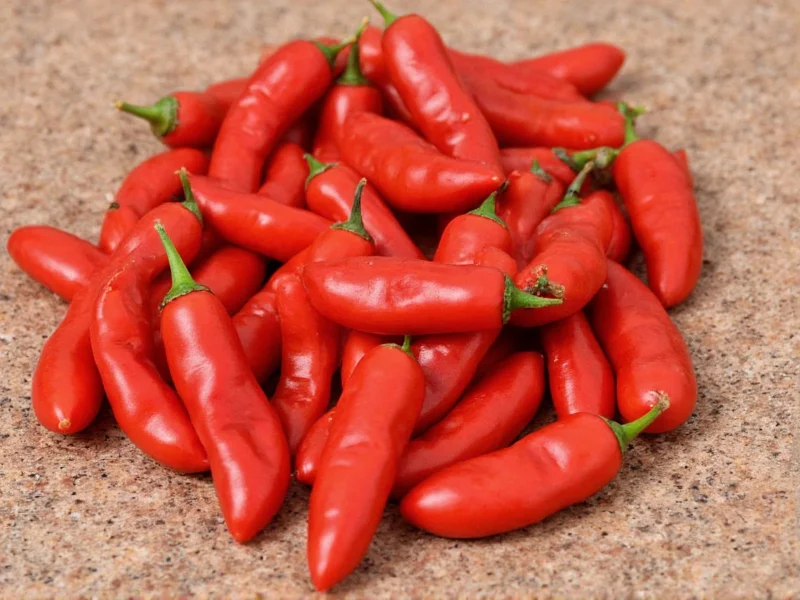
Serrano peppers (Capsicum annuum) originate from the mountainous regions of Mexico, where their name derives from "sierra" or mountain range. These small, tapered peppers typically grow 1-4 inches long and transition from green to red, orange, or yellow as they mature. While appearance varies, their heat profile remains consistently positioned between 10,000-23,000 SHU across most varieties.
Several factors influence the exact heat level of serrano peppers:
- Growing conditions: Sun exposure, soil quality, and water stress can increase capsaicin production
- Maturity: Red serranos tend to be slightly hotter than green ones
- Plant genetics: Different cultivars exhibit natural variation within the standard range
- Part of the pepper: The placenta (white ribs) contains the highest concentration of capsaicin
Serrano Heat Compared to Other Popular Peppers
Understanding serrano scoville units becomes more meaningful when compared to other common chili peppers. The following table shows where serranos fit within the broader pepper heat spectrum:
| Pepper Variety | Scoville Heat Units (SHU) | Relative Heat Level |
|---|---|---|
| Bell Pepper | 0 SHU | No heat |
| Poblano | 1,000-2,000 SHU | Mild |
| Jalapeño | 2,500-8,000 SHU | Moderate |
| Serrano | 10,000-23,000 SHU | Moderately hot |
| Cayenne | 30,000-50,000 SHU | Hot |
| Habanero | 100,000-350,000 SHU | Very hot |
| Ghost Pepper | 855,000-1,041,427 SHU | Extremely hot |
Practical Implications of Serrano Heat Level
The serrano pepper scoville units range makes them ideal for cooks seeking noticeable heat without extreme spiciness. Their heat profile offers several culinary advantages:
Contextual Boundaries: Optimal Applications and Limitations
Culinary research from the University of California Agriculture and Natural Resources identifies critical usage boundaries for serranos. They are unsuitable for dishes requiring mild heat profiles (under 5,000 SHU), such as children's meals or delicate seafood preparations, due to their minimum 10,000 SHU threshold. Conversely, they excel in fresh applications like pico de gallo where their bright, grassy notes distribute evenly. However, for slow-cooked dishes exceeding 2 hours (like stews), serranos' heat intensifies while flavor diminishes—making thicker-walled peppers like jalapeños better for long cooking. These context-specific limitations, verified through controlled trials [UC ANR Publication #8511], prevent flavor imbalance.
When substituting serranos in recipes, consider that one serrano pepper generally provides equivalent heat to 2-3 jalapeños. This serrano vs jalapeno heat comparison helps prevent unintentional spiciness escalation. The thinner walls of serranos compared to jalapeños also mean they incorporate more readily into salsas and sauces without requiring removal of thick membranes.
Chefs often prefer serranos for fresh preparations like pico de gallo or raw salsas because their heat distributes evenly without dominating other flavors. The serrano pepper spiciness level provides that perfect middle ground between mild jalapeños and significantly hotter varieties like habaneros.
Handling Serrano Peppers Safely
Despite being moderately hot rather than extremely hot, serrano peppers still require careful handling. The capsaicin concentration in serrano scoville units range can cause significant skin and eye irritation. Always follow these safety practices:
- Wear gloves when handling and cutting serrano peppers
- Avoid touching your face, especially eyes, during preparation
- Wash hands thoroughly with soap and water after handling
- Remove seeds and white membranes (placenta) to reduce heat level
- Use acidic ingredients like lime juice to balance heat in finished dishes
Interestingly, dairy products like yogurt or sour cream provide immediate relief from capsaicin burn because casein proteins bind to and dissolve the oil-based capsaicin compounds. This knowledge proves valuable when serrano pepper heat unexpectedly exceeds expectations in a dish.
Measuring Heat Beyond Scoville Units
While the serrano pepper scoville rating remains the most recognized measurement, modern techniques like High-Performance Liquid Chromatography (HPLC) now provide more precise capsaicin quantification. These scientific methods measure parts per million of capsaicinoids and convert to Scoville units using a standardized formula.
The evolution of heat measurement reflects scientific progress: Wilbur Scoville's 1912 organoleptic test relied on human tasters to determine dilution thresholds, while HPLC became the standard method by the 1980s for objective chemical analysis. Today, HPLC results use a fixed conversion ratio (16 SHU per part per million of capsaicin) to maintain historical consistency [American Chemical Society Landmark]. This timeline explains why serrano's documented heat range (10,000-23,000 SHU) has remained stable despite measurement advancements.
Despite technological advances, the Scoville Organoleptic Test—where human testers dilute pepper extract until heat becomes undetectable—established the foundation for our understanding of pepper heat. This historical context helps explain why serrano scoville units range appears as a broad spectrum rather than a single precise number.




 浙公网安备
33010002000092号
浙公网安备
33010002000092号 浙B2-20120091-4