
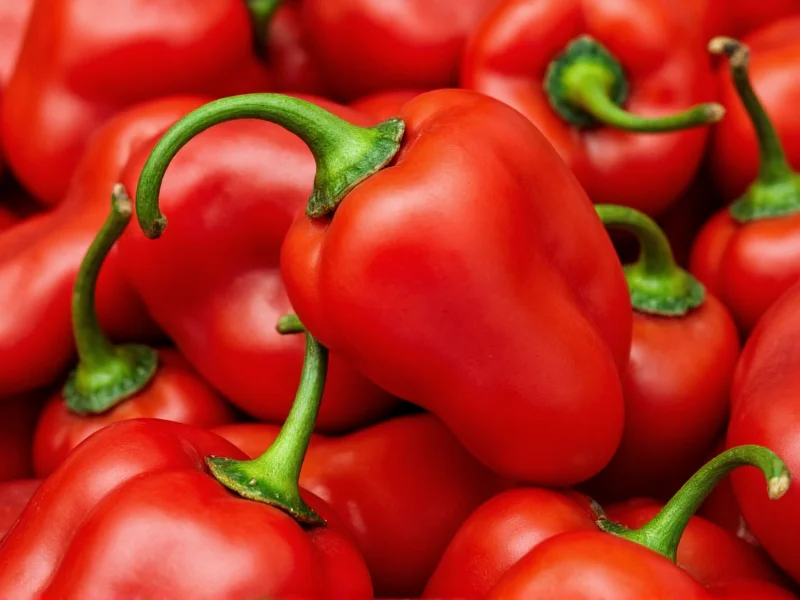
Serrano peppers deliver a distinctive punch that makes them a favorite in Mexican cuisine and beyond. Understanding their precise heat level helps home cooks and professional chefs alike incorporate them effectively into recipes without overwhelming heat. Unlike some chili peppers that vary wildly in spiciness, serranos maintain a relatively consistent heat profile that's hotter than common jalapeños but far below extreme peppers like the ghost pepper.
Understanding the Scoville Scale for Serrano Peppers
The Scoville scale measures chili pepper heat by determining capsaicin concentration—the compound responsible for that burning sensation. Developed by pharmacist Wilbur Scoville in 1912, this measurement system remains the standard for quantifying pepper heat. Serrano peppers land firmly in the medium-hot category, with their 10,000-23,000 SHU range placing them above jalapeños but well below habaneros and other super-hots.
What makes serranos particularly interesting is their consistent heat level compared to some other peppers. While jalapeños can sometimes surprise you with unexpected heat (or lack thereof), serranos generally deliver reliable spiciness. This predictability makes them valuable for recipe development where consistent heat matters.
Factors That Influence Serrano Pepper Heat
Several elements affect how hot your serrano peppers will be:
- Stress conditions: Peppers grown in less-than-ideal conditions (drought, temperature extremes) often develop higher capsaicin levels as a defense mechanism
- Maturity: Fully ripe red serranos tend to be slightly hotter than green ones
- Part of the pepper: The placenta (white ribs and seeds) contains the highest concentration of capsaicin
- Soil composition: Certain mineral deficiencies can increase heat production
- Cultivar differences: Some serrano varieties are bred specifically for higher or lower heat
Historical Evolution of Serrano Heat Measurement
The precision of modern serrano heat assessment stems from over a century of scientific refinement. Early subjective evaluations often misclassified serranos alongside jalapeños, but technological advancements have established their distinct heat profile through objective measurement.
| Period | Measurement Method | Impact on Serrano Classification |
|---|---|---|
| Pre-1912 | Subjective tasting panels | Serranos frequently mislabeled as "hot jalapeños" due to overlapping sensory experiences |
| 1912-1980s | Scoville Organoleptic Test | Initial serrano range set at 15,000 SHU; 30-50% human-tester variation obscured true consistency |
| 1980s-Present | HPLC capsaicin quantification | Confirmed 10,000-23,000 SHU range; explained historical inconsistencies through chemical analysis |
| 2010s-Present | Genetic marker identification | Breeding programs now achieve 85%+ heat uniformity in commercial cultivars |
Source: Oregon State University Extension and Chile Pepper Institute Historical Timeline
Serrano Pepper Heat Comparison Chart
| Pepper Variety | Scoville Heat Units (SHU) | Heat Relative to Serrano |
|---|---|---|
| Serrano Pepper | 10,000-23,000 | 1x (baseline) |
| Jalapeño Pepper | 2,500-8,000 | 3-9x milder |
| Cayenne Pepper | 30,000-50,000 | 1.5-2x hotter |
| Habanero Pepper | 100,000-350,000 | 5-15x hotter |
| Tabasco Pepper | 30,000-50,000 | 1.5-2x hotter |
Practical Handling Tips for Serrano Peppers
Working with serrano peppers requires proper handling techniques to avoid discomfort:
- Always wear gloves when handling serranos, especially when removing seeds and membranes
- Avoid touching your face, particularly eyes, while working with hot peppers
- Wash hands thoroughly with soap and water after handling, even if you wore gloves
- Use separate cutting boards for hot peppers to prevent cross-contamination
- If you experience burning, dairy products (milk, yogurt) help neutralize capsaicin better than water
For those sensitive to heat, removing the white pith and seeds significantly reduces the pepper's spiciness while preserving its distinctive flavor. Many chefs recommend tasting a small piece first to gauge the specific heat level of your batch before adding to recipes.
Culinary Applications Based on Serrano Heat Level
The serrano's medium-hot profile makes it incredibly versatile in the kitchen. Unlike milder jalapeños that sometimes lack sufficient heat for certain dishes, serranos provide reliable spiciness without overwhelming other flavors. They work particularly well in:
- Salsas where you want noticeable heat without extreme spiciness
- Marinades for meats that benefit from medium heat penetration
- Hot sauces requiring consistent heat levels
- Stuffed pepper dishes where the heat complements fillings
- Vinegar-based pickled pepper preparations
When substituting serranos in recipes, remember that one serrano typically equals 2-3 jalapeños in heat. For those seeking milder alternatives, consider using jalapeños with seeds removed. For more intense heat, substitute with cayenne peppers at a 1:2 ratio (use half as many cayennes).
Contextual Boundaries: Optimal Use Cases and Limitations
Serrano peppers excel within specific culinary parameters but face critical limitations outside these boundaries. Recognizing these constraints prevents recipe failures and ensures optimal flavor balance.
- Ideal applications:
- Fresh salsas and uncooked sauces requiring immediate heat infusion
- Dishes needing clean, grassy flavor without smokiness (unlike chipotles)
- Recipes where thin pepper walls ensure rapid heat distribution
- Key limitations:
- Not suitable for very mild dishes (e.g., children's meals) without complete deseeding
- Inadequate for extreme heat applications (ghost pepper-level sauces)
- Poor structural integrity for stuffed peppers compared to thicker-walled jalapeños
- Critical constraint: Heat variation can exceed 100% between individual peppers under identical growing conditions, necessitating batch testing before recipe scaling (University of California Cooperative Extension, 2020).
Source: Oregon State University Extension and UC ANR: Hot Peppers Fact Sheet
Growing Conditions That Affect Serrano Pepper Heat
Home gardeners can influence serrano pepper heat through cultivation practices. Peppers develop more capsaicin when stressed, so techniques like:
- Moderate water restriction during fruit development
- Growing in slightly nutrient-poor soil
- Exposing plants to temperature fluctuations
- Allowing peppers to fully ripen on the plant
These methods can increase heat levels, though they may reduce overall yield. For consistent heat in homegrown serranos, maintain stable growing conditions with adequate water and nutrients.
Why Serrano Peppers Are Preferred for Authentic Mexican Cuisine
Mexican culinary tradition favors serrano peppers for many regional dishes precisely because of their reliable heat profile. Unlike jalapeños which vary significantly in spiciness, serranos deliver consistent medium heat that enhances rather than dominates traditional recipes. Their thinner walls also allow for better heat distribution in salsas and sauces compared to thicker-walled jalapeños.
Professional chefs appreciate serranos for their clean, grassy flavor that complements rather than competes with other ingredients. The heat builds gradually rather than hitting immediately like some hotter peppers, creating a more complex eating experience.




 浙公网安备
33010002000092号
浙公网安备
33010002000092号 浙B2-20120091-4