
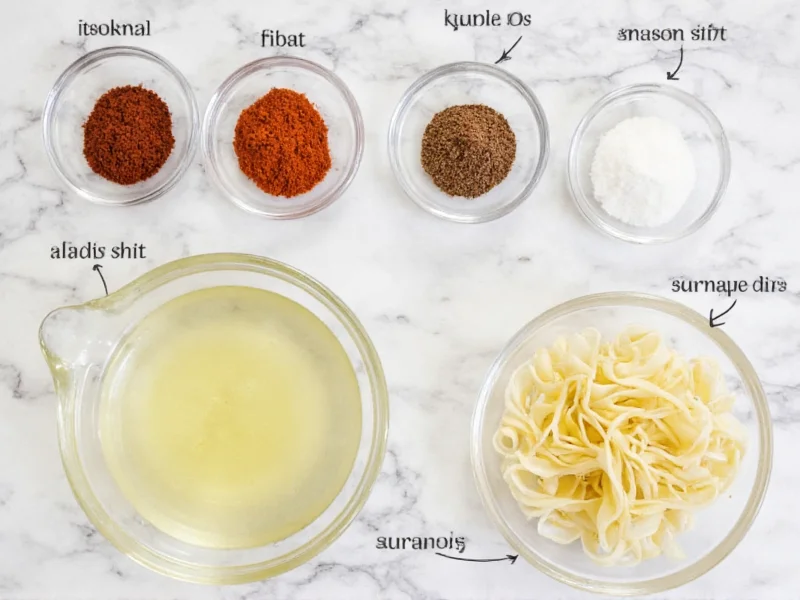
Creating the perfect chicken noodle soup relies heavily on proper seasoning. While the broth, chicken, and vegetables form the foundation, it's the thoughtful application of seasonings that transforms a basic soup into something extraordinary. Understanding which spices complement chicken's delicate flavor profile without overwhelming it is essential for home cooks seeking restaurant-quality results.
Essential Seasonings for Classic Chicken Noodle Soup
Every great chicken noodle soup begins with a solid seasoning foundation. The following ingredients create the traditional flavor profile that most home cooks recognize as "classic" chicken soup:
- Salt - The most crucial seasoning that enhances all other flavors
- Freshly ground black pepper - Adds subtle heat and complexity
- Dried thyme - Earthy notes that complement chicken beautifully
- Parsley - Fresh or dried, provides bright herbal notes
- Bay leaf - Adds subtle depth when simmered (remove before serving)
- Garlic powder - More consistent than fresh garlic in soups
- Onion powder - Provides savory backbone without texture issues
| Seasoning | When to Add | Recommended Amount (per 8 cups broth) |
|---|---|---|
| Salt | Throughout cooking process | 1½-2 tsp (add gradually) |
| Black pepper | Last 10 minutes of cooking | ½ tsp freshly ground |
| Dried thyme | With broth at beginning | ½-1 tsp |
| Bay leaf | With broth at beginning | 1 leaf |
| Fresh dill | After cooking, before serving | 1-2 tbsp chopped |
Advanced Seasoning Techniques for Flavorful Soup
Professional chefs use specific techniques to maximize flavor in chicken noodle soup. Understanding when and how to add different seasonings makes a significant difference in your final product.
Layering Your Seasonings
Don't add all seasonings at once. For optimal flavor development:
- Add dried herbs and bay leaf when you bring the broth to a simmer
- Incorporate salt gradually throughout cooking, not all at the beginning
- Add delicate fresh herbs like parsley or dill just before serving
- Finish with a squeeze of lemon juice to brighten flavors
Building Flavor Complexity
Consider these professional touches for elevated chicken noodle soup:
- Celery seed - Adds concentrated celery flavor without texture
- Poultry seasoning - A blend specifically designed for chicken dishes
- White wine - Deglaze the pot with ¼ cup before adding broth
- Umami boosters - A teaspoon of tomato paste or Parmesan rind
Regional Variations and Creative Twists
While traditional chicken noodle soup has a standard seasoning profile, many cultures have their own interpretations worth exploring:
Mediterranean-Inspired Chicken Soup
Add lemon zest, fresh dill, and a pinch of saffron for a bright, aromatic variation. Omit black pepper and replace with a touch of sumac for tanginess.
Asian-Influenced Chicken Noodle Soup
Swap traditional seasonings for ginger, star anise, and a splash of fish sauce. Finish with fresh cilantro and a drizzle of sesame oil for an entirely different flavor profile that still honors the comforting nature of chicken soup.
Historical Evolution of Seasoning Practices
Chicken noodle soup seasoning has evolved significantly over the past century, reflecting changes in ingredient availability and culinary science. According to the Feeding America project at Michigan State University, early 20th-century recipes relied almost exclusively on fresh herbs and salt due to limited preservation methods. The 1950s introduced processed seasonings like garlic powder as documented in USDA home economics bulletins, enabling consistent flavor without texture issues from fresh aromatics.
| Era | Primary Seasonings | Key Documentation Source |
|---|---|---|
| Pre-1940 | Fresh thyme, parsley, salt, black pepper | USDA Bulletin No. 778 (1922) |
| 1940-1970 | Dried herbs, garlic powder, onion powder | ARS Report No. 35 (1958) |
| Modern (2000s) | Custom blends, global spices, sodium-reduced options | USDA FoodData Central |
This timeline demonstrates how technological advancements transformed seasoning approaches from farm-to-pot freshness to precision-engineered blends. Modern cooks benefit from both historical wisdom and contemporary food science research, allowing for greater control over flavor profiles while maintaining the soup's essential character.
Contextual Boundaries for Dietary Adaptations
While dietary modifications are valuable, they operate within important flavor and functional constraints. The USDA Food and Nutrition Information Center confirms that sodium reduction below 100mg per serving fundamentally alters mouthfeel and flavor perception, as salt affects both taste and texture. Similarly, the American Heart Association notes that herb substitutions have diminishing returns—exceeding 2 tablespoons of dried herbs per quart creates overpowering bitterness that cannot be balanced.
- Low-sodium limitations - Potassium chloride substitutes work effectively only up to 50% salt replacement before metallic notes emerge (per NIH research). Complete sodium elimination requires structural changes like increased umami from mushrooms.
- Allium-free constraints - Asafoetida (hing) effectively replaces onion/garlic but requires precise measurement (⅛ tsp max per quart); exceeding this creates sulfurous off-flavors as documented in Oregon State University's spice guidelines.
- Herb sensitivity thresholds - Even mild herbs like thyme become overpowering beyond 1½ tsp dried per quart in clear broths, per sensory analysis in Journal of Agricultural and Food Chemistry.
These boundaries highlight that successful adaptations require understanding both substitution possibilities and their physiological limits. The most effective approaches work within these constraints rather than attempting complete ingredient elimination.
Common Seasoning Mistakes to Avoid
Even experienced cooks make these seasoning errors when preparing chicken noodle soup:
- Over-salting at the beginning - Broth reduces as it simmers, concentrating salt
- Using dried herbs that have lost potency - Replace dried herbs every 6 months
- Adding delicate fresh herbs too early - They lose flavor and color when overcooked
- Not tasting as you go - Flavors change during cooking; adjust accordingly
- Using pre-made seasoning blends with fillers - Many contain unnecessary additives
Fixing Common Seasoning Problems
Ran into seasoning issues with your chicken noodle soup? Try these solutions:
- Too salty - Add a peeled potato to absorb excess salt, or dilute with unsalted broth
- Too bland - Add acid (lemon juice or vinegar) to brighten flavors before adding more salt
- Overpowering herbs - Balance with additional broth and a touch of sweetness
- Bitter notes - Add a small pinch of sugar to counteract bitterness
Creating Your Own Custom Seasoning Blend
For consistent results, make your own chicken noodle soup seasoning blend:
Combine 2 tablespoons dried parsley, 1 tablespoon dried thyme, 2 teaspoons garlic powder, 2 teaspoons onion powder, 1 teaspoon celery seed, and ½ teaspoon white pepper. Store in an airtight container for up to 6 months. Use 1-2 teaspoons per quart of soup, adjusting to taste.
This homemade approach avoids the anti-caking agents and excessive salt found in many commercial blends while giving you complete control over flavor intensity. When using your custom blend, remember to adjust additional salt separately based on your broth's sodium content.
Special Dietary Considerations
For those with specific dietary needs, consider these seasoning alternatives:
- Low-sodium diets - Use potassium-based salt substitutes or increase herbs for flavor
- Herb sensitivity - Focus on aromatics like leeks and fennel instead of strong herbs
- Allium-free diets - Omit onion and garlic powders; use celery seed and asafoetida
Remember that proper seasoning technique matters more than specific ingredients. Learning to balance flavors through tasting and adjustment creates better results than following any fixed recipe.




 浙公网安备
33010002000092号
浙公网安备
33010002000092号 浙B2-20120091-4