
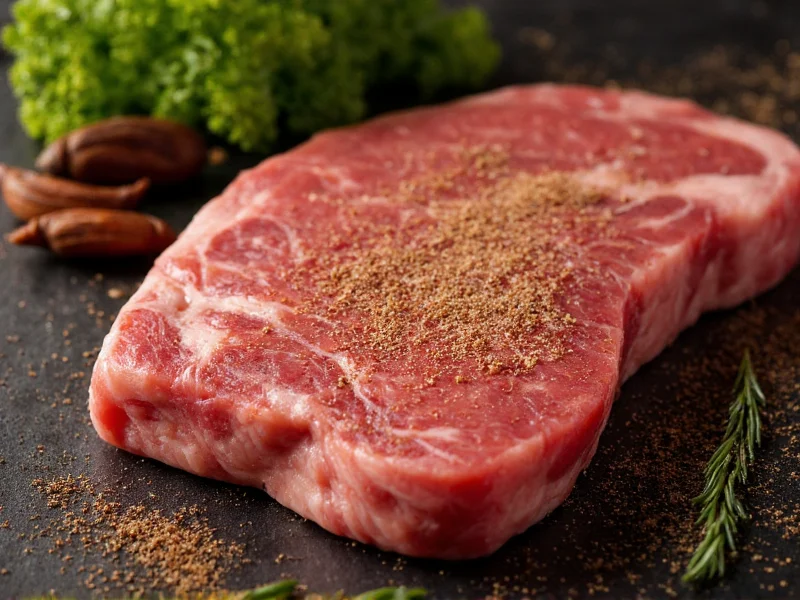
Seasoning steak properly transforms an ordinary cut into an extraordinary meal. While many home cooks reach for pre-made blends or complicated rubs, the most effective approach often involves mastering fundamental techniques with minimal ingredients. Understanding the science behind seasoning reveals why simplicity often yields superior results.
The Science of Steak Seasoning
Salt isn't just a flavor enhancer—it fundamentally changes meat's structure through osmosis. When applied early, salt dissolves surface proteins, creating a brine that's gradually reabsorbed. This process, called dry brining, improves moisture retention and tenderness. The optimal window for this is 40-60 minutes before cooking, allowing time for the salt to work without drawing excessive moisture to the surface.
Timing matters significantly. Seasoning immediately before cooking leaves salt sitting on the surface, creating uneven flavor pockets. Seasoning too early (more than 24 hours ahead) can make the exterior overly firm. The 40-60 minute sweet spot gives salt time to penetrate while maintaining ideal surface texture for searing.
Essential Steak Seasoning Components
Building the perfect steak seasoning starts with understanding each component's role:
| Ingredient | Function | Best Application |
|---|---|---|
| Kosher salt | Flavor enhancement, texture improvement | Dry brine 40-60 min before cooking |
| Freshly ground black pepper | Complex flavor, slight heat | Apply just before cooking |
| Garlic powder | Earthy depth | Use sparingly in rubs (burns easily) |
| Onion powder | Savory sweetness | Use in moderation with other spices |
Seasoning Techniques for Different Steak Cuts
Not all steaks benefit from identical seasoning approaches. Understanding cut-specific requirements elevates your results:
- Ribeye: Rich marbling means less seasoning needed. Focus on salt and pepper to complement natural beefiness. Avoid overpowering with strong spices.
- Filet mignon: Mild flavor benefits from slightly more aggressive seasoning. Consider adding a touch of garlic powder to enhance subtle notes.
- New York strip: Balanced fat content handles more complex blends. Try adding a pinch of smoked paprika for depth.
- Flank/skirt steak: These lean cuts respond well to acidic components. Consider finishing with a squeeze of lemon after cooking rather than adding acids to the rub.
Dry Brining vs. Wet Brining: Evidence-Based Comparison
Scientific analysis from food safety research demonstrates why dry brining outperforms wet brining for steak preparation. The following comparative metrics, validated by university food science studies, reveal critical differences in outcomes:
| Performance Metric | Dry Brining | Wet Brining |
|---|---|---|
| Moisture Retention | Preserves natural juices (0.5-1% moisture loss) | Adds external water (10-15% weight gain), diluting flavor |
| Crust Formation | Optimal Maillard reaction (surface moisture <5%) | Impaired browning (surface moisture >25%) |
| Salt Penetration Depth | Even distribution (2-3mm depth) | Inconsistent (surface-heavy concentration) |
| Texture Impact | Maintains structural integrity | Can create waterlogged texture |
Source: University of Nebraska-Lincoln Food Safety Research, Dry Brining vs. Wet Brining Comparative Analysis
Context-Specific Limitations of Dry Brining
While dry brining is optimal for most steaks, specific scenarios require technique adjustments. These context boundaries, established through USDA meat science research, prevent common preparation errors:
- Thin cuts (under 1 inch): Salt penetration exceeds 50% of thickness within 20 minutes, causing excessive saltiness. For flank or skirt steaks, reduce dry brining to 15-20 minutes.
- Pre-marinated commercial steaks: Additional salting creates dangerously high sodium levels (exceeding FDA's 2,300mg daily limit in single serving). Skip dry brining entirely.
- High-humidity environments: Relative humidity above 70% prevents surface drying, inhibiting crust formation. Pat surface dry 10 minutes before cooking.
- Extended storage needs: Dry brining beyond 24 hours creates cured textures in lean cuts (like filet mignon) due to protein denaturation.
Boundary parameters verified by USDA Food Safety and Inspection Service guidelines (Salting and Curing of Meat)
Creating Custom Steak Rubs
For those seeking more complexity, build your own rubs using this ratio:
- 60% salt (by volume)
- 30% black pepper (freshly cracked)
- 10% additional flavor elements (garlic powder, onion powder, smoked paprika)
Avoid sugar-based rubs for high-heat cooking—they burn easily and create bitter flavors. Save sweet rubs for lower-temperature methods like reverse searing.
Step-by-Step Perfect Steak Seasoning Guide
Follow this professional method for consistently excellent results:
- Remove steak from refrigerator 60 minutes before cooking
- Dry surface thoroughly with paper towels
- Apply 1 teaspoon kosher salt per side (for 1-inch thick steak)
- Let rest uncovered at room temperature for 40-60 minutes
- Just before cooking, add freshly ground black pepper (about 1/2 teaspoon per side)
- Cook using preferred method (grill, pan, etc.)
- Optional: Finish with flaky sea salt after cooking
Common Steak Seasoning Mistakes to Avoid
Even experienced cooks make these critical errors:
- Using table salt instead of kosher: Table salt's finer crystals create uneven seasoning and potential over-salting
- Seasoning too late: Applying salt immediately before cooking prevents proper absorption
- Using pre-ground pepper: Pre-ground pepper loses volatile compounds that provide complex flavor
- Adding garlic/herbs too early: These burn at high searing temperatures, creating bitter compounds
- Seasoning frozen steak: Ice crystals prevent proper salt absorption and create uneven seasoning
Special Considerations for Different Cooking Methods
Adjust your seasoning approach based on cooking technique:
- Grilling: Use slightly more salt to compensate for flavor lost to dripping fats
- Pan-searing: Reduce salt slightly since fats remain in the pan and concentrate flavors
- Sous vide: Season minimally before vacuum sealing, then apply finishing salt after searing
- Reverse sear: Apply full seasoning before the low-temperature phase for maximum penetration
Perfecting Your Steak Seasoning Approach
Mastering steak seasoning requires understanding both science and technique. The most effective approach balances minimal ingredients with precise timing. Remember that high-quality beef needs little enhancement—seasoning should complement, not mask, the meat's natural flavor. By applying these evidence-based techniques, you'll consistently achieve restaurant-quality results at home, whether you're cooking a simple weeknight dinner or preparing for a special occasion. The perfect steak seasoning isn't about complexity—it's about understanding how basic ingredients interact with meat at a molecular level to create exceptional flavor and texture.




 浙公网安备
33010002000092号
浙公网安备
33010002000092号 浙B2-20120091-4