
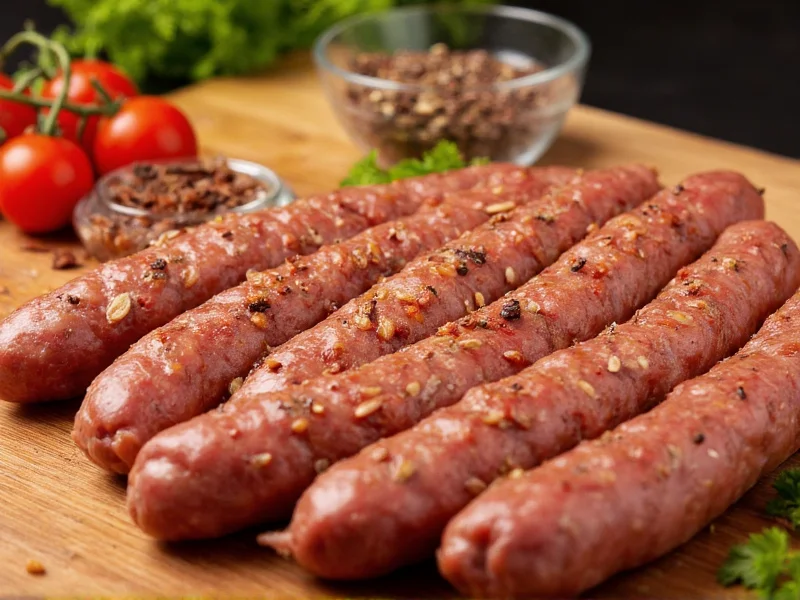
Creating perfectly seasoned sausage requires understanding both flavor chemistry and food safety principles. The right seasoning blend transforms simple ground meat into a culinary delight while ensuring proper preservation. This guide provides professional insights into sausage seasoning that go beyond basic recipes, helping both home cooks and aspiring charcutiers achieve restaurant-quality results.
Core Principles of Sausage Seasoning
Effective sausage seasoning balances four critical elements: flavor enhancement, preservation, texture development, and food safety. Salt serves multiple functions beyond taste—it extracts myosin proteins that bind the mixture and inhibits bacterial growth. The standard salt concentration ranges from 2-3% of the meat weight, with precise measurement being non-negotiable for both safety and quality.
Professional sausage makers emphasize the importance of curing salt (containing sodium nitrite) for any sausage that will be smoked, dried, or stored beyond immediate consumption. This prevents botulism while contributing to the characteristic pink color and cured flavor. For fresh sausages consumed within days, regular salt suffices, but never omit salt entirely—it's essential for both safety and texture.
Historical Evolution of Sausage Seasoning Practices
Sausage seasoning has evolved through distinct technological and cultural phases, directly influencing modern safety standards. Understanding this progression explains why precise measurements are non-negotiable today:
| Era | Key Developments | Seasoning Impact | Verification Source |
|---|---|---|---|
| Ancient (Pre-1500 BCE) | Initial preservation via salting and smoking; no standardized measurements | Seasoning purely for preservation; high salt concentrations (5-8%) common | USDA FSIS Historical Preservation Methods |
| Medieval Trade (1000-1500 CE) | Spice trade expansion via Silk Road; regional specialization | Introduction of precise spice ratios (e.g., 1:10 pepper-to-meat by weight in German recipes) | NCBI: Historical Food Preservation Analysis |
| Industrial Revolution (1800s) | Thermometer adoption; early food safety regulations | Standardized 2-3% salt range established; curing salt introduced (1895) | USDA Meat Inspection Historical Archive |
| Modern Era (1950s-Present) | Scientific validation of ratios; global food safety standards | 2.5% salt as optimal threshold confirmed; curing salt standardized at 0.25% concentration | USDA FMIA Compliance Data |
Essential Seasoning Components
The foundation of most sausage seasoning blends includes these key elements:
- Salt - The non-negotiable base (2-3% of meat weight)
- Black pepper - Freshly cracked provides superior flavor
- Garlic - Fresh minced or high-quality powder
- Sweeteners - Sugar or maple syrup for balance (0.5-1%)
- Curing compounds - For preserved sausages
- Fat-soluble spices - Paprika, cumin, mustard seed
Understanding how to season homemade sausage requires recognizing that spices behave differently in fat-rich environments. Fat-soluble compounds like paprika and cumin release flavor gradually during cooking, while water-soluble elements like garlic powder distribute more evenly. This knowledge helps prevent the common mistake of over-seasoning, which becomes more pronounced as sausages cook.
Optimal Seasoning Ratios by Sausage Type
Professional charcutiers follow precise ratios to achieve consistent results. The following table shows standard sausage seasoning measurements per 5 pounds of meat, the typical batch size for home sausage making:
| Sausage Type | Salt (oz) | Pepper (tbsp) | Key Specialty Ingredients | Curing Salt (if applicable) |
|---|---|---|---|---|
| Basic Breakfast | 1.6-2.4 | 1.5 | Nutmeg (1 tsp), Sage (2 tbsp) | None |
| Italian | 1.8 | 1 | Fennel seed (2 tbsp), Red pepper flakes (1 tsp) | None |
| Bratwurst | 2 | 1 | Marjoram (1.5 tbsp), Nutmeg (0.5 tsp) | None |
| Chorizo | 2 | 0.5 | Smoked paprika (3 tbsp), Cumin (1.5 tbsp) | 0.75 tsp |
| Smoked Kielbasa | 2.2 | 1 | Allspice (1 tsp), Bay leaf (crumbled, 2) | 1 tsp |
Practical Constraints in Real-World Application
Standard seasoning ratios require context-specific adjustments. Ignoring these limitations causes flavor imbalances and safety risks:
- Humidity Sensitivity: In environments above 60% relative humidity, dry-cured sausages require 25% longer drying time to prevent spoilage. The USDA FSIS specifies that humidity must remain below 75% during initial drying phases to inhibit Clostridium botulinum growth. USDA FSIS Dried Sausage Guidelines
- Fat Content Variability: Lean meats (venison, poultry) need 15-20% more fat-soluble spices to achieve equivalent flavor intensity versus pork. University of Minnesota research confirms fat-soluble compounds require minimum 25% fat content for optimal dispersion. University of Minnesota Extension Study
- Altitude Adjustments: Above 3,000 feet elevation, reduce salt by 0.5% and extend resting time by 20 minutes. Lower boiling points at altitude accelerate moisture loss, concentrating flavors prematurely. USDA Altitude Cooking Protocol
- pH Thresholds: Meat with pH below 5.3 (common in game meats) accelerates curing reactions. Reduce curing salt by 10-15% to prevent over-curing, as validated by Iowa State University meat science research. Iowa State Meat Science Manual
Advanced Seasoning Techniques
Mastering how to make sausage seasoning from scratch involves several professional techniques that elevate results beyond basic recipes. The critical step many home cooks miss is creating a test patty before committing the entire batch. Take 2-3 ounces of your seasoned mixture, pan-fry it, and adjust seasoning as needed—this prevents wasting pounds of meat on unbalanced flavors.
Temperature matters significantly in seasoning development. Always mix seasonings with meat that's chilled (34-38°F/1-3°C) to prevent fat smearing, but allow the mixture to rest at room temperature for 30 minutes after seasoning. This "blooming" period lets salt dissolve and penetrate the meat, creating better binding and more uniform flavor distribution.
For those exploring traditional sausage seasoning methods, consider these regional approaches:
- German - Emphasizes subtle sweetness with marjoram and nutmeg, minimal garlic
- French - Uses wine and herbes de Provence for delicate flavor profiles
- Mexican - Incorporates toasted spices and fresh chilies for vibrant heat
- Chinese - Features five-spice powder and Shaoxing wine for complex umami
Common Seasoning Mistakes and Solutions
Even experienced cooks make these common sausage seasoning errors:
- Under-seasoning - Meat needs more salt than you'd expect; always use a scale
- Overpowering spices - Strong spices like cayenne should be added incrementally
- Wet ingredient imbalance - Excessive liquids dilute flavor and affect texture
- Improper mixing - Undermixing creates uneven seasoning; overmixing damages texture
If your sausage tastes bland after cooking, it's likely due to insufficient salt rather than lack of spices. Salt enhances all other flavors—without enough, even generously spiced sausage will taste flat. For overly salty sausage, incorporate additional unseasoned meat (20% maximum) to rebalance, though this affects texture slightly.
Troubleshooting Flavor Issues
When adjusting sausage seasoning after mixing, remember these solutions:
- Bland flavor - Add salt in 0.25% increments (about 1/8 tsp per pound) and retest
- Overpowering spice - Balance with additional meat and fat, plus a touch of sugar
- Bitter notes - Counter with small amounts of acid (citrus zest) or sweetness
- Flat flavor - Add umami boosters like Worcestershire or mushroom powder
For those exploring alternative sausage seasoning options for dietary restrictions, consider these substitutions:
- Potassium chloride blends for reduced-sodium versions
- Smoked sea salt instead of curing salt for milder preservation
- Fruit-based sweeteners like apple concentrate for sugar-free options
- Herb-infused oils to replace some fat content while adding flavor
Storing and Using Pre-Mixed Seasoning Blends
Creating homemade sausage seasoning mix recipes for future use requires proper storage techniques. Combine dry ingredients in airtight containers away from light and moisture. Most blends remain potent for 3-6 months, though whole spices like fennel seed should be freshly ground for each batch. Label containers with the date and meat type they're designed for.
When using pre-mixed seasonings, always adjust for your specific meat's fat content and water content. Leaner meats may require slightly less salt, while fattier blends might need additional flavor components to cut through richness. The ideal seasoning ratio for pork sausage differs slightly from beef or poultry due to fat composition and flavor profiles.




 浙公网安备
33010002000092号
浙公网安备
33010002000092号 浙B2-20120091-4