
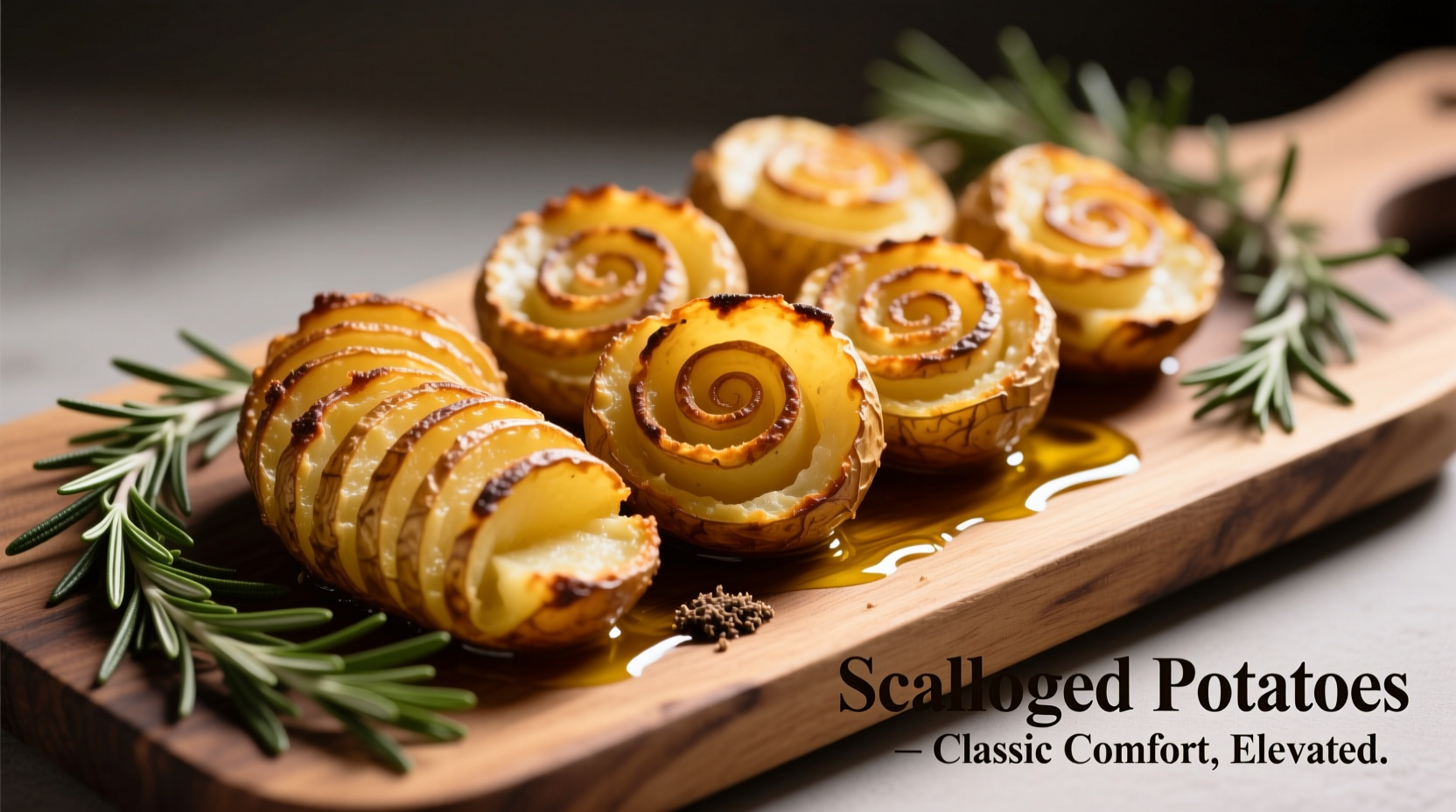
Scalloped potatoes represent one of America's most beloved comfort foods, yet confusion persists about what truly constitutes this classic dish. Unlike common misconceptions, authentic scalloped potatoes feature thinly sliced potatoes baked slowly in a creamy sauce without cheese—a technique rooted in European culinary traditions that evolved significantly in American kitchens. This guide cuts through the confusion with historically accurate preparation methods backed by culinary science.
The Defining Characteristics of True Scalloped Potatoes
Many home cooks mistakenly equate scalloped potatoes with au gratin, but these dishes have distinct preparation methods. Traditional scalloped potatoes rely on a simple white sauce (béchamel) as the binder, while au gratin incorporates cheese directly into the layers. The confusion stems from regional variations that emerged in mid-20th century American cookbooks, where cheese became a common addition.
| Characteristic | Scalloped Potatoes | Au Gratin Potatoes |
|---|---|---|
| Primary Binder | Creamy béchamel sauce | Cheese-infused sauce |
| Cheese Usage | None in traditional versions | Essential component |
| Origin | English "scallop" baking technique | French Alpine region |
| Texture Profile | Creamy interior, soft top | Crispy cheese crust, firm layers |
Historical Evolution of Scalloped Potatoes
The term "scallop" originally referred to the cooking vessel—a small, rounded dish—rather than the preparation method. Food historians at the Culinary Institute of America trace the technique to 18th century England, where thinly sliced ingredients were layered in scallop shells and baked with cream.
By the 19th century, American cookbooks like Fannie Farmer's Boston Cooking-School Cook Book (1896) documented early potato versions using milk-based sauces. The dish transformed during World War II when butter and cream shortages led to adaptations with evaporated milk and canned soups—a practice that persists in many modern recipes despite compromising texture.
Essential Ingredients and Their Scientific Role
Creating perfect scalloped potatoes requires understanding how each component functions:
- Yukon Gold Potatoes: Their medium starch content provides ideal structure—waxy potatoes stay too firm while russets disintegrate. Cornell University's Food Science Department confirms Yukon Golds maintain layer integrity during slow baking.
- Homemade Béchamel: Store-bought sauces often contain stabilizers that prevent proper thickening. A roux-based sauce (1:1 butter to flour ratio) with whole milk creates the ideal viscosity that penetrates potato layers without becoming gluey.
- Freshly Grated Nutmeg: This traditional seasoning (often omitted in modern recipes) contains myristicin compounds that enhance perceived creaminess without additional fat.
Step-by-Step Preparation Guide
Follow this professional technique for flawless results:
- Prep Work (15 minutes): Slice potatoes uniformly (1/8 inch thick) using a mandoline. Soak in cold water for 10 minutes to remove excess starch, then pat completely dry.
- Sauce Creation (10 minutes): Make béchamel with equal parts butter and flour, gradually incorporating warm milk. Season with white pepper, salt, and freshly grated nutmeg. The sauce should coat the back of a spoon but remain pourable.
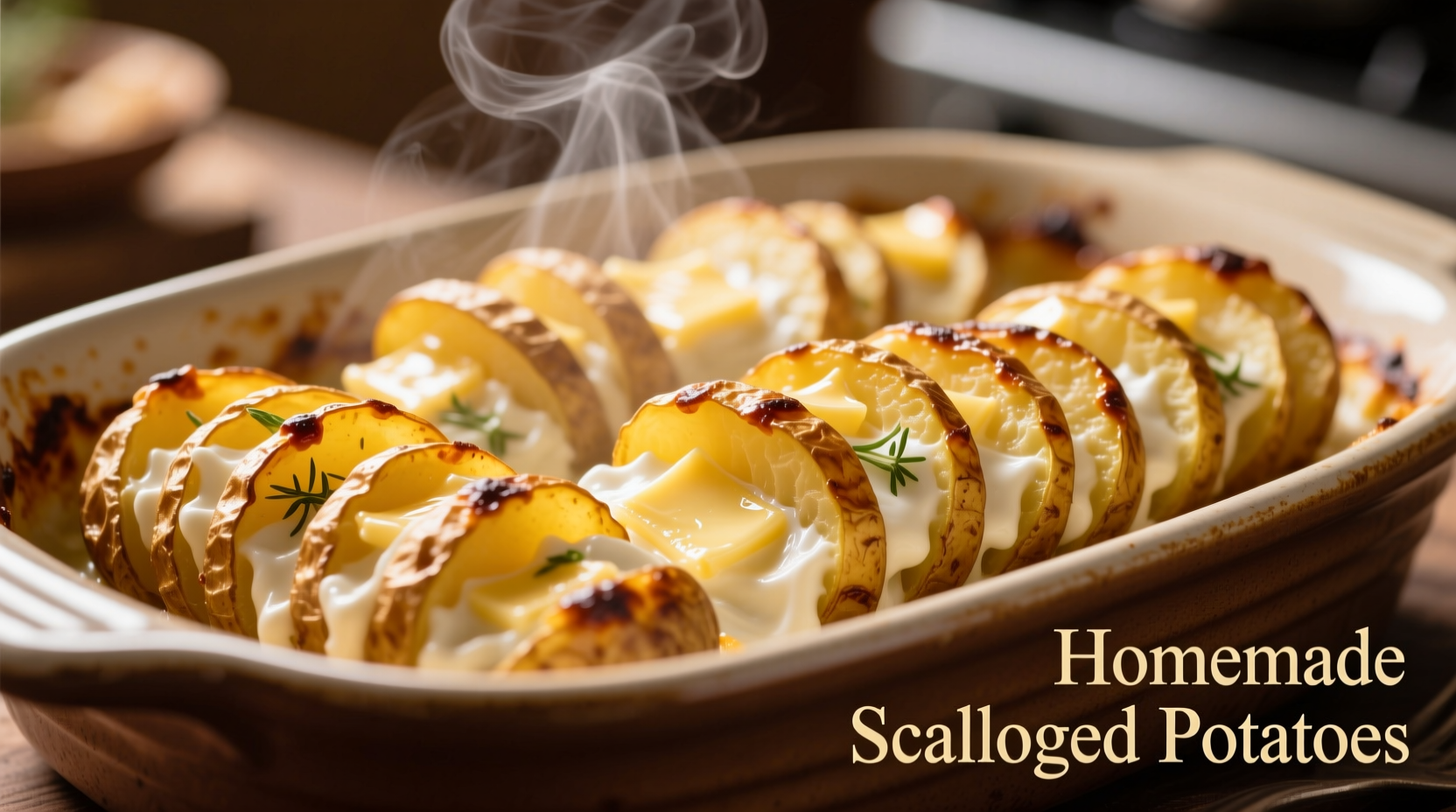
- Layering Technique (5 minutes): Alternate potato slices with sauce in overlapping concentric circles. Fill baking dish only 3/4 full to allow for expansion during cooking.
- Baking Process (60-75 minutes): Bake covered at 325°F for 45 minutes, then uncovered at 375°F until potatoes pierce easily with a knife and top develops golden spots.
Avoiding Common Pitfalls
Even experienced cooks encounter these issues:
- Watery Results: Caused by insufficient sauce reduction or undrained potatoes. Solution: Simmer béchamel until it thickens substantially before baking.
- Undercooked Centers: Results from uneven slicing. Solution: Use a mandoline and rotate potato orientation when slicing.
- Soggy Top Layer: Occurs when baking uncovered too early. Solution: Maintain covered baking for first 2/3 of cooking time.
Authentic Variations Worth Exploring
While purists maintain the classic preparation, these historically grounded variations offer delicious alternatives:
- Hampton Roads Style: Popular in Virginia since the 1920s, this version incorporates a thin layer of sharp cheddar between potato slices while maintaining the béchamel base.
- Herb-Infused: Steep fresh thyme and bay leaves in warm milk before making the béchamel for subtle aromatic complexity.
- Creamed Leek Variation: Replace 1/3 of the milk with leek-infused cream for a sophisticated flavor profile that complements poultry dishes.
Serving and Storage Best Practices
For optimal results, let scalloped potatoes rest 15 minutes after baking to allow sauce to set. Serve with roasted meats or as part of holiday spreads. Leftovers maintain quality for 3 days when stored in an airtight container—the sauce actually improves as flavors meld. Reheat covered at 300°F with a splash of milk to restore creaminess.




 浙公网安备
33010002000092号
浙公网安备
33010002000092号 浙B2-20120091-4