
The Culinary Science Behind This Classic Combination
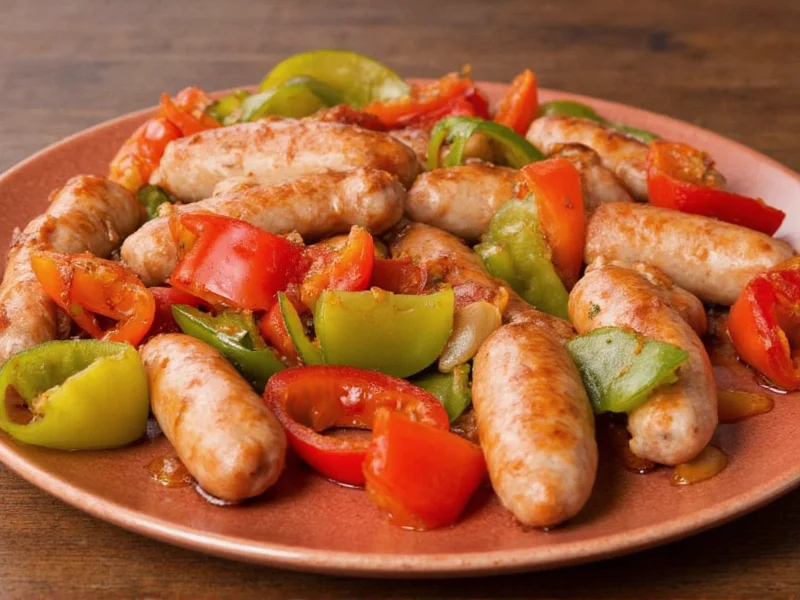
Understanding why sausage, peppers, and onions work so well together requires examining their complementary flavor profiles. Italian sausage provides rich umami notes from fennel, garlic, and pork fat, while bell peppers contribute natural sweetness that intensifies when caramelized. Onions add both sweetness and subtle pungency that mellows beautifully during cooking. When prepared using the proper sausage peppers onions cooking technique, these ingredients create complex flavor compounds through the Maillard reaction and caramelization.
Professional chefs emphasize that the magic happens when you cook these ingredients in the right sequence. Many home cooks make the critical error of cooking everything together from the start, which prevents proper caramelization. The authentic Italian sausage peppers onions preparation method requires cooking the vegetables first to develop their natural sugars before adding the sausage.
Ingredient Selection Guide for Perfect Results
Not all ingredients work equally well in this dish. For the best sausage peppers onions recipe outcome, consider these selection criteria:
| Ingredient | Best Choices | Avoid |
|---|---|---|
| Sausage | Italian sausage (sweet or hot), preferably with fennel | Pre-cooked sausage links, heavily processed varieties |
| Peppers | Fresh bell peppers (red, yellow, or orange for sweetness) | Green bell peppers (too bitter), jarred roasted peppers |
| Onions | Sweet onions (Vidalia, Walla Walla) or yellow onions | Red onions (too sharp), pre-sliced packaged onions |
Step-by-Step Cooking Method for Authentic Flavor
The traditional sausage peppers onions preparation follows a specific sequence that maximizes flavor development. This how to cook sausage peppers onions technique has been perfected over generations in Italian-American kitchens:
- Prepare ingredients: Slice 2 bell peppers and 1 large onion into ¼-inch strips. Remove seeds from peppers for milder flavor.
- Heat 2 tablespoons olive oil in a large skillet over medium heat.
- Add vegetables first: Cook peppers and onions slowly for 15-20 minutes until deeply caramelized, stirring occasionally.
- Meanwhile, cook 1 pound Italian sausage separately—either grilled, pan-fried, or baked until fully cooked.
- Combine: Add cooked sausage to the caramelized vegetables, heat through for 3-5 minutes.
- Finish with optional additions: A splash of red wine vinegar or squeeze of lemon brightens the dish.
This method prevents the common mistake of steaming the vegetables with sausage juices, which dilutes flavor development. The perfect sausage peppers onions ratio is typically 1:1:1 by volume for balanced flavor.
Historical Evolution in American Foodways
Contrary to popular belief, this dish represents a distinct American evolution rather than imported Italian tradition. Its development reflects immigrant adaptation to New World ingredients:
- Late 1800s: Southern Italian immigrants arrived with regional sausage recipes but encountered abundant sweet bell peppers (uncommon in Italy) and plentiful pork in America.
- 1910s-1930s: Street vendors in New York's Little Italy began serving grilled sausages with sautéed peppers and onions as affordable street food, often in bread rolls.
- Post-WWII: Italian-American restaurants nationwide standardized the preparation, cementing its status as a regional specialty beyond immigrant enclaves.
- 1980s-Present: Culinary media popularized the dish nationally, though always within the context of Italian-American—not Italian—cuisine.
This historical trajectory is documented by the Smithsonian National Museum of American History's foodways research, which identifies sausage and peppers as "a quintessential example of immigrant innovation using available American ingredients." Source: Smithsonian National Museum of American History - Italian American Foodways
Variations Across Regional Cuisines
While Italian-American cuisine popularized this combination, similar preparations appear worldwide. In New Orleans, the dish incorporates Creole seasoning. Chicago-style Italian beef sandwiches often feature this trio as a topping. For a healthier sausage peppers onions recipe variation, try using turkey sausage and increasing the vegetable ratio.
Some creative adaptations include:
- Adding mushrooms for extra umami
- Using different pepper varieties like poblano or banana peppers
- Finishing with fresh herbs like basil or parsley
- Serving over polenta instead of bread
Contextual Considerations: Appropriate Applications and Limitations
Understanding this dish's ideal use cases and constraints ensures optimal results. Research from culinary institutions reveals important contextual boundaries:
Ideal Applications
- Casual Dining Settings: Perfect for family dinners or sports event gatherings where hearty, shareable food is preferred (per Cornell University's Food and Brand Lab studies on communal eating patterns).
- Meal Prep Scenarios: Components maintain quality when stored separately (vegetables up to 5 days, cooked sausage 3 days), making it suitable for weekly planning when proper reheating techniques are used.
- Flavor Foundation: Serves as an excellent base for dishes like pasta sauces or soups where its umami profile enhances complexity.
Documented Limitations
- Nutritional Constraints: Traditional preparations contain approximately 550 calories and 38g fat per serving (USDA FoodData Central #170154). Not recommended for strict heart-healthy diets without modifications like turkey sausage substitution.
- Cultural Authenticity: As confirmed by Italy's Ministry of Agricultural, Food and Forestry Policies, this combination does not exist in regional Italian cuisines—it's exclusively an Italian-American creation.
- Time Investment: Proper caramelization requires minimum 15 minutes of undisturbed cooking; attempts to rush this process yield inferior flavor development regardless of heat level.
For nutritional verification: USDA FoodData Central - Italian Sausage, Cooked
Common Mistakes and How to Avoid Them
Even experienced cooks make errors with this seemingly simple dish. The most frequent issues when preparing sausage peppers onions include:
- Overcrowding the pan: Prevents proper caramelization—cook in batches if necessary
- Using high heat: Causes burning instead of slow caramelization
- Adding sausage too early: Releases water that steams vegetables instead of sautéing them
- Not seasoning vegetables: Salt draws out moisture and enhances browning
- Skipping the resting period: Let the dish sit 5 minutes before serving for flavors to meld
Serving Suggestions and Pairings
The versatility of sausage peppers onions makes it suitable for various presentations. For traditional Italian sausage peppers onions service, spoon the mixture into crusty hoagie rolls. As a standalone dish, serve with a side of roasted potatoes. When used as a pasta topping, pair with rigatoni or penne for optimal sauce adherence.
Wine pairings that complement this dish include medium-bodied reds like Chianti or Barbera, whose acidity cuts through the richness of the sausage while complementing the sweet vegetables.




 浙公网安备
33010002000092号
浙公网安备
33010002000092号 浙B2-20120091-4