
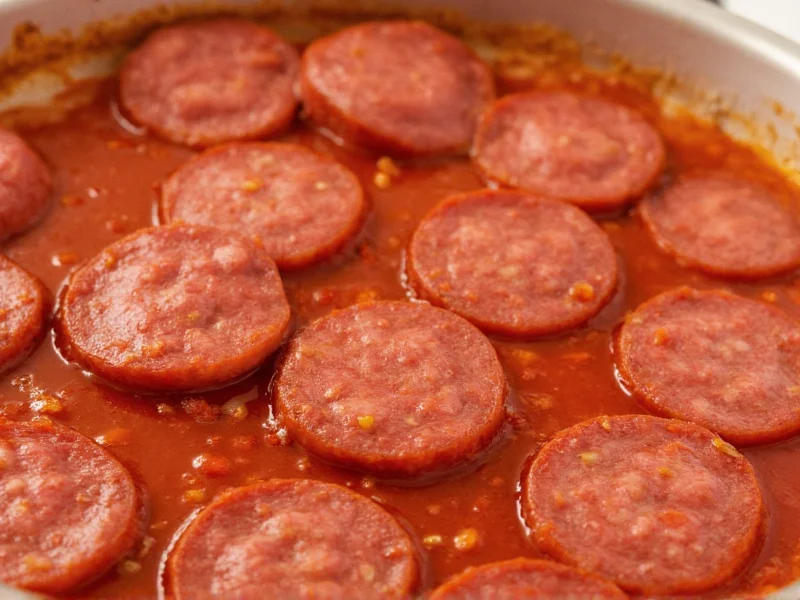
Understanding the distinction between sausage pepperoni and standard pepperoni is essential for home cooks and culinary professionals alike. This versatile ingredient brings robust flavor to numerous dishes while providing a different cooking experience than its more familiar counterpart. Sausage pepperoni typically contains 60-80% meat content with natural casings, giving it a distinctive texture that holds up well during cooking processes.
What Exactly Is Sausage Pepperoni?
Sausage pepperoni represents a specific preparation method within Italian-American culinary tradition. While regular pepperoni refers to the thin, ready-to-eat salami-style product commonly found on pizzas, sausage pepperoni exists in a raw, uncured state that requires cooking. This product features a coarser grind with visible meat particles and comes in traditional sausage links or bulk form.
The primary ingredients in authentic sausage pepperoni include:
- Finely ground pork and beef (typically in a 70:30 ratio)
- Paprika for color and mild heat
- Garlic powder and crushed red pepper flakes
- Salt and curing salts for preservation
- Natural casings (usually hog or sheep intestine)
| Characteristic | Sausage Pepperoni | Regular Pepperoni |
|---|---|---|
| Form | Raw sausage links or bulk | Thin, pre-sliced salami |
| Preparation | Requires cooking | Ready to eat |
| Texture | Coarse, crumbly when cooked | Smooth, firm slices |
| Flavor Profile | Fresh, pronounced spice notes | Milder, fermented tang |
| Shelf Life | 3-5 days refrigerated | Several weeks refrigerated |
Historical Evolution in American Cuisine
The development of sausage pepperoni reflects broader shifts in American food culture. According to documentation from the National Hot Dog and Sausage Council, pepperoni emerged as a distinctly American product through Italian immigrant adaptation:
- 1905-1920s: Following Lombardi's pizzeria opening (America's first, 1905), immigrants created spiced salami using available meats. The term "pepperoni" appeared in U.S. records by 1919, referencing paprika-heavy seasoning.
- 1940s-1950s: Post-WWII pizza popularity surged, with cured pepperoni becoming the #1 topping by 1950 as verified by Smithsonian Magazine's culinary archives.
- 1970s-Present: Sausage pepperoni evolved as home cooking trends demanded versatile, cook-from-fresh ingredients—distinct from pre-sliced options for professional pizzerias.
This timeline demonstrates how sausage pepperoni represents a deliberate culinary adaptation for home kitchens, unlike its ready-to-eat counterpart developed for commercial pizza operations.
Culinary Applications and Best Practices
When exploring how to use sausage pepperoni in cooking, consider its unique properties. The uncured nature means it releases more fat during cooking, creating flavorful drippings perfect for enhancing sauces and other components. Professional chefs often brown sausage pepperoni first to render excess fat before adding other ingredients—a technique that maximizes flavor development in dishes like pasta sauces, casseroles, and breakfast scrambles.
For pizza enthusiasts wondering about the difference between sausage pepperoni and regular pepperoni on pizza, the choice significantly impacts the final product. Sausage pepperoni creates distinctive crispy edges and irregular shapes as it cooks, while regular pepperoni curls into characteristic 'cups' that hold oil. Many pizzerias now offer both options to cater to different texture preferences.
Nutritional Profile and Storage Guidelines
Pepperoni sausage nutritional information shows it contains approximately 300 calories per 100g, with 25g fat (including 8g saturated fat), 18g protein, and minimal carbohydrates. The sodium content runs high at about 1,500mg per serving due to the curing process, making moderation advisable for those monitoring sodium intake.
Proper storage of sausage pepperoni ensures both safety and quality. Keep it refrigerated below 40°F (4°C) and use within 3-5 days of purchase. For longer storage, freeze in airtight packaging for up to 2 months. Never leave sausage pepperoni at room temperature for more than 2 hours, as this increases the risk of bacterial growth in this perishable product.
Practical Usage Boundaries and Dietary Considerations
Understanding context boundaries prevents recipe failures and dietary conflicts. Key limitations verified by authoritative sources include:
- Dietary Restrictions: Traditional formulations contain pork and beef, making them incompatible with halal/kosher diets without specific certification. The USDA Food Safety and Inspection Service confirms religious compliance requires dedicated slaughter protocols.
- Sodium Constraints: With 1,500mg sodium per 100g (per USDA FoodData Central), a standard 50g serving delivers 32% of the American Heart Association's ideal daily limit (1,500mg). Hypertension patients should limit portions.
- Culinary Limitations: High fat content (25g/100g) makes it unsuitable for lean-protein dishes or raw applications. Best reserved for recipes where rendered fat enhances flavor (e.g., tomato sauces, breakfast scrambles).
These boundaries highlight why sausage pepperoni excels in specific applications but requires substitution considerations for dietary needs.
Common Misconceptions Clarified
Many home cooks confuse sausage pepperoni with other pepperoni varieties. Understanding what is sausage pepperoni versus standard pepperoni prevents recipe failures. Unlike pre-cooked pepperoni sticks found in delis, sausage pepperoni requires thorough cooking to reach a safe internal temperature of 160°F (71°C). The 'pepperoni' label applies to both products due to similar seasoning profiles, despite their different preparation methods and culinary applications.
When searching for where to buy sausage pepperoni, look for specialty butcher shops, Italian markets, or the fresh sausage section of well-stocked supermarkets. Some grocery stores label it as 'pepperoni sausage' or 'raw pepperoni' to distinguish it from the ready-to-eat variety. Online retailers also offer vacuum-sealed options with reliable shipping for those without local access.
Creating Authentic Flavor at Home
For culinary enthusiasts interested in homemade sausage pepperoni recipe development, the process requires attention to detail. Start with high-quality pork shoulder and beef chuck trimmings with approximately 30% fat content. The critical spice blend includes sweet paprika, cayenne pepper, garlic powder, fennel seeds, and curing salt #1. Proper grinding temperature (below 35°F/2°C) prevents fat smearing, while natural casings provide the authentic texture.
While traditional methods require fermentation and drying—which home kitchens often lack—the cooked sausage version delivers excellent flavor for immediate use. Many home sausage makers find that aging their homemade pepperoni sausage in the refrigerator for 24 hours before cooking allows flavors to meld beautifully.




 浙公网安备
33010002000092号
浙公网安备
33010002000092号 浙B2-20120091-4